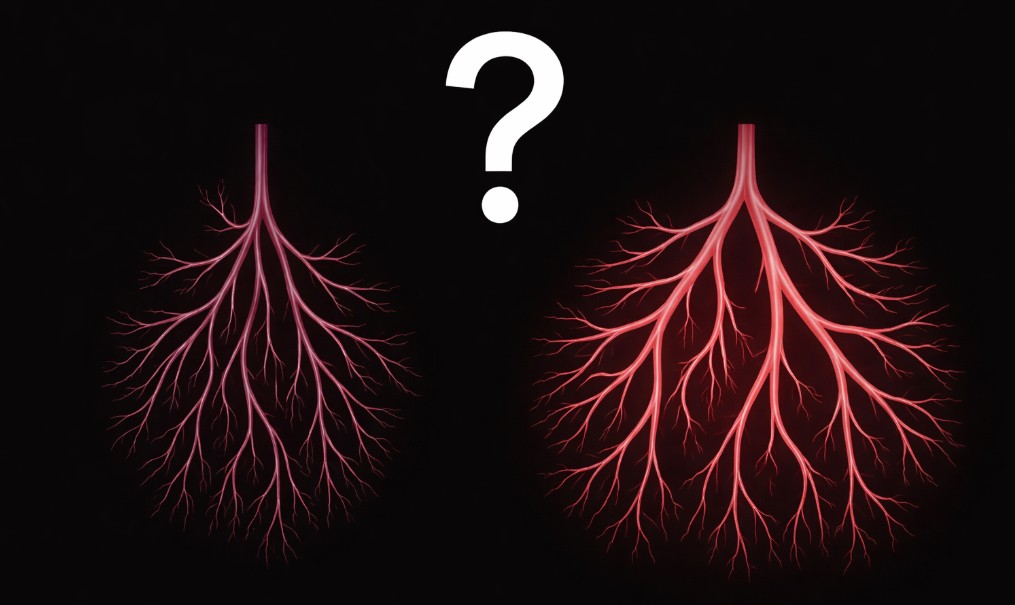
An Open Research Alleyway in Metabolic and Circulatory Health
A Bright Meadow Group Open Inquiry
Modern medicine is extraordinarily good at identifying and managing measurable problems.
High blood glucose. Elevated blood pressure. Arterial stiffness. Insulin resistance. Peripheral neuropathy. Circulatory insufficiency.
We measure these conditions precisely and treat them with growing sophistication.
But there is a broader question that may deserve attention.
What if some of the systems involved in these diseases are not only damaged by illness, but also under-stimulated by modern living conditions?
More specifically:
What if the human circulatory system — especially the microcirculation — is a trainable physiological system that modern life rarely asks to work?
This essay proposes that idea as a hypothesis worth investigating.
The Body Is Built to Respond to Change
Human physiology evolved in a world defined by variability.
Temperature changed daily and seasonally. Work patterns varied. Food availability fluctuated. Exposure to wind, water, and weather was routine.
The body developed regulatory systems designed to handle constant environmental change. Many of these systems are adaptive. They respond to repeated demand.
Muscles strengthen with load. Bones reinforce with stress. The heart adapts to endurance training. Metabolism shifts in response to diet and activity.
These adaptations are widely recognized.
But one system receives surprisingly little attention in this context: the vascular system.
Blood Vessels Are Not Passive Pipes
The circulatory network is not a set of static tubes.
Blood vessels continuously adjust their behavior through vasodilation and vasoconstriction, endothelial signaling, capillary recruitment, blood distribution shifts, and heat exchange regulation.
These responses occur automatically as the body regulates temperature, activity level, and tissue demand.
This raises a basic physiological question:
If vascular systems respond dynamically to stress, can they also be conditioned by repeated environmental stimuli?
The Forgotten Frontier: Microcirculation
Large arteries dominate public discussion of cardiovascular disease.
But the actual exchange of oxygen, glucose, nutrients, and waste occurs in the microcirculation — the vast network of small vessels and capillaries that reach nearly every cell in the body.
Microvascular health influences tissue oxygenation, insulin delivery, glucose uptake, wound healing, nerve function, temperature regulation, and inflammatory signaling.
When this system functions poorly, the effects appear across many diseases: Type 2 diabetes, peripheral vascular disease, hypertension, neuropathy, and chronic fatigue patterns.
In many cases, microvascular dysfunction is not merely a side effect. It is part of the disease process itself.
A Missing Environmental Stimulus?
For most of human history, daily life exposed people to constant thermal variation.
Cold mornings. Warm afternoons. Seasonal changes. Outdoor labor. Water exposure.
These conditions forced the circulatory system to repeatedly adjust.
Warm environments promote vasodilation, expanding peripheral blood flow to release heat. Cold environments promote vasoconstriction, conserving heat and redistributing circulation toward the core. Each shift engages the vascular system.
Over time, repeated cycles of expansion and contraction may influence vascular responsiveness and flexibility.
This idea suggests a simple possibility:
Temperature variation may function as a form of circulatory conditioning.
The Modern Thermal Environment
Modern civilization has introduced something unusual in human history: stable indoor climates.
Large portions of the population now live and work within a narrow temperature band — often around 20–24°C (68–75°F). This range lies close to the human thermoneutral zone, where the body expends minimal energy regulating temperature.
The advantages are obvious. Comfort, safety, and energy efficiency.
But stability also means the body rarely needs to activate some of its regulatory systems — among them thermoregulation, peripheral vascular adjustment, cold and heat adaptation, and certain metabolic responses linked to temperature change.
This leads to a question that has not been widely explored:
Has modern environmental stability reduced natural stimulation of the circulatory and thermoregulatory systems?
Thermal Cycling as a Possible Stimulus
One potential method of restoring that stimulation is controlled thermal variation.
Simple routines — such as alternating warm and cool water exposure — create repeated vascular adjustments. Warm exposure encourages vasodilation. Cool exposure encourages vasoconstriction. Repeated alternation creates cycles of vascular expansion and contraction.
The hypothesis is that these cycles may maintain endothelial responsiveness, improve peripheral circulation, influence capillary recruitment, support thermoregulatory function, and affect metabolic activity tied to heat production.
The goal is not extreme exposure or endurance challenges.
The goal is physiological engagement through variability.
Existing Research Hints
Several established research areas suggest that temperature exposure influences metabolic and vascular physiology.
Cold exposure can activate brown adipose tissue, increasing energy expenditure through heat production. Heat exposure — such as sauna use — has been associated in some studies with improved cardiovascular markers. Exercise science shows that repeated physiological demand can increase capillary density in muscle tissue. Contrast hydrotherapy has been observed to increase superficial circulation.
None of these findings prove the hypothesis proposed here.
But together they suggest that temperature variation interacts meaningfully with vascular and metabolic systems.
The Broader Hypothesis
Taken together, these observations lead to a broader question.
Modern metabolic disease is often linked to diet composition, caloric excess, sedentary lifestyles, and sleep disruption. These factors are clearly important.
But another variable may deserve investigation: the loss of environmental variability itself.
Humans now live with stable temperatures, stable lighting, continuous food availability, and reduced physical demand. Each of these changes removes environmental signals that historically shaped human physiology.
Thermal stability may be one such change.
A Suggested Research Path
The thermal variability hypothesis suggests several testable questions.
Researchers could examine whether controlled temperature variation affects endothelial function, capillary recruitment, peripheral circulation, insulin sensitivity, glucose metabolism, inflammatory markers, and vascular stiffness.
Experimental designs could compare populations living in stable thermoneutral conditions with those exposed to structured daily temperature variation.
The outcomes are measurable.
What This Hypothesis Does Not Claim
This proposal does not claim that temperature exposure cures disease. It does not argue against medical treatment. It does not suggest extreme cold exposure as a universal solution.
Instead it raises a narrower possibility:
that thermal variability may represent a neglected environmental stimulus affecting vascular and metabolic health.
An Open Invitation
The purpose of this piece is not to declare a discovery.
It is to highlight an unexplored alleyway in health science.
Human physiology evolved under conditions of constant environmental change. Modern life has dramatically reduced that variability. If some biological systems evolved expecting those stimuli, removing them may carry consequences.
Understanding those consequences is a legitimate area for scientific investigation.
The idea may prove minor. Or it may reveal an overlooked component of metabolic health. Either outcome would expand our understanding.
Bright Meadow Group Open Inquiry Series Ideas offered freely for investigation and discussion.