On April 29, 2026, the Supreme Court decided Louisiana v. Callais and took a hammer to what was left of the Voting Rights Act. Six to three. The ruling gutted Section 2 — the provision that for sixty years let voters of color challenge maps drawn to dilute their power — and held that race-conscious redistricting meant to remedy discrimination is itself unconstitutional. Translation: the tool built to stop the rigging is now the thing the courts call rigging.
Then watch what happened next, because it tells you everything. Louisiana’s governor declared an emergency and suspended the state’s primary — to redraw the map. More than a hundred thousand people had already cast early votes. Forty-two thousand absentee ballots were already in the box. The Court skipped its own waiting period to let the state pull it off in time. They didn’t change the lines before the votes. They changed them after the ballots were already in, and called it procedure.
This is not a Louisiana problem. Since 2025 it has been a national project. Texas redrew its map mid-decade at the president’s urging to manufacture five Republican seats; other states fell in line behind it. Maps covering close to forty percent of the House have been redrawn between one election and the next. The last time the country saw a redistricting race like this was the 1960s — which should tell you exactly which era these people are trying to restore.
Majority-Black districts get cracked and packed — split apart so they can’t add up to anything, or stuffed together so the power stays sealed in one place and bleeds out of everywhere else. If that mechanic sounds familiar, it should. Redlining didn’t only happen at the bank. The principle is identical: draw the line so the wrong people can’t build anything where they stand.
Call it what it is: a special kind of racist treason. Not the version with a flag and a rifle. The administrative version — the one that wears a suit, cites precedent, and apologizes with a shrug. It doesn’t need a hood. It has a gavel.
The Willie Lynch letter — the supposed instructions for keeping enslaved people in line — was never a manual for whips and chains. It was a manual for division. Keep them suspicious of each other over color, age, status, where they came from, and you never have to worry about them organizing against you. The people with the most to lose burn all their energy distrusting each other. The people with everything to gain never lift a finger.
Historians think the letter is a fabrication. Fine. It doesn’t matter. The document might be fake; the strategy is real, documented, and unbroken. You can trace it from the plantation to the precinct without ever losing the thread. The targets change. The mechanic never does.
So understand what the attack on Black voters actually is. It is not only an attack on Black voters. It is a wedge. Breaking the trust between Black communities and the broader coalition they have carried for sixty years is easier than beating that coalition at the polls. Make the party feel like it doesn’t see you. Make every disappointment feel like a betrayal. Make staying home feel like the only self-respecting thing left to do.
That’s the door. Here’s what’s on the other side of it.
One in three eligible voters does not vote. If you picture that third as comfortable and rich, you are not paying attention. Rich people vote. They vote in every election, down to the drainage commissioner, because they understand precisely what is on the table for them. The third that stays home is working people. Poor people. People who looked hard at this system, correctly concluded it was captured, and then drew exactly the wrong lesson from a right diagnosis.
Sitting out is not neutrality. It is not protest. It is not principle. It is a gift — wrapped, addressed, and delivered on schedule — to the exact people who need you home.
Here is the arithmetic, cold as it comes. One percent of this country holds something like seventy percent of the wealth. That number is not fixed. It moves every cycle, and it does not move toward you. The technology to build something better than survival exists right now — clean energy, real healthcare, housing that isn’t a trap. Not someday. Now. We will not get there through this system running the way it currently runs. But we will get further from it — measurably, every November we sit out — if we keep handing Congress back to the people methodically, legally dismantling the one mechanism that could change the math.
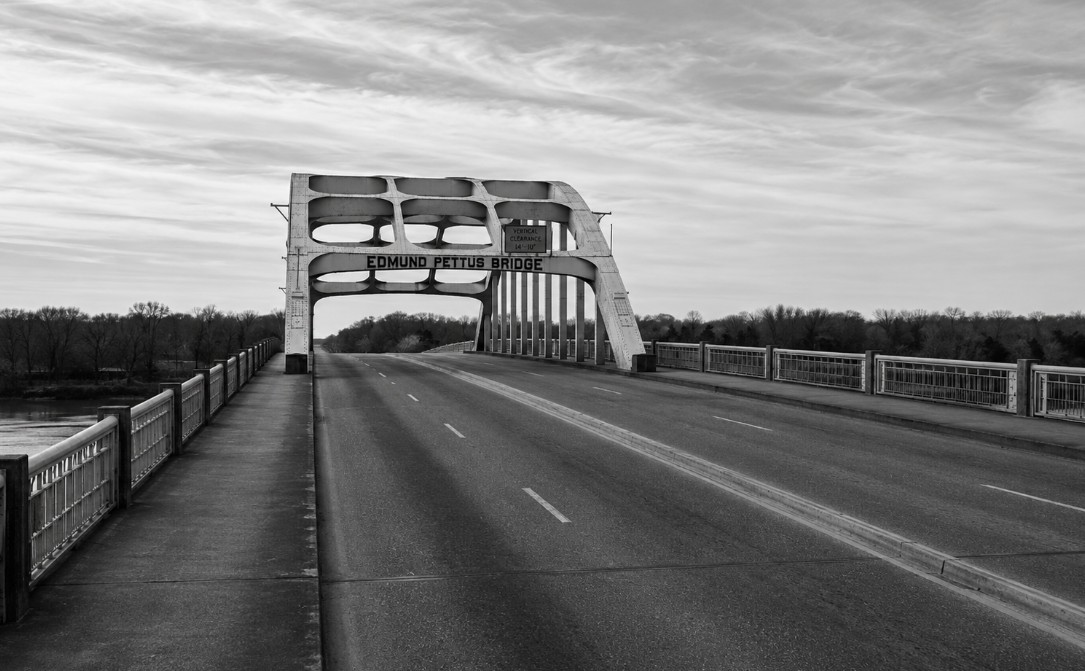
People were beaten for this. Set on by dogs. Bombed in their own houses. Loaded into cars and never seen again. Not abstractions — named people, in named towns, on dates you could look up tonight, for nothing more exotic than the right to vote.
Two generations later, poor people are still staying home on the first Tuesday in November.
That has to stop.
Register. Vote. In November. Not just the top of the ticket — the House, the statehouse, the county, the school board, the bench. Flip Congress, and don’t flip it by a hair. Flip it hard enough that accountability stops being optional. Hard enough that the people who built this apparatus have to answer for it in the only language they have ever respected, which is losing.
They need you home.
Don’t be home.