And Why We’ve Been Burying the Future Instead
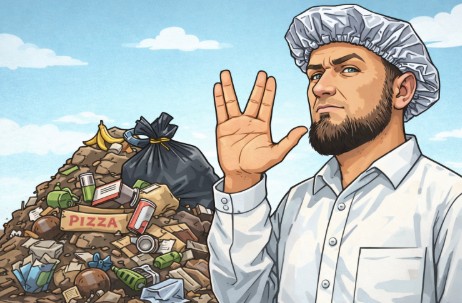
In Star Trek, the replicator is treated like magic. You ask for a thing, and the machine makes it — food, tools, materials — out of what seems like nothing.
In the real world, we don’t have replicators.
But we do have something uncomfortably close.
It just isn’t shiny.
And it starts with waste.
The Technology We Found Before We Knew What to Do With It
Hydrothermal processing — specifically HTL (Hydrothermal Liquefaction) and HTC (Hydrothermal Carbonization) — isn’t new. The core science was understood as early as the early 1900s, with real experimentation happening mid-century.
The problem wasn’t that it didn’t work.
The problem was that no one could see what it was for.
At the time:
- Fossil fuels were cheap
- Waste was “someone else’s problem”
- Scale wasn’t yet a crisis
So the idea that you could take wet, mixed, ugly organic material — food waste, sludge, agricultural residue, even human waste — and turn it into usable fuels, solid carbon, nutrients, and heat just didn’t land.
It was shelved as interesting, but impractical.
That decision aged poorly.
The Problem We Never Actually Solved
Modern civilization produces enormous volumes of complex waste:
- Food scraps
- Yard waste
- Paper
- Agricultural residues
- Industrial organics
- Sewage
- Biosolids
Yes — shit included.
And despite all our technology, our primary strategy is still:
- Bury it
- Burn it
- Or push it somewhere downstream and hope it stops being our problem
Landfills are not solutions.
Wastewater treatment plants are damage control, not recovery systems.
We don’t actually process waste.
We hide it and pray.
Nature can handle organic complexity — slowly.
Cities cannot.
So the backlog grows.
What HTL / HTC Actually Does (Plain English)
Hydrothermal systems do one crucial thing differently:
They treat waste the way the Earth does — but faster.
Instead of drying material out, HTL and HTC use:
- Heat
- Pressure
- Water
to break complex organic matter down into its fundamental components.
Depending on the process:
- HTL turns wet waste into a crude-like bio-oil, gases, and nutrient-rich water
- HTC turns it into a stable carbon solid (biochar-like material), plus recoverable liquids
No incineration.
No drying first.
No pretending the material is “too messy.”
Mixed waste goes in.
Valued outputs come out.
That’s the replicator analogy.
Not because it creates something from nothing —
but because it converts anything organic into something useful.
At Scale, Waste Stops Being Waste
Here’s the quiet part most people miss:
At regional scale, these systems don’t just handle trash —
they redefine what trash is.
In the River Refugium Project (RRP) model:
- Cities become feedstock sources
- Waste becomes input
Outputs feed:
- Energy systems
- Soil rebuilding
- Nutrient recovery
- Industrial materials
- Agricultural loops
Every banana peel.
Every paper towel.
Every gallon of sludge.
Not “disposed of” — recaptured.
A city stops being a sinkhole and becomes a mine.
Yes, Including the Gross Stuff
Let’s not dance around it.
Human waste is one of the most energy-dense, nutrient-rich streams we produce — and we currently treat it like radioactive garbage.
HTL/HTC doesn’t care.
To the system:
- Sewage
- Food waste
- Agricultural residue
are just different expressions of the same chemistry.
When processed properly, shit becomes fuel, carbon, nutrients, and heat.
That’s not sci-fi.
That’s thermodynamics.
The Only Real Obstacle: Upfront Cost
The technology works.
The chemistry is known.
The need is obvious.
The barrier is capital.
But here’s the comparison that reframes everything:
The cost of a single modern sports stadium
could fund multiple city-scale hydrothermal recycling systems.
One entertains people a few dozen times a year.
The other:
- Reduces landfill use
- Cuts wastewater loads
- Produces energy
- Recovers nutrients
- Creates long-term regional resilience
One is a monument.
The other is infrastructure.
We already spend the money.
We just choose the wrong toys.
The Real Replicator Isn’t Flashy
A real replicator wouldn’t hum and glow.
It would:
- Sit quietly
- Smell a little weird
- Take in the things we don’t want to think about
- And give us back fuel, materials, and stability
HTL and HTC aren’t magic.
They’re something better:
a way to finally close the loop we keep pretending doesn’t exist.
The future isn’t about creating things from nothing.
It’s about never throwing value away again.
Bright Meadow Group
These are the kinds of systems we can help you bring online, or troubleshoot.