Beyond Posture: The Case for a Continental Republic
Let’s set something aside before we go any further.
The chest-thumping. The saber-rattling. The historically embarrassing habit of American presidents talking about “taking” things that matter—canals, islands, resources, neighbors—as if the 19th century never ended.
That language is not strategy. It’s not leadership. It’s not even power.
It’s noise.
And it obscures a far more serious conversation that North America has been avoiding for generations.
Because stripped of theatrics, ego, and wealth-extraction fantasies, one fact remains stubbornly true:
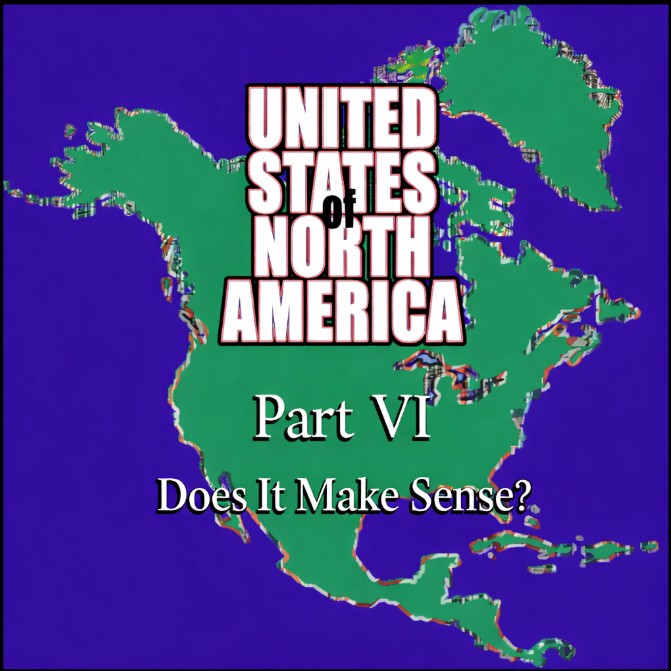
The entire North American continent, acting in concert as a single political and economic system, would be unmatched in its ability to create the best place on Earth to live.
Not to dominate. Not to conquer. Not to extract.
To build.
That distinction matters.
The Difference Between Empire and Integration
Empires are imposed. They are built outward from a center of force. They extract value from the periphery to enrich the core. They rely on hierarchy, coercion, and permanence myths.
A continental republic is the opposite.
It is voluntary. It is negotiated. It is ratified by citizens, not enforced by armies. It exists to raise the floor, not crown a throne.
Much of the resistance to continental integration comes from confusing these two ideas. The fear is not irrational. History gives us plenty of reasons to recoil from expansionist fantasies.
But this is not about annexation.
It is about coordination.
Why North America, Together, Is Structurally Unique
From a strategic standpoint, North America already behaves like a single organism—just an inefficient one.
Economically
Canada holds freshwater, energy reserves, and arable land at continental scale.
The United States holds capital density, research infrastructure, and logistical depth.
Mexico and Central America hold manufacturing capacity, demographic momentum, and cultural continuity with the Global South.
The Caribbean controls maritime chokepoints, tourism economies, and renewable potential.
Greenland anchors Arctic access, rare earths, and climate monitoring.
These assets already interlock. They just do so through friction: borders, tariffs, regulatory mismatches, migration crises, and zero-sum politics.
Unification wouldn’t create dependency. It would remove redundancy and waste.
Defensively
A unified continental defense posture would:
- eliminate internal strategic competition
- stabilize migration through development rather than enforcement
- remove incentives for foreign powers to exploit seams between states
- secure trade routes without militarized paranoia
North America does not need more weapons. It needs fewer internal fault lines.
Environmentally
Climate does not respect borders.
Water systems, river basins, wildfire corridors, agricultural zones, and coastlines already function as continental systems. Managing them as fragmented national projects guarantees inefficiency and conflict.
A continental republic could coordinate:
- water security
- disaster response
- climate migration
- renewable grids
- land restoration
This is not idealism. It is basic systems engineering.
The International Order Argument
The world is entering a multipolar phase whether we like it or not.
In that world:
- fragmented regions lose leverage
- coherent blocs set standards
- coordination beats scale alone
A united North America would not need to threaten anyone. Its existence would stabilize global systems simply by being predictable, prosperous, and internally coherent.
That is influence without coercion.
Contrast that with imperial posturing, which:
- triggers alliances against you
- destabilizes markets
- invites resistance
- accelerates decline
History is very clear on this point.
Turtle Island, Not Erasure
One of the most important corrections this thought experiment has made over time is this:
Any continental project that does not structurally include Indigenous nations is illegitimate by definition.
Not symbolically. Not ceremonially. Structurally.
The concept of Turtle Island is not poetic branding. It is a reminder that governance on this continent did not begin with European capitals, and legitimacy cannot be borrowed retroactively.
A continental republic that:
- recognizes Indigenous nations as foundational partners
- embeds sovereignty rather than consulting it
- treats land as responsibility, not commodity
…would represent something genuinely new in the modern world.
Not a superstate. A reconciliation at scale.
Why This Is Not a Call to Action
This matters enough to be explicit:
This is not advocacy. This is not a plan. This is not a movement. This is not a demand.
It is a thought experiment carried far enough to see whether it collapses under its own weight.
So far, it hasn’t.
What it has done is expose how small and reactive our current conversations are by comparison.
We argue about tariffs while supply chains reorganize themselves. We argue about borders while climate redraws them. We argue about sovereignty while corporations already ignore it.
The question isn’t whether change is coming.
It’s whether we think deliberately or stumble into it.
From Conquest to Coordination
If North America ever does move toward deeper integration, it will not be because someone threatened it into existence.
It will happen because citizens decide—slowly, lawfully, openly—that cooperation produces more dignity, stability, and opportunity than competition ever did.
That path begins by discarding the fantasy of conquest and replacing it with something far more radical:
Mutual investment in a shared future.
Not ruled from Washington. Not ruled from Ottawa. Not ruled from Mexico City.
Built together, from the inside out.
And if the rest of Turtle Island ever chooses to see past the noise, the wealth extraction, and the tired posturing, it may find that the most powerful move available is not domination at all.
It is coordination.