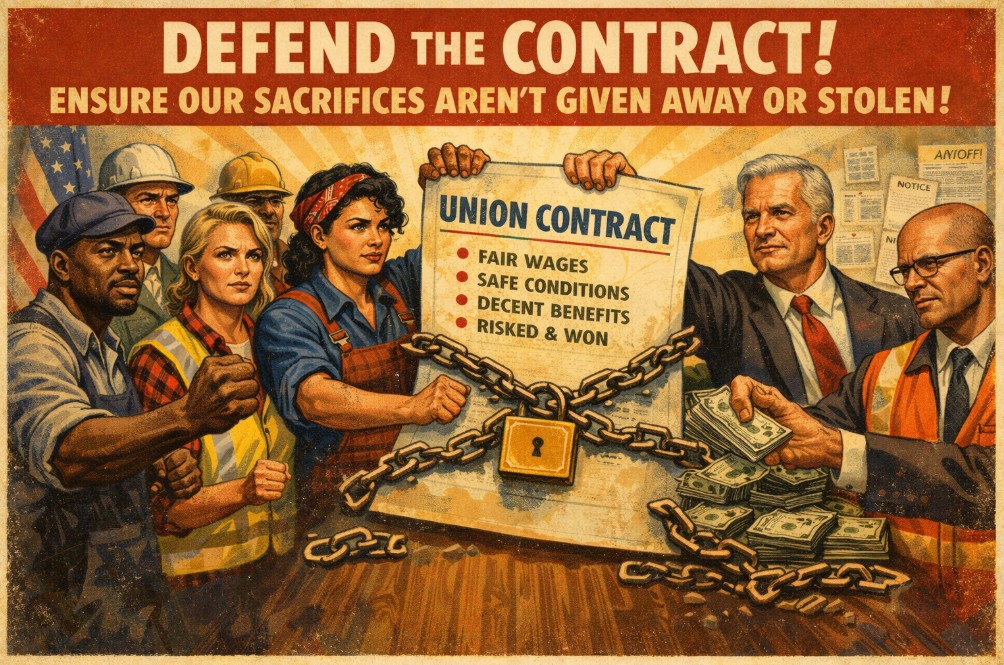
WHY WE FILE EVERY GRIEVANCE
Name’s Philip Randolph Wright.
Mister Wright if we are doing business.
Let me tell you something most folks learn too late.
The grievance procedure is not about being difficult.
It’s not about being angry.
It’s not about “getting somebody in trouble.”
It’s about keeping the water cold.
First: This Isn’t Personal. It’s Business.
Management expects you to perform as promised.
Show up on time.
Follow procedures.
Meet standards.
Protect equipment.
Respect policies.
Nobody calls that “personal.”
That’s business.
Well, the contract works both ways.
When management violates:
- Scheduling rules
- Safety standards
- Overtime language
- Job assignments
- Leave procedures
- Pay provisions
That’s business too.
Filing a grievance is simply saying:
“We expect the same professionalism you expect from us.”
No drama.
No grudges.
No speeches.
Just documentation.
That’s how grown folks handle agreements.
Second: The Boiling Water Rule
You ever hear about the frog in boiling water?
Drop him in boiling water—he jumps out.
Put him in cool water and warm it slowly…
He stays.
Until it’s too late.
That’s how bad workplaces happen.
Not overnight.
Gradually.
One “little exception.”
One “temporary change.”
One “just this once.”
One “don’t make a fuss.”
Next thing you know:
Breaks are gone.
Safety slips.
Schedules stretch.
Pay gets fuzzy.
Respect disappears.
And everybody’s standing there saying:
“How did it get this bad?”
It got that bad because nobody stopped it early.
Small Violations Become Big Ones When Ignored
Every major contract fight I’ve ever seen started small.
A five-minute break skipped.
A shift swap denied.
A safety shortcut.
A job classification bent.
A supervisor “trying something.”
Ignored.
Then repeated.
Then normalized.
Then enforced.
That’s the pattern.
Grievances are how you interrupt it.
Why Filing Early Protects Everybody
When you file early:
- You protect new hires.
- You protect quiet workers.
- You protect folks who hate confrontation.
- You protect the future crew.
You’re not just defending yourself.
You’re defending the standard.
Standards are what make work dignified.
Support Your Shop Steward
Let me speak plain.
Your steward is not “starting trouble.”
They are absorbing pressure so you don’t have to.
They:
- Read the fine print
- Track patterns
- Document behavior
- Sit in tense meetings
- Take heat from both sides
- Protect your rights quietly
That’s service.
Back them up.
Give them information.
Tell them early.
Tell them honestly.
They can’t protect what they don’t know.
Discipline Builds Freedom
The Army taught me this.
So did the union hall.
Discipline is not punishment.
Discipline is structure that protects you when things get hard.
Contracts are discipline.
Grievances are maintenance.
You don’t skip maintenance and expect machines to run.
Why would you do that to people?
This Is How Respect Stays Real
Respect is not a feeling.
It’s behavior backed by systems.
A workplace with no grievances isn’t “harmonious.”
It’s usually scared.
A workplace with fair, steady grievances is healthy.
It means:
- People are paying attention.
- Standards matter.
- Nobody’s asleep at the wheel.
Final Word
Don’t wait until the water is boiling.
Don’t wait until everybody’s exhausted.
Don’t wait until trust is gone.
File early.
File clean.
File calmly.
Protect the agreement.
Protect the people.
Protect the future.
That’s the Wright way.
Now you know, Jack.