Another Lesson from the Story of Copper
Technology itself is not what causes disruption and instability.
The disruption comes from what happens around the technology.
Again and again, the historical pattern is clear. When a technology matures, wealth and power consolidate around those who control the old version of it—its tools, its trade routes, its institutions, its permissions. That consolidation becomes self-protective. It resists displacement.
And when displacement inevitably arrives, the friction is not technical.
It is political, economic, and social.
Power does not like losing its place.
In the Copper Age, this meant cities rising and falling as access to ores, smelting techniques, and trade chokepoints shifted. Those who controlled yesterday’s metal did not fail because the new tools were better. They failed because they attempted to freeze the world in a configuration that no longer matched reality.
This is the real source of instability:
not innovation, but hoarded advantage.
When wealth and influence are allowed to concentrate too tightly around a given technology, every transition becomes violent—economically, socially, sometimes literally. The system cannot bend, so it breaks.
Which brings us, uncomfortably, to the present.
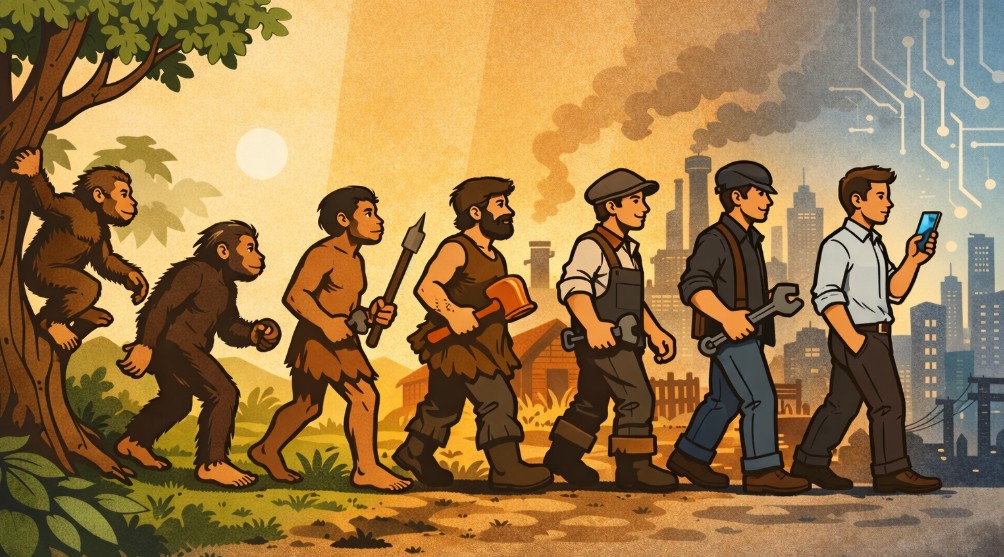
If we want to reduce the disruption caused by technological revolutions, the lesson from history is not to slow technology down. It is to prevent excessive consolidation of power around it.
That means examining gatekeeping mechanisms that exist primarily to preserve advantage rather than encourage progress.
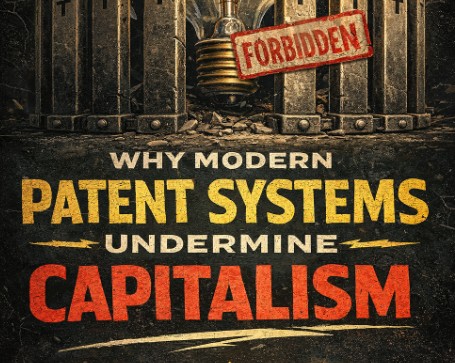
Mechanisms like intellectual property.
From a systems perspective, there is no strong structural argument for IP that does not resolve, eventually, into wealth hoarding. IP does not exist to protect society from chaos; it exists to protect incumbents from competition. It creates artificial scarcity in domains where scarcity is no longer natural.
The result is predictable:
uneven development, delayed diffusion, heightened friction, and sharper social backlash when change finally breaks through anyway.
If, instead, technological gains are allowed to spread more evenly—if knowledge flows more freely, if access broadens rather than narrows—then wealth distributes more gradually, power shifts more smoothly, and transitions become less destructive.
Democratized technology does not eliminate disruption.
But it lowers the pressure gradient.
And lower pressure means fewer explosions.
History suggests that societies which learn this lesson early endure transitions with less trauma—and preserve more of what makes them worth carrying forward.
The copper didn’t destroy civilizations.
The hoarding did.
AI will be no different.
Postscript
One last point.
I don’t think this transition is just another reshuffling of power. I think it’s the first one that makes much of our existing power structure unnecessary.
The technology already exists for people to live independently and regeneratively—energy, food, fabrication, coordination, knowledge. None of this requires centralized control anymore.
What is still centralized is permission.
And permission isn’t technical. It’s institutional.
That’s why this moment feels unstable. Systems built to manage scarcity are colliding with tools that no longer need it. Institutions designed to distribute power are facing a world where power can simply disperse.
Most people don’t see this yet—not because it isn’t real, but because it runs against the stories we’ve been trained to accept.
History suggests transitions like this aren’t resisted because they fail.
They’re resisted because they work.