Judge Cyrus Ball House — Lafayette, Indiana
There is a particular kind of confidence in 19th-century architecture that we do not build anymore. It stands upright. It announces itself. It assumes permanence.
The Judge Cyrus Ball House does exactly that.
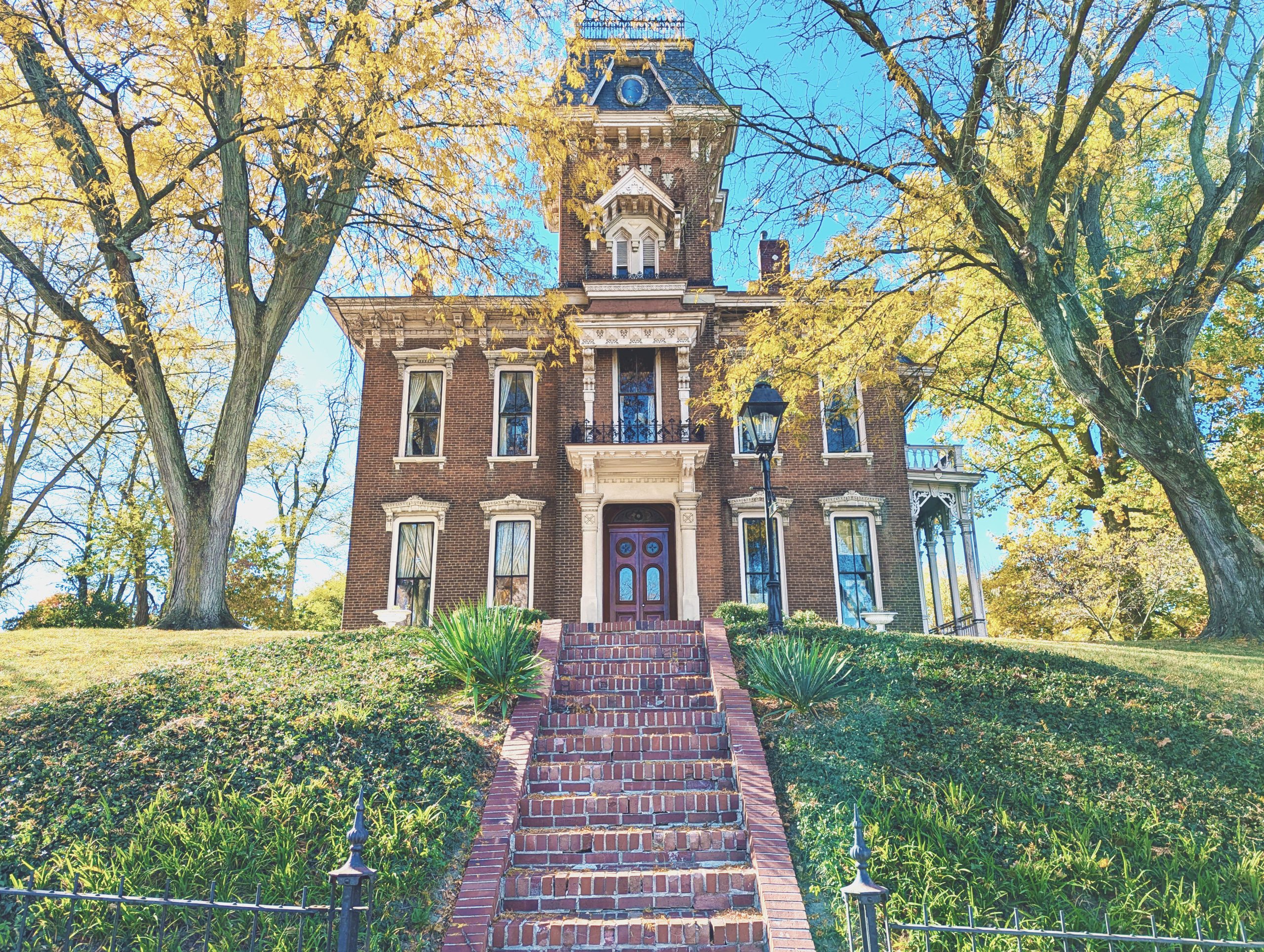
This photograph captures the mansion in full autumn clarity — red brick against electric blue sky, framed by gold canopy trees that feel almost staged for theatrical effect. The house rises from its hill with deliberate symmetry, anchored by that central tower and crowned with iron cresting along the mansard roofline.
This is not accidental architecture. It is declaration.
The Approach: Architecture as Ceremony
The brick stairway leading up the slope is a ritual in itself. The elevation is modest, but intentional. You do not step into this house casually — you ascend to it.
Notice how the central axis aligns:
- Brick stairs
- Double front doors
- Tower above
- Circular window at the roofline
That vertical alignment is a Second Empire hallmark — visual gravity pulling your eye upward. The tower is not merely decorative; it is symbolic. It telegraphs status, modernity (for 1869), and cultural literacy.
The iron cresting at the roof peak — delicate but assertive — completes the silhouette. In the 19th century, ironwork was a statement of industrial advancement and wealth. Here, it reads almost like a crown.
The Style: French Second Empire in the Midwest
Constructed in 1868–69, the Ball Mansion embraces the French Second Empire style, which surged in American popularity after the Civil War. It was the architectural language of ambition.
Key elements visible in your image:
- Mansard roof allowing a full upper story without increasing apparent height
- Central projecting tower with decorative dormer detailing
- Bracketed cornices under the eaves
- Pedimented window hoods in limestone
- Double entry doors with arched transom window
- Symmetrical façade massing
The limestone trim contrasts sharply against the brick — not merely ornament, but crafted stone announcing permanence and refinement.
The detailing around the second-floor balcony window is particularly elaborate. Carved brackets support the projecting canopy above the entrance. That overhang is both functional and theatrical — shelter and stage.
The Human Story
Cyrus Ball was not simply a homeowner. He was a merchant, lawyer, banker, civic leader — a figure woven into Lafayette’s economic rise in the 19th century.
Houses like this were not just residences; they were civic statements. When guests arrived, business was conducted here. Reputation was reinforced here. Networks were formed here.
Architecture was reputation, rendered in brick.
The fact that this structure survives largely intact speaks to sustained stewardship across generations. It was listed on the National Register of Historic Places in 1984 and remains one of the defining landmarks of Ninth Street Hill.
The Landscape Context
Your photograph shows something equally important: mature trees framing the mansion.
The golden canopy softens the hard geometry of brick and stone. The black lamppost in the foreground adds a vertical counterpoint, almost echoing the tower.
The house does not dominate the land; it converses with it.
That slope, the open lawn, the iron fencing — all of it reinforces hierarchy and procession. There is a subtle choreography between nature and structure here.
Interior Significance (Historical Record)
Though your image is exterior, the documented interior features are worth noting:
- Original woodwork and hardware
- Marble fireplaces in formal rooms
- Plaster cornices
- Ornate staircase with turned balusters
The carriage house remains as well — a rare intact companion structure that completes the estate narrative.
Few homes of this era retain such continuity.
Present Status
The Ball Mansion is not a full-time public museum but remains a preserved private residence within Lafayette’s historic district. It is occasionally opened for tours or heritage events.
Its continued existence in lived condition rather than institutional conversion is notable. It is not frozen; it is inhabited.
That matters.