A Stone Amplifier from the New Deal Era
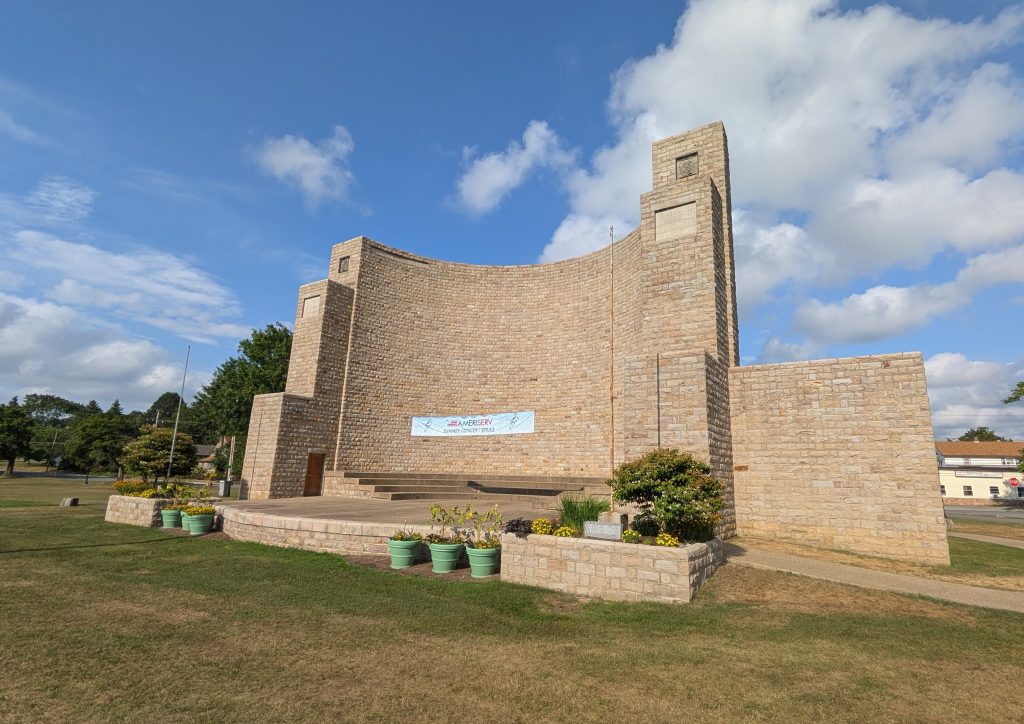
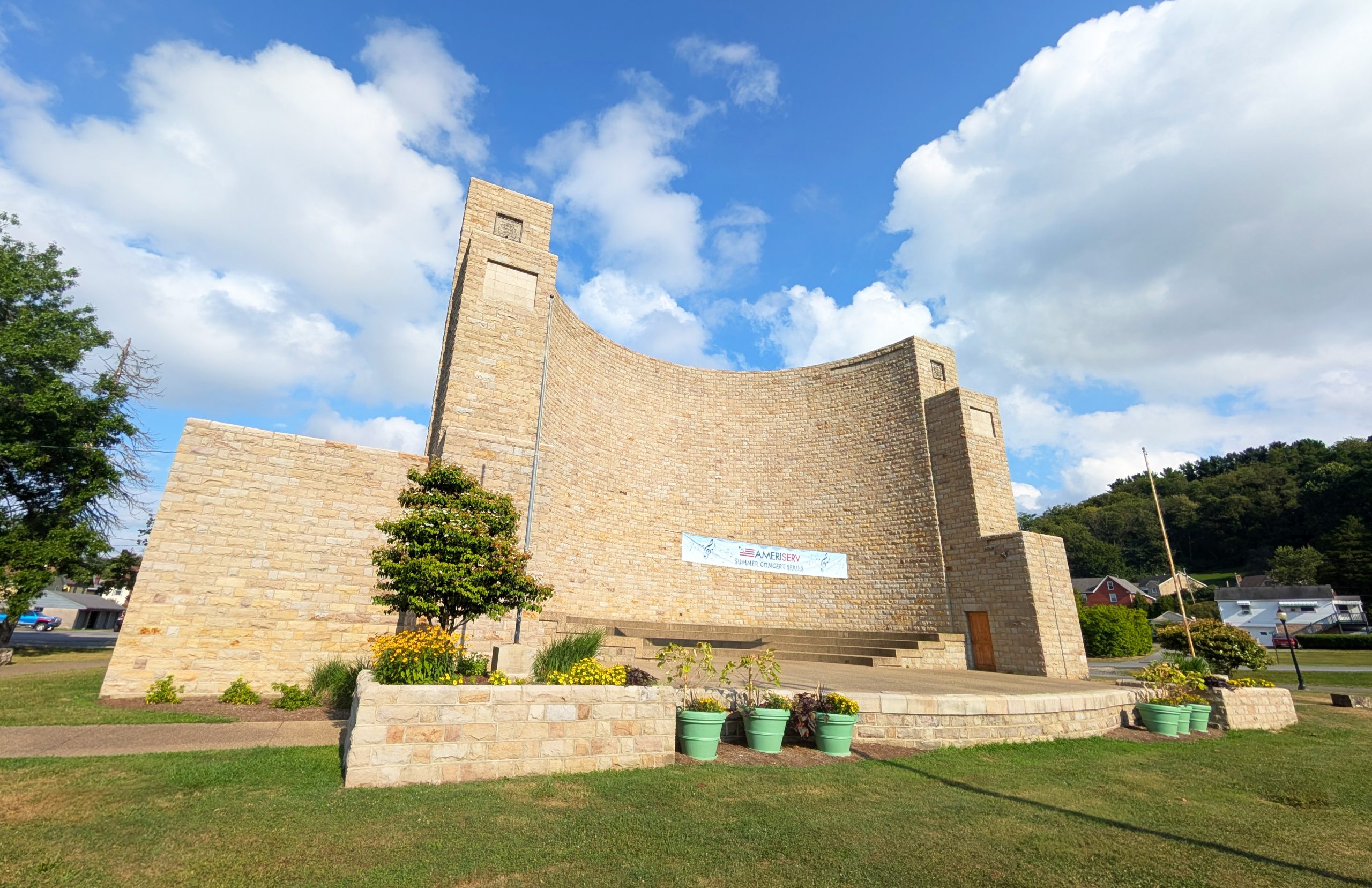
In Roxbury Park, on the western edge of Johnstown’s urban basin, sits one of the most unusual pieces of civic architecture in Pennsylvania: the Roxbury Bandshell.
At first glance it looks almost defensive — thick stone walls, cylindrical massing, and towers rising from the stage structure. But the building was never meant to keep people out.
It was designed to gather them.
Completed in 1940 as part of the Works Progress Administration during the Great Depression, the Roxbury Bandshell was originally known as the Municipal Music Pavilion, one of twenty-seven bandshells constructed across the United States through WPA programs intended to create jobs while building permanent civic infrastructure.
Today only a handful of those structures remain.
And the Roxbury pavilion may be the most monumental example still standing.
A Depression-Era Monument
The idea for the pavilion emerged locally in 1937 when the 17-7-8 Community Association proposed constructing a municipal music venue in Roxbury Park. The plan quickly gained support from city officials and community organizations.
Fundraising began in 1938 to meet the local sponsorship requirement required for WPA projects. The original contribution was expected to be about $5,000, but as the design expanded the local share grew to $14,318, bringing the total construction cost close to $70,000–$80,000 — a major investment during the Depression.
Groundbreaking took place on May 14, 1939, drawing an estimated 3,000 residents to watch construction begin.
The finished pavilion required enormous amounts of labor and material:
- 2,200 tons of native stone
- 969 barrels of cement
- 576 tons of sand
- 192 tons of slag
- roughly 697 man-months of labor
That combination — local materials and government-funded labor — is the architectural signature of the WPA era.
The building itself became a physical record of the policy.
Architecture That Works Like an Instrument
A bandshell is not simply a stage.
It is an acoustic machine.
Before modern sound systems, outdoor music required architecture capable of projecting sound across large open spaces. The curved masonry wall behind the stage performs this task by reflecting sound waves forward into the audience area.
The Roxbury Bandshell accomplishes this through a massive semicircular wall rising approximately 55 feet high, surrounding a stage with a 30-foot interior radius (a 60-foot wide performance area).
This geometry creates a natural amplifier.
Instead of dissipating into the sky behind the performers, music reflects off the curved stone surface and is redirected outward into the lawn seating area.
The result is surprisingly powerful acoustics — even without electronic amplification.
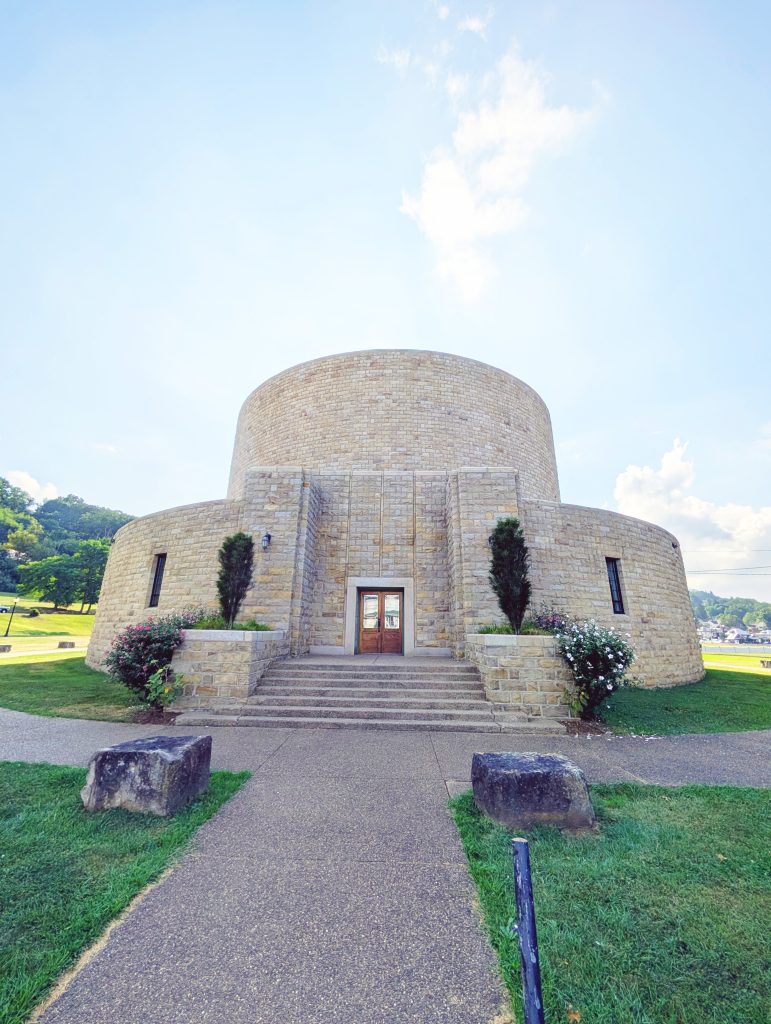
The structure also includes interior rooms for rehearsal, dressing areas, storage, and access corridors, along with lighting systems and early sound amplification installed during construction.
The design essentially merges three things:
- architecture
- acoustic engineering
- civic theater
Opening Week: A City Celebrates
The dedication ceremony in June 1940 lasted eight days, reflecting how important the project was to the community.
Performances included:
- choral societies
- ethnic cultural groups
- school bands
- fencing demonstrations
- gymnastics exhibitions
This programming reveals the real purpose of the pavilion.
It was not built for elite concerts.
It was built for the public.
In an industrial city filled with immigrant communities and labor societies, the bandshell provided a shared civic stage.
Decline and Near Demolition
Like many WPA structures, the bandshell fell into neglect late in the twentieth century.
By the 1980s and 1990s:
- performances declined
- maintenance stopped
- seating areas were replaced by a roller hockey rink
- demolition was proposed
In 2005, the structure nearly disappeared entirely when the city considered removing it to build a parking lot.
Instead, the community organized.
Local residents formed the Roxbury Bandshell Preservation Alliance, raising funds and securing grants to stabilize and restore the structure.
Nearly $400,000 has been invested in preservation work since then, including:
- roof replacement
- masonry cleaning and repointing
- stage reconstruction
- lighting upgrades
- accessibility improvements
The building returned to active use — which is the only way performance architecture truly survives.
The Bandshell Today
Today the Roxbury Bandshell once again functions as it was intended.
Summer concerts, community events, and public gatherings regularly bring thousands of people back to the park.
The structure now hosts:
- weekly summer concerts
- community festivals
- seasonal events
- neighborhood celebrations
It is not just preserved.
It is alive.
For information about the Roxbury Bandshell and to support its continued operations: https://www.roxburybandshell.com/preservation-alliance/
How Many WPA Bandshells Survive?
The exact number is difficult to pin down because many WPA bandstands were later modified, demolished, or rebuilt.
What we can say with confidence:
- 27 bandshells were built nationwide by the WPA.
- Only a handful remain today.
Some sources claim the Roxbury Bandshell is the last intact example of its specific WPA municipal music pavilion design, which would make it among the rarest surviving structures of its type in the country.
Regardless of the exact number, its rarity is undeniable.
Why It Matters
The Roxbury Bandshell represents a moment in American history when public architecture was expected to serve multiple purposes simultaneously:
- employ people
- improve civic life
- build cultural infrastructure
- create durable monuments
It is a Depression-era structure that still performs its original function eighty-five years later.
Few public works age that well.
In Roxbury Park, stone was shaped into a sound reflector, a gathering space, and a civic symbol — one that still sends music across the valley.
That is Man Made architecture at its best.