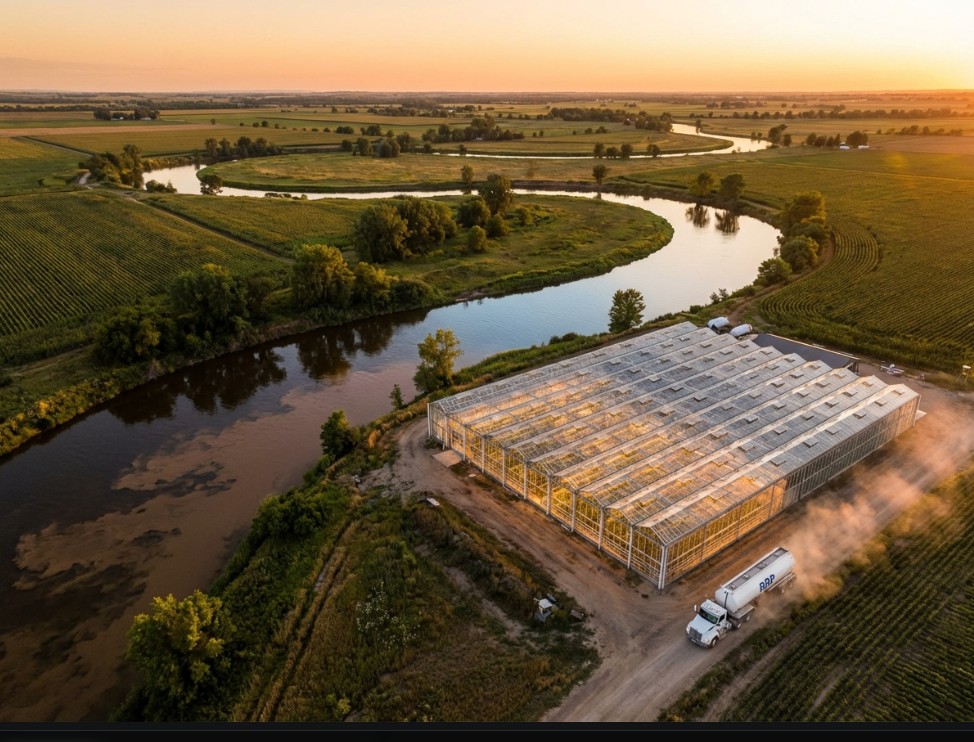
Introducing the RRP Operator Brief — and Releasing the River Refugium Project Version 2.0 to the Blue Ribbon Team
Bright Meadow Group | Cernunnos Foundation April 2026
We dropped Version 2.0 of the River Refugium Project on the Cernunnos Foundation site yesterday. Today it comes to the Blue Ribbon team — the people who have been in this work since it was an ibc tank and a wilty garden. Version 2.0 is here.
This article introduces a companion piece we’ve been building in parallel: the RRP Operator Brief. It’s a different document for a different reader. The RRP series is written for engineers, economists, regulators, and funders. The Operator Brief is written for the people who will actually run these systems — site managers, deployment leads, municipal partners, tribal operators, and anyone who needs to understand the system at the level of what do I do and why does it matter, not just how does it work.
We’ll spend most of this article inside the Operator Brief, because the framework it presents is worth understanding in its own right. And then at the end, we’ll tell you where to find the full RRP Version 2.0 package.
What Version 2.0 Actually Is
Before we get into the operator layer, context on what changed.
Version 1.0 was foundational — system architecture, environmental framework, design philosophy. It was downloaded approximately 400 times and distributed widely across watershed advocacy, agricultural policy, and infrastructure finance circles. It established what the system does. It did not fully answer what it costs, what it returns, or how it scales.
Version 2.0 answers those questions.
The headline additions: a three-scenario financial model built from 43 confirmed engineering variables traceable to their source documents; a formalized hub-and-spoke cluster architecture that defines how nodes combine into regional systems; the pilot-as-data-engine thesis that reframes the first deployment as a measurement instrument, not a demonstration; documentation of the evaporation greenhouse mechanism — a passive phase-separation technology that functions as a low-energy analog to reverse osmosis; a national watershed priority map; a ten-criterion site selection matrix with five scored candidate sites; and a complete removal of all proprietary IP claims that were present in Version 1.0.
The document series now runs thirteen primary volumes plus four appendices. The financial model is a standalone Excel workbook — nine sheets, 43 named variables, three scenarios. Every provisional figure is flagged. Every assumption is traceable.
That’s the package. Now let’s talk about how to run one of these things.
The Operator Brief: A Different Document for a Different Reader
The full RRP series will answer almost every technical question you can ask about this system. The Operator Brief answers a different set of questions: What is this, in plain terms? What does it do, and what does it not do? What do I watch, what do I prioritize, and what kills it?
Here’s the framework, at depth.
The Reframe That Changes Everything
The first thing the Operator Brief does is reset the mental model, because if you come into this system thinking you’re running a water treatment plant, you’ll make wrong decisions from day one.
This is not a water treatment plant. Water treatment plants consume resources to remove contamination. This system converts contamination into resources. The difference is not rhetorical — it determines how you think about inputs, outputs, failure modes, and success metrics.
The correct mental model is this: you are operating a harvesting system on a moving resource stream. The river is the supply chain. The contamination is the feedstock. Pollution intensity is not the problem you’re solving — it’s the variable that drives your output yield. The most degraded rivers are the best business cases.
Two structural problems are addressed simultaneously: water contamination and resource scarcity. The same organic load that makes a river dangerous produces the fuel, soil inputs, and recoverable water that the surrounding community lacks. The system doesn’t treat one problem while ignoring the other — it resolves both through the same process.
That reframe matters operationally because it changes what you optimize for. You’re not optimizing for effluent quality alone. You’re optimizing for output capture efficiency across the full product stack: recovered water, biocrude, biochar, and thermal energy. If any of those outputs accumulates without a buyer, the system stalls. If all four have off-take, the system self-finances.
System Architecture, Plain Language
The RRP processes river water through four sequential stages. Each stage has a job. Each stage feeds the next.
Stage 1 — Conditioning. River water enters through a forebay: a settling and screening zone that removes large debris, separates sediment, and buffers flow. Triple-layered screens handle intake blockage. A cistern downstream stabilizes feedstock composition before processing begins. Biofiltration media beds begin breaking down dissolved organics. Algae polishing beds pull nitrogen and phosphorus from the water column. The output of Stage 1 is not clean water — it’s conditioned, concentrated organic slurry. Prepared feedstock. That’s what goes into the reactor.
Stage 2 — Precision Thermal Cycling (PTC). This is the conversion engine. Two thermochemical pathways run depending on feedstock moisture and target outputs:
- Hydrothermal Liquefaction (HTL) processes high-moisture algae slurry at elevated temperature and pressure. Output: biocrude — an oil-analog fuel — plus aqueous phase and combustible gas.
- Hydrothermal Carbonization (HTC) processes wet biomass at lower temperatures. Output: hydrochar — a stable carbon solid — plus process water.
Both pathways are closed-loop. Process water is recovered and returned to the system. Waste heat from the reactor is captured and redirected to greenhouse operations. The system is designed to reach net energy positivity — producing more usable energy than it consumes. Heat reuse efficiency is the single highest-leverage operational variable in the entire system.
Stage 3 — Separation and Recovery. Thermochemical outputs are separated and stabilized. Biocrude is captured and staged for local energy use or sale. Char is cooled and prepared for agricultural or filtration applications. Process water is polished through additional biological or UV treatment. Waste heat routes to the greenhouse thermal loop.
The Outputs. Four product streams come out of a running node: recovered water (polished, usable, community-visible), biocrude (local energy, petroleum displacement, economic reframe), biochar (soil amendment, carbon sequestration, immediate agricultural value), and thermal energy (internal reuse, reduces parasitic load). A system where all four have buyers is a fundamentally different economic object than a system where only one does.
Deployment: Three Phases, No Shortcuts
The deployment model is phased deliberately. Each phase depends on data from the previous one. You don’t design Phase 2 in detail before Phase 1 runs — because the pilot data is what sizes everything downstream.
Phase 1 — Pilot Node. A single modular unit at a high-flow contamination point. The pilot runs in Model B configuration: full biological engine, no on-site thermochemical plant. Biomass is baled or slurried and transported to a third-party processor or held until a hub reactor is available. This keeps entry capital manageable and starts generating the performance data the financial model depends on.
The pilot’s job is not to prove the concept exists — it’s to measure what actually happens at a specific site with a specific feedstock. Throughput per day. Organic reduction percentage. Biomass yield per grow unit. Biocrude conversion ratio. Water quality at discharge. Those numbers replace the provisional flags in the financial model with real data, which determines cluster sizing, which determines the economics of Phase 2.
The pilot is the data engine. Treat it accordingly.
Phase 2 — Cluster Expansion. Multiple nodes along the river corridor. Staggered positioning is deliberate: upstream nodes reduce organic load entering the system, protecting downstream nodes from surge overload; downstream nodes handle final polishing. At least one node transitions to Model A — integrated on-site thermochemical hub — as aggregate biomass supply from satellite nodes crosses the reactor minimum feed threshold.
The standard cluster is one Model A hub served by five to ten Model B satellite nodes. The hub reactor runs at steady-state regardless of individual satellite variation. When one satellite has a seasonal gap, others are producing. Maintenance windows can be scheduled against the aggregate supply curve. This is why the cluster architecture exists — a single node cannot guarantee the feedstock continuity that makes a reactor economically viable.
Phase 3 — Network Integration. Cluster outputs enter regional resource loops. Biocrude displaces petroleum imports. Biochar moves through agricultural distribution. Recovered water enters municipal or agricultural water strategies. System performance data becomes the monitoring infrastructure for river health across the watershed. The nodes stop being isolated installations and start functioning as distributed watershed infrastructure.
Site Selection: What You’re Looking For
Not every polluted stretch of river is a candidate. The Operator Brief lays out five selection criteria. All five matter — weakness in any one raises cost and risk without proportionate benefit.
High organic concentration. The system is optimized for organic load, not heavy metals or industrial chemical contamination. Nutrient-dense agricultural runoff and sewage effluent are ideal. Chemical-only contamination with low organics doesn’t produce adequate thermochemical yield. You need feedstock, not just contamination.
Consistent flow rate. Reactor throughput depends on consistent input. Highly variable hydrology — seasonal dry periods, flash-flood-dominated rivers — requires significant buffering infrastructure and complicates steady-state operations. Steady flow is worth more than peak flow.
Physical access. Modular units need to arrive, be staged, and be installed. Sites with no road access, extreme bank geometry, or active flood risk during installation add cost and schedule risk that compounds in ways that aren’t always visible in site surveys.
Proximity to population centers. Visible impact drives political support, and political support keeps the system funded through the pilot phase. A node that produces measurable water improvement where thousands of people depend on the river generates buy-in that remote installations simply cannot. Site for visibility. It pays.
Available adjacent land. Greenhouse and biochar operations need land. Floodplain parcels, brownfields, and marginal agricultural land are preferred. Active crop land or ecologically sensitive areas add permitting complexity that is avoidable if you pick the site right.
The RRP site selection matrix scores candidate sites across ten criteria with a 150-point maximum. Tier A sites score 120 or above. The five current candidate sites in the RRP appendix — Helena (120), Cairo (114), Pine Bluff (109), Natchez-Vidalia (108), and Tulsa (97) — give you a calibration reference. The Lower Mississippi corridor between Memphis and New Orleans is the hero deployment target: nutrient density, land cost, labor availability, climate advantage, and political moment all converge there.
What to Watch: The Five Metrics
Operators track five primary performance indicators. These are the numbers that drive both operational decisions and the financial model validation the pilot is supposed to produce.
Throughput (GPD). Gallons per day processed through the full system. The baseline capacity metric. Sets the ceiling for all other outputs. If throughput drops unexpectedly, trace it upstream: intake, screens, cistern buffer, feedstock conditioning.
Organic reduction percentage. Reduction in biological oxygen demand (BOD), total suspended solids (TSS), and nutrient load between intake and discharge. Primary environmental performance indicator. Drives permit compliance and community trust. This is the number you put on the slide when you’re talking to the city council.
Thermochemical yield. Biocrude and char output per unit of dry feedstock mass. The economic engine metric. This is what the financial model runs on. Low yield signals feedstock composition problems or pre-filtration failure. High yield signals the pilot is performing above conservative assumptions — which is where you want to be.
Water quality at discharge. Turbidity, pathogen count, nutrient concentration (N, P), dissolved oxygen at the outlet. The community-visible metric. Measure this at community water access points, not just at system discharge. Report in plain language: turbidity and pathogen numbers translate to community understanding better than BOD percentages.
System energy balance. Net energy produced versus consumed, accounting for thermal reuse, biocrude energy value, and parasitic load. Net positive is the design target. Falling below parity is an early warning that the thermal loop has a problem. Check heat exchanger condition before assuming feedstock is the cause.
Priority Hierarchy: When Trade-offs Hit
The Operator Brief establishes a four-tier priority hierarchy for when decisions have to be made under pressure. This is not theoretical — feedstock surges, equipment failure, and output accumulation will all create trade-off moments in the first year of pilot operations.
First priority: system uptime. A running system at reduced efficiency outperforms a stopped system. Continuous low-output operation generates more data, more community trust, and more political capital than optimized but intermittent runs. Don’t sacrifice uptime chasing throughput records.
Second priority: stability over optimization. Consistent, predictable output builds the case for Phase 2 funding. Erratic performance undermines it. The pilot period is not the time to experiment with reactor parameters. Run the system to spec. Generate clean data.
Third priority: continuous flow over peak performance. Steady throughput is more valuable than spikes. Pre-filtration quality, intake throttling during surge events, and cistern management are daily operational priorities, not emergency responses.
Fourth priority: output capture efficiency. Outputs without buyers are system waste — unrecovered value and unrecovered costs. Establish biocrude and biochar off-take relationships before commissioning. Don’t let storage become the constraint that forces a throughput reduction.
What Kills It: Six Failure Modes
The RRP is designed to fail safely — passive safe states, automatic isolation, no uncontrolled releases. No failure pathway produces toxic discharge or irreversible system loss. But there are six operational failure modes that will affect throughput or output quality if they’re not managed.
Intake overload. Surge events carry debris loads that overwhelm pre-filtration screens. Mitigation is the screen array design itself — triple-layered, with bypass gates and automatic alarms. Response is throttle and clear, not push through.
Feedstock composition shift. Seasonal river chemistry changes — post-storm runoff, upstream discharge events — alter organic load and thermochemical yield. SCADA monitoring catches this early. Response: reduce throughput, restabilize, don’t run off-spec feedstock through the reactor.
Thermal loop degradation. Heat exchange efficiency drops as scale builds on exchanger surfaces. Catches early through energy balance monitoring. Response: scheduled descaling maintenance. This is routine, not an emergency, but only if you’re watching the energy balance number.
Reactor fouling from poor pre-filtration. Solids that pass pre-filtration foul reactor internals. Prevention is the only effective mitigation. Pre-filtration is the reactor’s protection system. It is not optional.
Output accumulation without off-take. Biocrude and char storage has finite capacity. If buyers aren’t in place before the pilot reaches full throughput, storage backs up and forces throughput reduction. Establish off-take agreements before commissioning. This one is entirely avoidable and entirely ruinous if avoided.
Power failure. System seals, isolates, and depressurizes automatically. SCADA defaults to containment loops. No hazard. Restart protocol: verify pressure equalization, check valve positions, restart at reduced throughput.
The Leverage Points: Where Effort Returns the Most
Five variables produce outsized return relative to the effort required to improve them. Operators who know where leverage lives know where to focus when resources are constrained.
Heat reuse efficiency is the highest-leverage operational variable in the system. Every point of improvement in thermal recovery reduces external energy cost and pushes the energy balance toward net positive. Heat exchanger maintenance is not infrastructure upkeep — it’s yield optimization.
Biochar has the shortest path to early revenue. It has immediate agricultural value and the easiest off-take conversation. Establish farmer relationships before the first char batch comes out of the system. Early off-take generates cash flow that supports the pilot phase politically and financially.
Visible water improvement at community access points is the primary driver of political sustainability. Measure where people actually use the river. Report in language they understand. This is the number that keeps the permitting environment stable and the municipal partnership intact through the pilot phase.
Biocrude reframes the system in stakeholder conversations. A remediation project is a cost center. A fuel-producing infrastructure asset is an economic engine. Those are different conversations, with different outcomes. Lead with the oil recovery number when talking to investors and elected officials.
Pilot data quality is a compounding asset. Every clean data point from the pilot compounds value across the full deployment arc. Sloppy measurement at the pilot stage means the financial model runs on assumptions instead of evidence — and assumption-driven models don’t attract serious capital. Governance of data collection is addressed explicitly in RRP8: Verification, Monitoring & Performance Certification. Read it before the pilot starts.
The End State
Conventional remediation has a terminal event. The contamination is removed, the project closes, the infrastructure is decommissioned. If the source of contamination remains — and it usually does — the river recontaminates. The intervention was a treatment, not a structural change.
The RRP end state is structurally different.
A fully networked RRP deployment on a river system produces continuous improvement, not one-time cleanup. As long as the nodes run, the river improves. There is no terminal event because the system is not addressing a past problem — it is continuously intercepting a present one.
Beyond water quality: the watershed becomes a net energy contributor, producing fuel that displaces petroleum imports and powers the agricultural systems that depend on it. The biochar loop rebuilds soil organic matter in the surrounding agricultural zone, reducing synthetic fertilizer dependency. At full cluster scale, the economic model is designed to reach breakeven on pilot data and positive returns at operating model conditions — eliminating dependence on grant funding for ongoing operations.
The river doesn’t get cleaned. It gets transformed.
That’s the end state. That’s what we’re building toward.
The RRP Version 2.0 Package
The full River Refugium Project Version 2.0 document series — thirteen primary volumes, four appendices, standalone financial model, national watershed priority map, and node site flow map — was published through the Cernunnos Foundation on April 1, 2026.
The series is open-access. No proprietary claims. No restricted sections.
Contact: robert@brightmeadowgroup.com Web: www.cernunnosfoundation.com
The Operator Brief referenced throughout this article is a pre-release working draft and will be distributed separately to Blue Ribbon team members. Contact the above to request a copy.
Bright Meadow Group / Cernunnos Foundation River Refugium Project — Document Series RRP0002 — Version 2.0 — 01 April 2026