I write this as a veteran of Operations Desert Shield, Desert Storm, Fiery Vigil, Restore Hope, and Southern Watch.
I wore the uniform willingly. I believed in service then, and I believe in it now. A nation has the right—sometimes the duty—to defend itself when its existence is truly at risk.
But I also write this as a man who has seen enough of war to know what it really is.
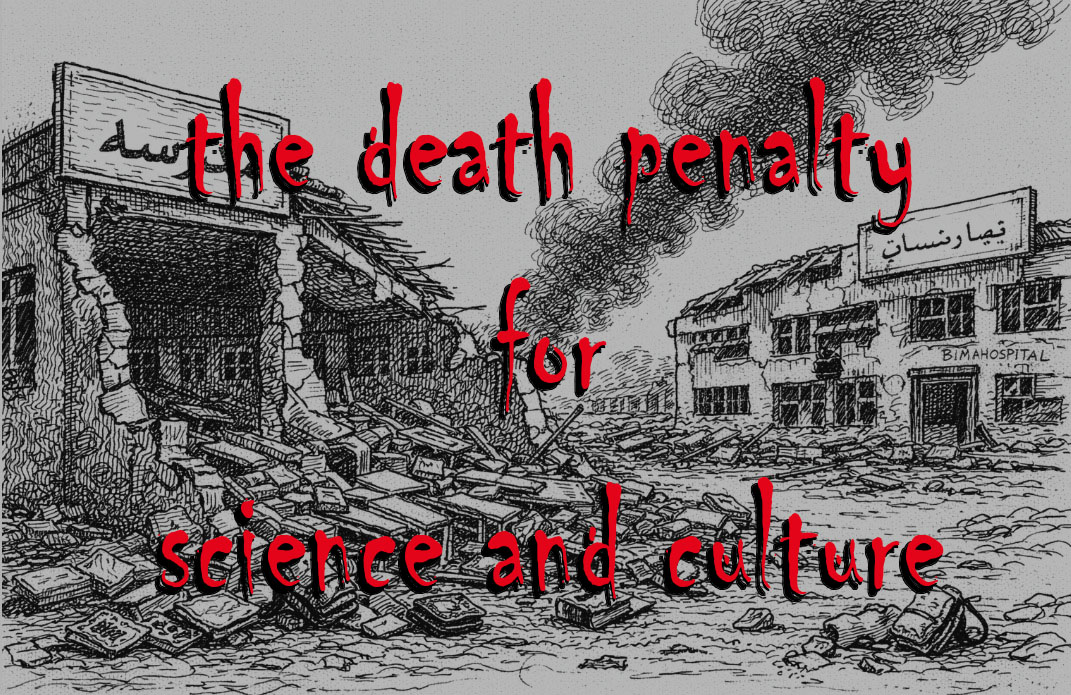
War is the death penalty of science and culture.
When a nation goes to war, it does not only send soldiers.
It sends its teachers, its mechanics, its engineers, its farmers, its artists, its students, its fathers, its daughters, its future.
It takes the years that could have built something and spends them destroying what someone else spent years building.
There are times when that cost cannot be avoided.
History is honest about that, even if we are not.
A people has the right to defend its home.
A nation has the obligation to survive.
There are moments when the choice is not between war and peace, but between war and disappearance.
That is not what most wars are.
Most wars are not fought because the people demanded them.
They are fought because leaders decide them.
Because alliances require them.
Because pride insists on them.
Because fear imagines them.
Because someone, somewhere, believes the cost will be paid by someone else.
The men who fight rarely start the fight.
I learned that a long time ago.
The man on the other side of the line usually wants the same things I want.
He wants to go home.
He wants his family to be safe.
He wants his work to matter.
He wants to live long enough to see the world get a little better instead of a little worse.
I have never believed that the people who work for their food every day are my enemies.
Not then.
Not now.
If you put us in the same room without uniforms, most of us would find more to agree on than to fight about.
We would talk about work.
About pay.
About our kids.
About the price of fuel.
About the things that break and the things that need fixed.
We would recognize each other.
War makes sure we never get that chance.
It turns neighbors into targets and strangers into threats.
It takes the slow work of science, of culture, of learning, of building, and replaces it with the fast work of destruction.
A laboratory becomes a crater.
A school becomes a ruin.
A bridge becomes a memory.
And when the war is over, if it ever really ends, someone has to start over with less than they had before.
That is why I say war is the death penalty of science and culture.
Not because it always kills them, but because it always takes years that can never be given back.
The founders of this country understood that danger better than we sometimes give them credit for.
They argued with each other about almost everything, but they agreed on one thing: war should never be easy to start.
They built a system that made decisions slow on purpose.
They divided power so no single man could send the nation into battle alone.
They forced debate, delay, and disagreement, not because they were weak, but because they knew how strong the temptation of war can be.
Even those who later stood on opposite sides of this nation’s history understood the cost of it.
Men who called themselves nationalists and men who called themselves confederates both believed, in their own way, that a people should govern themselves and defend their own ground, not spend their lives fighting wars that did not have to be fought.
We forget that lesson too easily.
A republic survives when its people remember that the government exists to serve them, not to spend them.
Service is honorable.
Defense is necessary.
Sacrifice is sometimes unavoidable.
But war should always feel like a last resort, not a habit.
Because every time we choose it, we are not only risking lives.
We are risking the work of generations.
We are risking the knowledge we have built.
We are risking the culture we claim to protect.
And we are asking men and women who would rather be building the world to spend their strength tearing it apart.
I have worn the uniform.
I do not always regret that.
But I will never pretend that war is anything other than what it is.
Necessary sometimes.
Tragic every time.
And always paid for by the people who were never asked if they wanted it.
On a Sunday morning, that seems worth remembering.