Lately I’ve been looking more closely at civic buildings.
Not the flashy ones designed to impress tourists, but the quieter ones—the buildings that were constructed because a community needed a place to conduct the work of public life. Courthouses, city halls, post offices, libraries. The physical framework of governance.
And once you start paying attention to those buildings, you realize something quickly: the best of them were built with tremendous confidence. They were designed to last.
Which brings us to a remarkable structure sitting quietly in our home county.
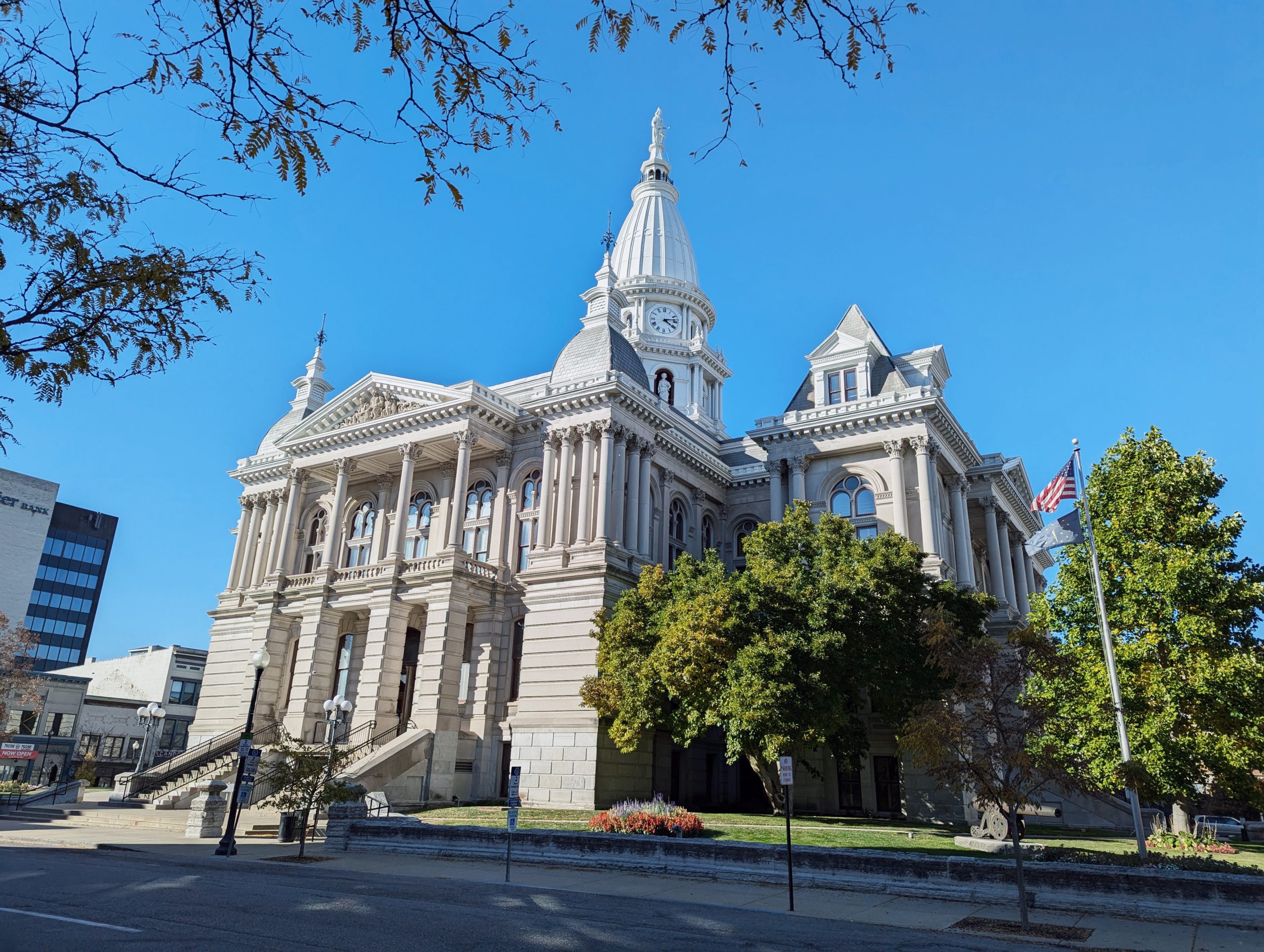
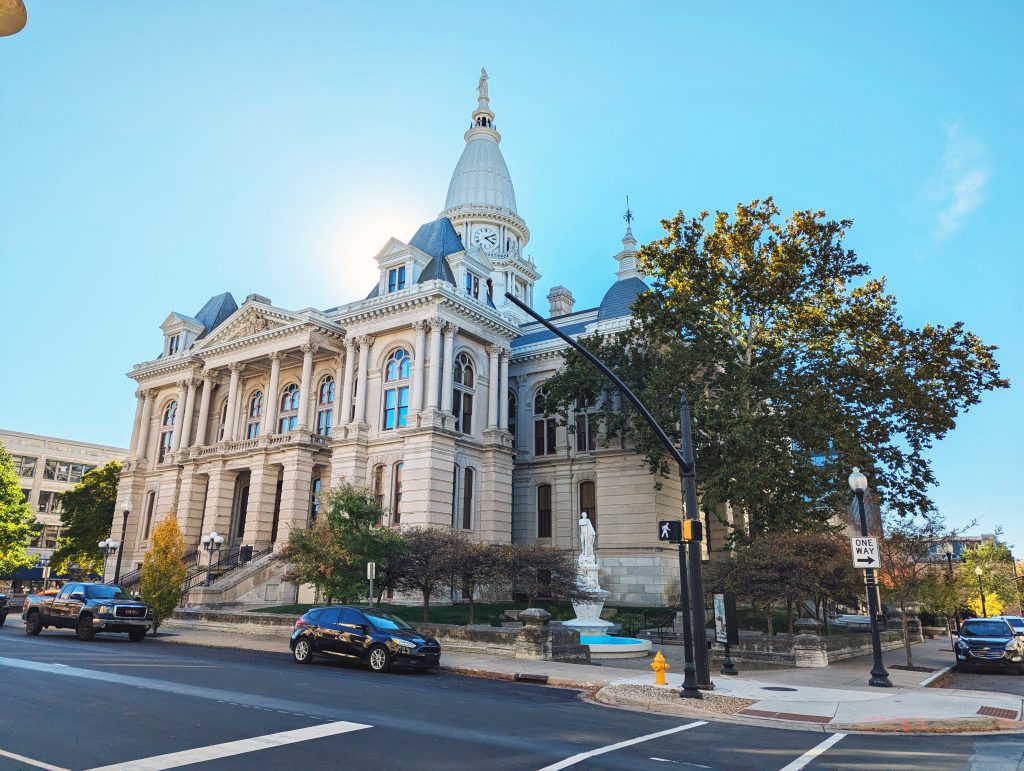
Just up the hill in the county seat stands the Cambria County Courthouse, located at 200 South Center Street, Ebensburg Borough, Cambria County, Pennsylvania.
It is one of the most architecturally ambitious civic buildings in western Pennsylvania—and like many of the best civic structures, it tells a story far larger than the town around it.
A County Seat on the Hill
The courthouse sits in Ebensburg Borough, the official county seat of Cambria County, Pennsylvania, a role the town has held since the early nineteenth century.
Ebensburg was deliberately selected as the administrative center because of its geography. Located along the ridge of the Allegheny Plateau, it offered relatively central access to the various valleys and industrial settlements that would later define the county. From communities such as Johnstown in Cambria County, Portage Borough in Cambria County, South Fork Borough in Cambria County, and Cresson Township in Cambria County, the courthouse hill at South Center Street in Ebensburg Borough became the place where disputes were settled, deeds recorded, and government conducted.
For more than two centuries, the legal and administrative life of the county has flowed through this location.
The building standing there today is the product of that evolving civic demand.
The Original Courthouse: 1880–1881
The present courthouse was constructed between 1880 and 1881.
It replaced an earlier courthouse that had served the county since the mid-nineteenth century. By the late 1870s, population growth and increasing legal activity made a larger and more architecturally significant building necessary.
The design was commissioned from architect M. E. Beebe of Buffalo, New York, who produced a courthouse rooted in the Second Empire architectural style—a style popular for government buildings in the United States during the late nineteenth century.
Second Empire architecture, inspired by French civic buildings during the reign of Napoleon III, emphasized dramatic rooflines, ornamental detailing, and a strong central massing meant to project institutional authority.
Key elements of that design included:
- Steep mansard roof forms
- Symmetrical wings
- Decorative dormers and cornices
- Tall, narrow windows
- A commanding central tower
The resulting structure was not simply a courthouse—it was a declaration that Cambria County had entered a period of prosperity and institutional maturity.
Expansion and Transformation
The courthouse did not remain static.
By the early twentieth century, Cambria County had grown dramatically. Industrial expansion in the valleys below brought population growth, economic activity, and a heavier judicial workload.
As a result, the courthouse underwent a major expansion in 1923.
This renovation significantly enlarged the structure and introduced the most recognizable feature visible today: the large central rotunda capped by a dome and clock tower.
The expansion blended architectural influences from Beaux-Arts and Classical Revival traditions, resulting in the monumental façade that now dominates the courthouse square.
The additions brought:
- A central rotunda
- Additional courtrooms
- Expanded administrative offices
- The prominent clock tower dome topped with a statue
- Classical columns and monumental entrances
Rather than demolish the earlier building, the expansion incorporated it into a larger and more imposing civic complex.
The result is the courthouse we see today—an architectural layering of nineteenth-century ambition and twentieth-century civic monumentality.
Architecture of Authority
Standing at the intersection near South Center Street and High Street in Ebensburg Borough, Cambria County, Pennsylvania, the courthouse was designed to command attention.
Several architectural elements accomplish this:
The Rotunda and Dome
The tall dome, visible from many approaches into Ebensburg Borough, anchors the entire building visually.
Courthouse domes in the United States were inspired by classical government architecture—most notably the United States Capitol Building in Washington, District of Columbia. They symbolized the idea that local law was part of a broader democratic framework.
The statue at the top of the dome represents Justice, reinforcing the building’s purpose even from a distance.
Classical Columns
The grand colonnades lining the façade reflect Beaux-Arts planning principles, which emphasized symmetry, proportion, and classical motifs.
Columns like these were meant to evoke ancient civic structures in Rome, Italy and Athens, Greece, reminding visitors that the rule of law traces its lineage through centuries of political philosophy and governance.
Monumental Staircases
The elevated staircases leading into the courthouse serve a symbolic function as well as a practical one.
In nineteenth- and early twentieth-century civic design, the act of ascending steps into a courthouse reinforced the idea that entering the legal system required a transition—from everyday life into the formal world of law.
A Training Ground for the Judiciary
The courthouse has also played a role in the broader legal history of Pennsylvania.
Many lawyers who began their careers practicing law in Cambria County, Pennsylvania eventually went on to hold important positions within the Commonwealth’s judicial system.
One notable example is John W. Kephart, who began his legal career in Cambria County before eventually rising to become Chief Justice of the Supreme Court of Pennsylvania in 1936.
Like many attorneys of his generation, Kephart’s early professional work unfolded in the legal environment centered around the courthouse in Ebensburg Borough, Cambria County, Pennsylvania.
The building therefore served not only as a venue for county governance but also as a training ground for members of the Commonwealth’s judiciary.
The Courthouse Today
Today, the Cambria County Courthouse at 200 South Center Street in Ebensburg Borough, Cambria County, Pennsylvania remains the operational center of county government.
Inside the building are:
- Courtrooms of the Cambria County Court of Common Pleas
- Administrative offices
- The county commissioners’ offices
- Records and clerk offices responsible for deeds, filings, and legal documentation
Citizens from across the county—from Richland Township in Cambria County, Westmont Borough in Cambria County, Portage Township in Cambria County, and Upper Yoder Township in Cambria County—continue to pass through its doors.
More than a century after its construction, the courthouse still performs the job it was designed for.
A Stoic Monument
Buildings like this often fade into the background of daily life.
They are so durable and so familiar that people stop noticing them.
But the Cambria County Courthouse in Ebensburg Borough, Cambria County, Pennsylvania remains one of the most significant civic structures in the region. Its architecture reflects a moment when communities invested heavily in buildings meant to express stability, permanence, and the rule of law.
And for those of us living nearby in our home county, it is easy to forget just how extraordinary that structure really is.
Until you stop, look up at the dome rising above South Center Street in Ebensburg Borough, and remember that institutions—like the buildings that house them—are meant to endure.