The Dead Hand: A Capitalist Case for Generational Reset
Thomas Jefferson, writing to James Madison from Paris in September of 1789, set down a sentence that most Americans have never read and that the country has spent two hundred and thirty-six years pretending he never wrote. The earth belongs in usufruct to the living. By usufruct he meant the legal right to use and enjoy a property you do not own outright — the right of a tenant, not a master. The land, in Jefferson’s framing, was held in trust. No generation owned it. Each generation borrowed it from the one that followed.
From that premise he drew conclusions that would terrify any modern wealth manager and that would have been entirely unsurprising to anyone who had ever borrowed a field, or a tool, or a sum of seed-money from a neighbor, knowing they had to give it back. No debt should outlive the generation that incurred it. No constitution should bind the citizens of a future republic who never consented to it. No claim of the dead should reach forward and bend the living to its purposes. Jefferson calculated, with the mortality tables of his day, that a generation lasted about nineteen years. Every nineteen years, he argued, the books should close. The debts should expire. The laws should be reaffirmed by the people who would actually live under them, or struck down. The dead, having taken what they took and built what they built, should release their grip on the future.
He lost that argument. Madison talked him out of it. Madison was the brighter of the two men by most fair measures, but here he was wrong — and his error was not in disagreeing with Jefferson but in failing to refine him. The right answer was not nineteen years; it was fifty, a span long enough to hold a working life and a child’s coming of age, short enough that no claim outlives its makers. And no inheritance, in either direction. Madison should have made that argument. He killed Jefferson’s instead, and the republic chose stability over renewal. We have lived for two centuries under the consequences of that choice. The dead hand has not let go. It has, in fact, tightened — and you can see it in any small town in this country, where the buildings are owned by entities that have no relationship to the people who walk past them and where the wealth of the place flows outward, year by year, to places no one can name.
This is the case for prying it loose. And it is, in spite of how it will sound to some readers, a capitalist case. The argument here is not that property is theft, or that markets are corrupt, or that wealth is suspicious. The argument is the opposite. The argument is that what we currently practice in this country is not capitalism. It is a hereditary aristocracy dressed in capitalism’s clothes, and it has been bleeding the actual capitalist promise — that every adult competes on the merit of their own labor and their own ideas — for as long as most of us have been alive.
The disease has two faces
Generational wealth and generational debt are not separate problems. They are the same problem viewed from opposite sides of a balance sheet. Both are mechanisms by which dead people, or near-dead institutions, reach forward through time to control the lives of people who weren’t born when the relevant decisions were made. A child born today in this country inherits a share of the national debt, a share of an asset price ladder she did not climb, a body of patent law that her great-great-grandfather’s contemporaries wrote to protect their interests, and a tax code built by the lobbyists of corporations older than her grandmother. None of this was her choice. None of it reflects her labor. All of it shapes what her labor can purchase and what her ideas can become.
The poor in this country are told, with great moral seriousness, that their position is a failure of personal effort, perhaps softened by some structural disadvantage they should work to overcome. The rich are told, with the same seriousness, that their position reflects ancestral virtue compounded by sound judgment. Neither story is true, and the dominant culture exhausts itself maintaining the fiction. You can see the strain on the faces of people who have to pretend, day after day, that the system is fair while watching every measurable indicator say otherwise.
The dollar, which is supposed to represent a unit of human labor, has stopped representing that. It cannot represent labor when the cost of housing reflects two hundred years of accumulated land rents, when the cost of medicine reflects patent monopolies on molecules discovered with public funding, when the cost of a basic adult life reflects compounding claims by people who died before any current worker was born. A janitor and a software engineer are both selling hours of their lives. The difference in what their hours buy is not, primarily, a difference in the value of their labor. It is a difference in how much of the dead hand each one of them is paying rent to.
The corporation as apex predator
If generational wealth is the disease, the modern corporation is its perfected form. A neighbor will die. A corporation will not. A neighbor is bound by the same mortality as you, and therefore is bound by some version of the same morality — the knowledge that he too will have to die and account for what he leaves behind. A corporation has no such constraint. The American corporation, as it currently exists, is generational wealth without even the inconvenience of a generation. It does not age. It does not pass through the moral and legal crucible of inheritance. It accumulates assets, patents, real estate, market position, and political influence on a timeline that no human being can match. It is the dead hand without the death.
This was not always the case, and a serious citizen should know this. In the first decades of the American republic, corporate charters were granted one at a time, by state legislatures, after public-interest review. They were time-limited — usually twenty or thirty years. They were purpose-limited — this canal, this bank, this turnpike, not “any lawful business.” They were revocable for cause. The legislature that granted a charter could, and did, pull it back when the corporation strayed from its stated public purpose. The phrase used in the charters themselves was the public good. It was a precondition of incorporation, not a marketing afterthought.
What we now think of as the corporation — the perpetual, general-purpose, rights-bearing entity that can hold property forever, sue and be sued like a citizen, spend money on political speech, and own other corporations in a recursive nesting of legal personhood — is a creation of the mid-nineteenth century at the earliest. General incorporation laws, which allowed anyone to obtain a charter by filling out a form, replaced the old legislative-grant system in the 1840s and 50s. Corporate personhood as a constitutional doctrine traces to an 1886 headnote in a Supreme Court case about railroad taxation. None of the people who wrote the Constitution would recognize the modern corporation as a legitimate entity. Many of them, Jefferson loudest among them, would consider it an abomination.
We are not, therefore, proposing radical surgery on a healthy patient. We are proposing the restoration of a body that has been overtaken by a malignancy it was not designed to host. The framers had a corporate framework. We replaced it with a tumor and kept the name.
What this has actually cost us
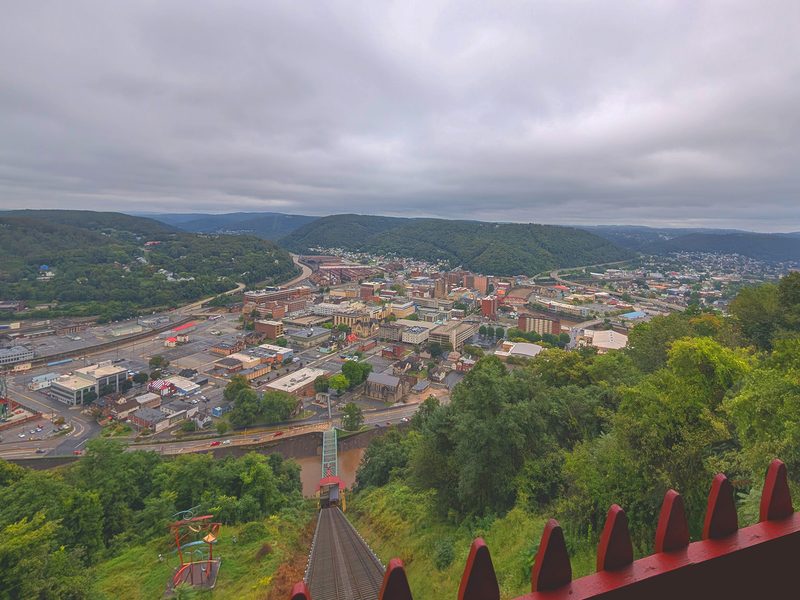
The asymmetry between human-timeline citizens and immortal-timeline corporations is not an abstraction. It is the reason Congress has just had a public conversation about whether its members should be permitted to engage in insider trading, on the grounds that one hundred seventy-four thousand dollars a year is not adequate compensation for the difficulty of their work — while the median American household makes a fraction of that and is told, with no apparent irony, that its difficulties are a matter of poor budgeting. It is the reason the actual labor of an actual worker in Johnstown, Pennsylvania, is competing in 2026 against patent monopolies, land titles, and capital structures whose origins predate the moon landing. It is the reason the political class can speak about its own enrichment as a self-evident entitlement and about working-class deprivation as a self-evident character flaw.
The dollar that the worker earns and the dollar that the dynasty receives are technically the same instrument. They are not, in any meaningful sense, the same thing. One has been earned by a living person in the present. The other is the compounding output of claims established by people who are no longer alive, defended by a legal system designed to honor those claims first and the living second. Until we say this out loud, no other reform matters.
The fix is older than the problem
What follows is not new. It is, in nearly every particular, a restoration of premises that were available to the founders and were chosen by Jefferson and rejected by Madison. The five points below describe what an honest application of the Jeffersonian frame would require. None of them is gentle. None of them is unprecedented. All of them, taken together, would return the United States to a recognizable version of the country it was designed to be.
Inheritance, capped. Above a generationally adjusted threshold — set high enough to bury a parent, settle their affairs, give an adult child a modest running start, and bury yourself eventually — inheritance is taxed at one hundred percent. The exact figure should be pegged to a moving human-scale benchmark like a multiple of median household income. The principle is simple: an adult may inherit a fresh start. An adult may not inherit a workforce, a portfolio of claims on other people’s labor, or a position in a hereditary class. Below the threshold, transfer is unimpeded. Above it, the books close at death.
Property is human. Title to land — actual, walkable, working land — and to physical property may be held only by living human beings, in their own names, with their own mortality attached. No corporation owns real estate. No trust holds a deed. No limited-liability shell, no offshore vehicle, no perpetual foundation has title to anything. If a property cannot be held in the name of a living person who can die, the title is void. This single rule dissolves the corporate landlord, the dynasty trust, the shell-game tax shelter, and the perpetual royalty stream in one cut. It is recognizably Jeffersonian: property is a relationship between a living person and a thing.
Intellectual monopoly is not property. The framers understood this and the language survives in the Constitution itself, which authorizes Congress to grant patents and copyrights only “for limited times” to “promote the progress” of useful arts. Modern intellectual property law has inverted the framers’ premise: the monopoly is presumed permanent and the public domain is the exception. The restoration here is to recognize what IP actually is — a state grant of monopoly, paid for by the restricted freedom of everyone else — and to retire the institution. Ideas, once released, are not property. Adam Smith despised monopolies and Jefferson said an idea released into the world was like fire passed from one candle to another: undiminished in the giving, illuminating where it spreads. The current IP regime is among the most aggressively anti-capitalist institutions in American law. A real capitalist should hate it.
Corporations, returned to charter. No more general incorporation. No more perpetual existence. No more “any lawful purpose.” A corporate charter is granted by a public body, for a defined purpose, for a defined time, revocable for cause when the corporation drifts from the public good. The charter expires. The corporation winds down. The assets revert to the partners or the public, depending on the original terms. If the enterprise still serves the public good at expiration, a new charter may be sought on its merits — not as a renewal but as a fresh case. Republicans hate the modern corporation because it has captured the regulatory apparatus and crushes their constituents. The left hates it because it concentrates wealth and externalizes harm. There is, in this one place, a genuine cross-political consensus available to anyone willing to claim it.
The permanent belongs to everyone. Some things have to exist on timescales longer than a human life. The electrical grid. Water systems. Certain kinds of scientific infrastructure. The atmosphere. Where a function genuinely cannot be performed by time-limited human partnerships or successive chartered corporations, the function belongs to all citizens equally, in fractional ownership, with dividends distributed pro rata. Not state-owned. Not corporate-owned. Citizen-owned, like the Alaska Permanent Fund generalized. If a thing must be permanent, it must belong to the public that lives with its permanence.
How the transition actually happens
The objection that will arrive first is that this is utopian — beautiful on paper, impossible in practice, the sort of proposal a person makes when they will not have to clean up the consequences. Fair enough. Here is the answer.
The transition is immediate and transitory. The poor in this country need real relief and they need it now, before they conclude — correctly — that the system as currently configured will never deliver it, and burn the structure to the foundation. The wealthy will be angry. They will not, in any material sense, be hurt. A person sitting on three hundred million dollars in assets when the books close at death is not made poor by the closing. He is made finite, which is a thing he was already, biologically, and which he had paid considerable money to pretend otherwise about.
The mechanism is sequenced but compressed. Pass the framework. Announce the implementation dates. Give the existing structures a defined window — months, not decades — to reorganize their affairs into compliant forms. Living humans take title to property currently held by their entities. Corporations apply for chartered status under the new framework or wind down. Patent holders are paid out at a declining schedule and their claims expire. Inheritance above threshold transfers to a public fund that capitalizes the new framework — the fractional citizen ownership stakes, the relief mechanisms for those drowning in the old debt regime, the transition costs of the chartered corporate replacements.
This is not gentle. It is also not violent. It is the legal recognition of a fact that is already true: the dead do not own the living, and pretending otherwise has costs that the living are no longer able to bear.
This is not socialism
The instinct of the defenders of the current regime will be to call this socialism, and many of the people who agree with it will accept that label gratefully. Both are confused.
Socialism, in its conventional meanings, places productive property in the hands of the state, or of a collective managed by the state, on behalf of the public. Nothing proposed here does that. Property remains private. Labor remains compensated by exchange. Markets remain the primary mechanism by which production is allocated. What changes is that property is restored to its proper relationship with mortality, that monopoly grants from the state are recognized as the temporary expedients they were always supposed to be, and that the corporate form is returned to its public-purpose origins.
The result is more capitalist than what we currently have, not less. An adult competes against other adults on the merit of their own labor and their own ideas, without having to outrun two centuries of accumulated dead-hand claims. A new firm competes against existing firms on the basis of what it can build, not on the basis of which incumbents have the patent portfolio and the legal staff. A worker’s hour of labor purchases what an hour of labor is worth, not what an hour of labor is worth after the rents have been extracted. The dollar starts representing labor again because there is no longer a parallel claim system grinding against it.
What this dismantles is not capitalism. What this dismantles is hereditary aristocracy, monopoly rent extraction, and the corporate-immortality loophole through which the dead control the living. Capitalism is what survives when those three things are removed.
Coda
Jefferson lost his argument with Madison and the country has paid a slow, compounding price ever since. We have arrived, after two centuries of compounding, at a place where the median citizen cannot afford a basic adult life on a full-time wage, where the political class openly debates its own entitlement to insider information, where a child is born into a debt she did not contract and an asset price structure she cannot climb, and where the dollar — the unit by which we measure the value of a human hour — has been bent so far out of true that we no longer recognize the shape it is supposed to have.
The earth belongs in usufruct to the living. The dead have had their turn. They built what they built and took what they took and the living owe them remembrance and gratitude. The living do not owe them rent.
It is time to close the books.