Sit down a minute. September third means something.
Nineteen sixteen. Four brotherhoods — engineers, firemen, conductors, trainmen — around four hundred thousand men voted to authorize a walkout. Date was set for the fourth. Labor Day, of all things. The railroads had said no to eight hours, so the men set a date and let the date sit there where everybody could see it.
Wilson went up to Congress on the twenty-ninth of August and asked them to write the eight-hour day into law. The House moved on it. The Senate moved the day after. He signed it on the third. The strike got called off before the whistle blew on the fourth.
Now notice what happened there, because folks skate right past it. There was no walkout. No trains stopped. No windows broke. What moved the federal government of the United States inside of a week was a date on a calendar and four hundred thousand men who meant it.
That’s the lesson, and it’s older than the law.
Thirty years earlier, May of ’86, men walked off in Chicago asking for those same eight hours. You know how that finished. A bomb in Haymarket Square, a trial with more verdict in it than evidence, and four men on a gallows. That was the price of wanting eight hours in 1886.
Here’s the thing about a bill like that, though — everybody keeps a copy. The government kept one too. It had already run the numbers on breaking a rail strike in ’77, when troops fired on strikers and Pittsburgh burned. Ran them again at Pullman in ’94, with an injunction, soldiers, and Gene Debs in a cell. Each of those went in the books as a win. Each cost more than anybody cared to spend a second time.
So by 1916, with a war going in Europe and American freight running toward the coast, the men in that room could do arithmetic. The brotherhoods didn’t have to raise their voices. They stood there holding thirty years of receipts.
That’s leverage. Leverage is knowing what your work is worth to the man who needs it done, and staying calm while you say so.
Now the part that lives in my house.
My father carried bags in a Pullman car. That law didn’t touch him. The four brotherhoods didn’t take men like him — wouldn’t have taken him at all. He watched engineers and conductors get eight hours written into federal statute while he worked whatever hours the car required. He waited until 1937 for a contract, and the man who finally got it for him is the man I’m named after.
So when I call September third a turning point, mind the word. It turned. It didn’t arrive. Haymarket showed what wanting it cost. Sixteen showed that the government would put it in writing once refusing got expensive enough. And 1938 — the Fair Labor Standards Act — is when the rest of us got counted, twenty-two years down the road, with farm hands and domestics left off that list besides.
Fifty-two years from a gallows in Chicago to a federal standard, and parts of the shop still waiting on the mail.
Somebody’s going to tell you the eight-hour day drags on production. I’ve heard it across three decades of shop meetings, and it tends to turn up the same week the schedule gets tight. Ask it back flat: production of what, and for who? Eight hours got signed because production stopped mattering the second the trains quit rolling. Your labor is the production. The hours are what the country agreed to pay for it, on an installment plan, and men were buried making the down payment.
You don’t hand a thing like that back because a quarter came in soft.
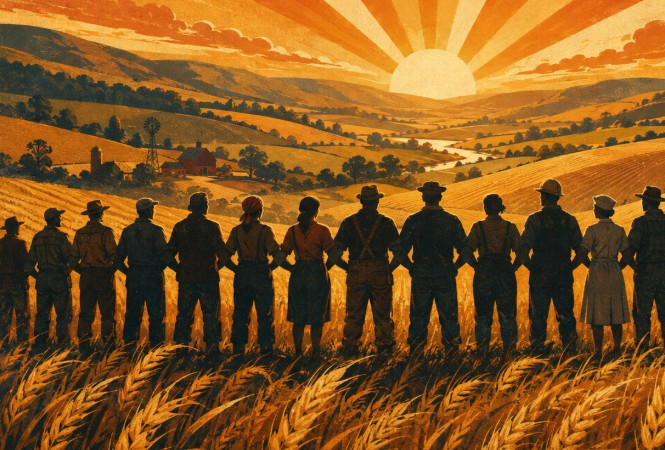
Measure twice, act once. Check your measure, then check your motive. And remember what those four hundred thousand did on the third of September: they stood in one place, together, and the country moved around them.
My old man put it this way. We carried other folks’ baggage, son. Never their shame.
Now you know, Jack.