
Editors Note:
I went a little off the beaten path with today’s thought experiment.
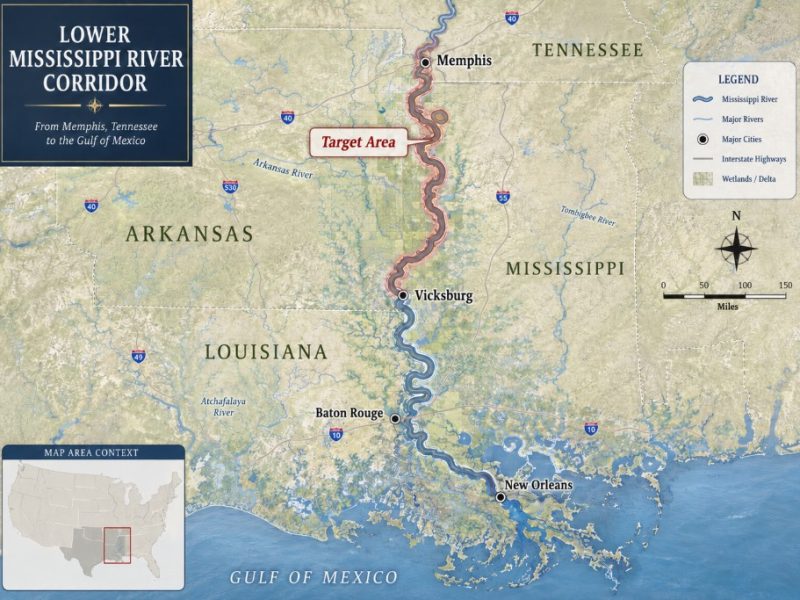
I started with a real-world problem—the growing Dead Zone in the Gulf of Mexico—and a proposed solution we’ve been developing called the River Refugium Project. It’s about using hydroponics to clean up river systems and spark local industries. But once I started imagining the communities that might grow around this, things got… bigger. Way bigger.
This piece evolved into a kind of love letter to a reimagined Mississippi River Valley—part Venice, part Amsterdam, part chinampa-farming wonderland. It sounds wild at first. But when you start picturing it—the floating markets, the boat rides, the clean water, the new jobs—it actually starts to feel obvious. Why wouldn’t we want to live this way?
So this is me and Brobot, taking a climate crisis and flipping it into an opportunity. Call it utopian, call it weird, or call it overdue. Just read it and see if your wheels start turning too.
From Floods to a Floating Future: Reimagining the Mississippi Valley and Gulf Coast
Part 1: From Drowning Delta to Canal Paradise
The Mississippi River Delta is drowning. Along the Gulf Coast, land is vanishing into the sea – Louisiana historically lost wetlands at a rate of roughly one football field per hour. Sea levels creep higher each year, raising the baseline for storm surges. Warmed by climate change, Gulf hurricanes are growing more ferocious, packing heavier rains and devastating winds. The mighty Mississippi, corseted by aging levees, now delivers “500-year” floods far more often than once in 500 years. Those very levees – built to protect – have in some cases worsened flood risk by bottling up the river’s flow. Across the Mississippi River Valley and Gulf Coast, communities feel perpetually under siege from rising waters and monster storms.
The environmental toll is just as alarming. Each summer, a sprawling “Dead Zone” blooms in the Gulf of Mexico, an oxygen-starved band of water – at times the size of New Jersey – where fish and shrimp struggle to survive. Fertilizer runoff from millions of acres of Midwestern farmland washes downriver, feeding algae blooms that suck oxygen from the Gulf and suffocate marine life. Fishermen who once hauled abundant shrimp from Louisiana waters now find smaller catches and stunted sizes, as the hypoxic zone disrupts the food chain. Upriver, the source of this problem is also a symptom of economic strain: huge swaths of farmland, often of marginal value, are doused in chemicals to maintain yields. Decades of intensive farming have left soil depleted and waterways polluted. When heavy rains hit the Midwest, nutrient-laden runoff pours into the Mississippi’s tributaries, ultimately fueling the Gulf’s dead zone. It’s a vicious cycle – low-value land overproduced with high inputs, leading to polluted water and collapsing fisheries downstream.
Yet out of this sinking, swampy crisis, a bold new vision is emerging. Imagine the flat deltas and bayous transformed into a “canal paradise” – a living landscape that embraces water instead of fighting it. Picture the lower Mississippi Valley a few decades from now: a vibrant mosaic of winding canals, floating gardens, and bustling waterways, something like a hybrid of Venice and Amsterdam, infused with the spirit of ancient America. Instead of levees holding an angry river at bay, there are broad channels and spillway-parks that welcome the floods, guiding the excess water into expansive lakes and wetlands. City streets in low-lying towns have given way to scenic canals lined with homes and markets. Waterfront living is no longer just for the rich or the reckless – it’s the new normal, with neighborhoods designed around canals where kids kayak to a friend’s house and commuters hop on sleek water-buses.
In the future Gulf Coast, embracing water could turn towns into lively canal cities, reminiscent of Xochimilco’s floating gardens and boat-filled waterways.
This vision draws on both Old World and New World inspiration. Think of Venice’s charm – centuries-old buildings rising from lagoons, connected by footbridges and gondolas. Think of Amsterdam, where canals double as roads and everyone owns a boat as casually as a bicycle. Now add an even older innovation: the chinampas of the Aztecs – those legendary “floating gardens” of Lake Xochimilco. The Aztecs built small rectangular islands of mud and vegetation, separated by canals, and grew astonishing yields of crops on them. These chinampa farms were so fertile that they fed an empire, and they created a lush waterworld where canoes glided between plots of corn and flowers. In our imagined canal paradise, the Mississippi Valley becomes a 21st-century echo of that idea – farms on fertile floating platforms, fed by the river’s nutrients, and woven into the very fabric of new canal communities. Residents and visitors alike could paddle through a patchwork of garden islands teeming with vegetables and flowers, much like tourists today float through the remaining chinampa canals of Xochimilco on bright trajinera boats.
In this future, tourism thrives alongside everyday life. The region’s very struggle – water – has become its selling point. Instead of fearing the next flood, people celebrate the high water season with festivals on the lakes that temporarily expand; instead of abandoned, flood-prone lots, there are waterfront cafés and floating markets. Imagine music echoing over the bayou as festival-goers arrive by boat, tying up at a dock where cotton fields once drowned in the spring. A new regional pride takes root: the people of the Mississippi delta are no longer “the flooded out” – they are stewards of an American Venice, protectors of a uniquely beautiful water culture. The economy blossoms with canal-based transport and recreation. Houseboat bed-and-breakfasts welcome travelers seeking a taste of this waterworld. Historic river towns like Natchez or Memphis turn their waterfronts into attractive harbors buzzing with flat-bottom tour boats and solar-powered water taxis. Coastal fishing communities, once crippled by the dead zone and storm damage, reinvent themselves as hubs of sustainable aquaculture and eco-tourism, where visitors can catch shrimp in the morning and visit a floating greenhouse in the afternoon.
Crucially, this romantic vision isn’t just about lifestyle – it’s about resilience. A paradise that floats can also bend with nature’s punches. Canals and spillways can relieve pressure on the river, giving floods somewhere to go other than straight through city streets. Wetlands and broad water channels can absorb storm surges from hurricanes, taking the brunt of the energy before it reaches towns. Homes are built amphibiously – designed to rise on stilts or floats when water comes, rather than be gutted by it. The entire region functions like a giant set of lungs for the river and the sea, breathing water in and out in a controlled rhythm. During heavy rains, excess water is channeled into designated basins and canals, spreading out harmlessly like it once did across natural floodplains. In droughts, the network of canals can be managed to store and redistribute water, ensuring navigation and irrigation continue even when the Mississippi runs low. It is a dynamic, living infrastructure – part natural, part engineered – that not only protects the population but enriches it. By treating water as a friend rather than an enemy, the Gulf Coast and Mississippi Valley could flip the script from disaster to prosperity.
Visions of “America’s next Venice” may sound fanciful, but they are grounded in real examples and time-tested wisdom. The Dutch have long made peace with living below sea level by crafting cities of canals and ingenious flood control – their approach now includes creating “Room for the River” so floods can spread out safely. The idea here is similar: give the water room and it will reward you with stability (and maybe even a great waterfront view). Indigenous and ancient peoples like the Aztecs proved that wetlands can be unbelievably productive when managed well – a lesson we desperately need as traditional farmland falters. By merging modern engineering with ecological design, the Mississippi-Gulf region can transform from a place people feel they have to escape into a place they aspire to live. It’s a future where bayous bustle with life and livelihoods, where floating farms and canal towns turn environmental crisis into a cultural and economic renaissance.
One thought on “Reimagining the Mississippi River Valley”
Comments are closed.