Goodbye, Civilization — And Thanks for the Training
The moon gets hit Wednesday morning. Some of us have been ready for this since 1980.
At 2:35 on Wednesday morning, a discarded piece of a SpaceX Falcon 9 is going to hit the moon at 5,400 miles an hour — seven times the speed of sound, forty feet long, ten thousand pounds, aimed at nothing in particular near Einstein Crater on the side that faces us. It has been drifting since January of 2025, when it did its actual job and put two private landers on their way. Then it was done. Nobody came back for it. Nobody was going to.
Move fast and break things. This week the things include a celestial body.
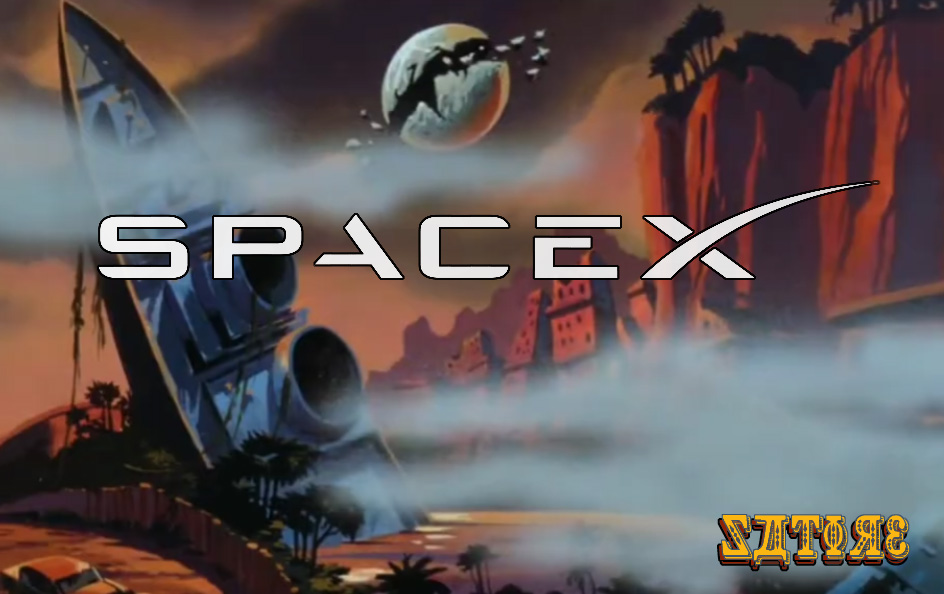
I want to be clear that I am not worried, and neither should you be, because a substantial portion of the American population received extensive childhood training for precisely this scenario and we have been waiting forty-six years for someone to ask. I refer to Generation X. I refer to the curriculum. I refer to Thundarr the Barbarian, ABC, Saturday mornings, October 1980, created by Steve Gerber with production design by Jack Kirby, produced by Ruby-Spears for Warner Bros. — which is to say, by men who understood that if you are going to end the world in front of an eight-year-old eating dry cereal out of the box at seven in the morning, you owe that child a good-looking apocalypse.
The premise: in 1994, a runaway planet passes between the Earth and the moon. The moon splits in half. Civilization ends. Two thousand years later, humanity has reorganized into wizards, mutants, and barbarians picking through the vine-covered ruins of Manhattan, and our hero rides out of the wasteland with a princess and a seven-foot Mok named Ookla, who cannot speak English and does not need to.
Nobody consulted us about this. It simply arrived, between the cereal ads, and it lodged. An entire cohort of American children absorbed the collapse of industrial civilization as a setting. Not a fear. A setting. With a theme song.
And I would like to report that we retained it. We are, as a generation, the only demographic that has ever been handed a functioning society and privately thought, sure, but what’s the over-under. We were raised by television and a house key on a shoestring. We were told the ozone layer was leaving. We did duck-and-cover drills for a war that never came and then got a recession every eleven years like a subscription. We are fine. We have been rehearsing.
So allow me to lay out what the curriculum says to expect.
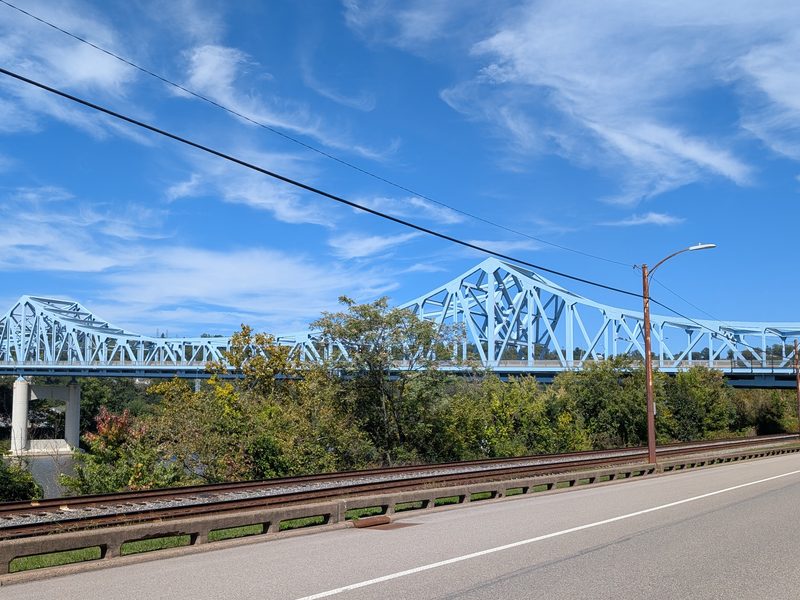
Expect the freeways to go first, and to stay. Kirby’s ruins were never rubble. They were recognizable — half a suspension bridge still standing, an interstate ending in mid-air, a car on the shoulder with nobody in it. The lesson embedded in every establishing shot was that infrastructure outlives the institution that built it. The road remains long after the department that maintained it has ceased to exist. Anyone who has driven certain stretches of Pennsylvania will find this an easy adjustment. Some of us are already living in the establishing shot.
Expect a hard divide between the people who can run the old machinery and the people who worship it. Every third episode turned on some wizard who had found a working piece of pre-collapse technology, did not understand it in any respect, and used it to rule a valley and demand tribute. The show presents this as fantasy. Your utility bill presents it as Tuesday.
Expect to walk. Expect to know your neighbors, on the grounds that the alternative is being eaten by one. Expect that the most important person in the settlement is whoever knows how to fix the pump, and that this person will finally, at long last, be paid what they are worth, mostly in fish.
Now the adjustment for scale.
I regret to report that Wednesday may fall somewhat short of the runaway planet. The impact carries the energy of roughly three tons of TNT and should leave a crater about eighty-nine feet across and sixteen feet deep. On a body that has been eating meteors for four billion years, this ranks between a pothole and a divot. The flash will last under a second and will likely be too faint to see. NASA’s Lunar Reconnaissance Orbiter and South Korea’s Danuri will take before-and-after photographs, and Danuri will pass within a mile or two of the rocket about two minutes before it lands, which is the single coolest fact in this entire affair and the only one that made me sit up.
The moon will not split. There will be no wizards. Ookla is not coming. We were promised a Sun Sword and we are getting a dent.
Which brings me to the part that is actually worth your anger.
The cartoon at least had the decency to be an accident of physics. A rogue planet wanders through, nobody could have stopped it, and the survivors get two thousand years and a decent skyline out of the deal. What we have instead is a piece of industrial equipment that is going to strike another world because steering it somewhere harmless was not worth the money.
That is not a reading. That is the documented finding. The people who track these objects have said plainly that a nudge at the right moment would have put the stage into orbit around the sun, where it could drift until the heat death of everything, bothering no one. The nudge takes fuel. Fuel is mass. Mass is money. The mission was over, the payload was delivered, the contract was closed, and the stage became a rounding error moving at five thousand miles an hour.
So it goes over the side. And here is the arithmetic that ought to stick in your throat: the disposal burn is the cheapest line item in the entire enterprise, and it is the one that got skipped. Not because anyone couldn’t afford it. Because nothing happens to you if you don’t.
This is the second dead rocket known to have hit the moon by accident. The first was a Chinese stage in 2022, which had the courtesy to do it on the far side, where nobody has to look. We get the near side this time. Face up. Visible from your porch with a decent telescope, a permanent hole in the object that every human culture that has ever existed has used to mark time, put there by a company that did not want to spend the fuel.
When you are broke you throw the can out the window and somebody sees you do it. When you are rich you shit on the moon and it’s a press event.
I have spent a lot of years now looking at what people leave in rivers. Tires. Water heaters. Whole vehicles, going to rust in six feet of water. Every one of them is the same decision, made by somebody who determined that disposing of a thing properly was a cost they were entitled to hand to whoever came next. The Conemaugh is a ledger of that decision, written in steel, and we are still paying the balance.
The logic does not change when you move it three hundred thousand kilometers up. It only gets a better press release, and a much bigger creek.
So no, we are not getting the Thundarr future. No split sky, no wizards, nothing you could build a religion around. What we are getting is the maintenance apocalypse — the slow accumulation of everything nobody was paid to put away, in orbit and in the water behind your house, until one day somebody has to live in the middle of it and will not have the faintest idea who to bill.
Set an alarm for 2:35 anyway. Eastern Pennsylvania has a good view. It seems right to watch.
Lords of light.