There is a problem that appears every time human beings attempt to protect something fundamental.
We try to define it.
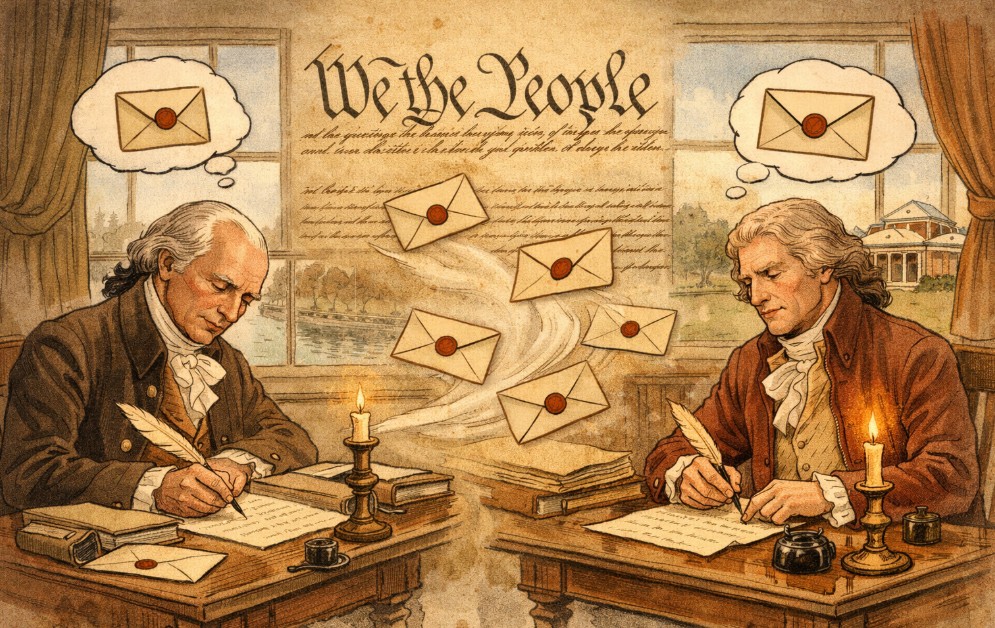
We write it down. We put borders around it. We name it carefully, believing that names create safety — that if a principle can be captured precisely enough, it can be defended against erosion.
History suggests otherwise.
The moment a thing is fully named, it becomes negotiable.
The Enumeration Problem
Rights, freedoms, and human dignity are often discussed as if they were objects that can be listed, cataloged, and clarified until confusion disappears.
But lists create limits.
When something is enumerated, everything not included begins to feel optional. What was once an unquestioned condition of being human slowly becomes something debated, interpreted, balanced, and eventually trimmed.
This is not usually done with malice. It is simply how systems operate.
Law seeks clarity. Institutions seek definitions. Administrators seek boundaries they can manage.
The result is predictable:
what begins as protection slowly becomes categorization.
The Drift of Meaning
Over time, words change.
“Rights” shift from assumed principles to negotiated allowances. Interpretation layers over interpretation until the original intent thins into abstraction.
Every generation believes it is preserving the framework while quietly adapting it to immediate concerns.
The change is gradual enough that almost no one notices it happening in real time.
Only later, looking backward, does the narrowing become visible.
What Inalienable Actually Means
The idea of something being inalienable implies that it cannot be granted — and therefore cannot be revoked.
It exists prior to government, prior to agreement, prior even to law itself.
That is an uncomfortable idea for institutions, because institutions function by defining and managing categories.
To acknowledge something beyond definition is to accept limits on power.
So the impulse emerges again and again: clarify, refine, reinterpret.
And each refinement risks reducing what was meant to remain whole.
The Modern Question
The pressure to define personhood is no longer theoretical.
As technologies evolve, society begins asking whether systems, platforms, or artificial intelligences should occupy moral or legal categories traditionally reserved for humans.
This is presented as progress, as modernization, as adaptation to new realities.
But underneath the debate is an older question:
what happens when the definition of personhood becomes flexible?
If the category expands too far, it may stop protecting the beings it was originally meant to safeguard.
The Cost of Over-Definition
Every era believes it can perfectly engineer fairness through precision.
Yet the more precise the language becomes, the more opportunities emerge for interpretation, exemption, or limitation.
What begins as clarity often ends as complexity — and complexity favors those with power and resources to navigate it.
Ordinary people rarely experience rights as philosophical ideals. They encounter them in moments of friction, when something has already gone wrong.
By then, the conversation is rarely about principles. It is about boundaries.
A Warning
None of this suggests abandoning law or structure.
Civilizations require shared agreements.
But there is a difference between describing a principle and containing it.
Some things function best when understood as foundations rather than frameworks — truths assumed rather than endlessly adjusted.
The trouble begins when naming becomes an act of control rather than recognition.
Closing
My grandmother used to say that some things are strong precisely because we do not try to hold them too tightly.
Perhaps freedom works the same way.
Perhaps the more carefully we try to define what should never be limited, the easier it becomes to shrink.
And perhaps the real challenge is remembering that not everything valuable can be improved through refinement.