A Bright Meadow Group tour of Johnstown, for people who build things
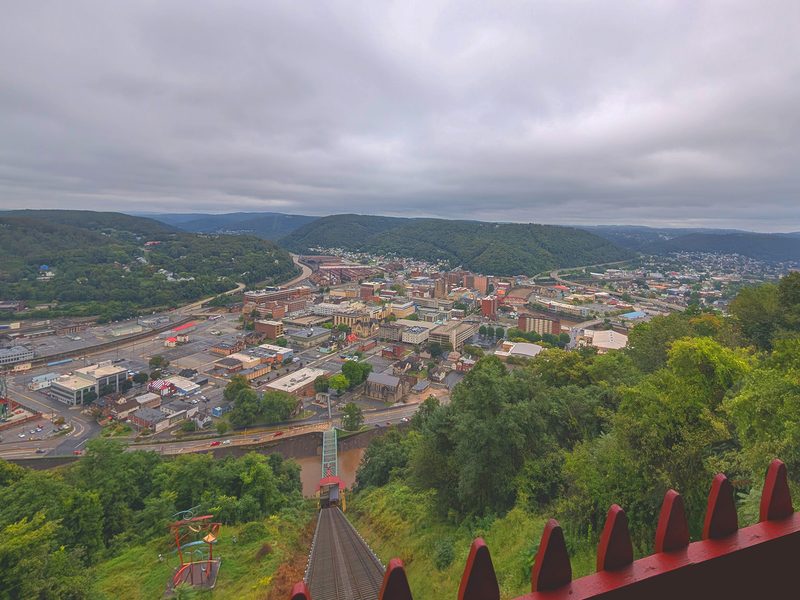
Come into Johnstown on Route 56 and the road does the selling. The ridges close in on both sides like cupped hands, green in July and rust-gold by late September, and at the bottom of them sits a city wearing the clothes of a much bigger one.
In 1920, about 67,000 people lived in Johnstown. Fewer than 19,000 live here now. The water mains, sewer lines, power grid, rail and roads were built for the bigger town, and they’re still in the ground, paid for and underused. It’s a bit like buying a house and finding a finished basement, a two-car garage and a commercial kitchen the last owners never mentioned. Around that sits a hundred-mile ring of cheap land, timber, stone, water, and people who know how to make things.
We think Johnstown is on its way to becoming a destination, the kind of mountain town people plan a vacation around and then start browsing house listings on the drive home. Austin was a cheap place with good music and good scenery before it became Austin. The people who bought land early there are the ones who remember that.
Bright Meadow Group consults for developers and investors looking at this region. We work in three steps: Observe, Design, Intervene. What follows is the Observe step, written as a tour. Each stop points toward a development path we see coming and the kind of project that fits it.
The winds
Several forces are pushing on Johnstown at once.
Manufacturing. It’s picking up, much of it tied to defense work. Those contracts follow federal budgets, and budgets move.
Public investment. The city just finished an $8 million rebuild of Central Park. A Main Street revitalization project is lined up behind it. The 2026–27 state budget created a Residential Revitalization Keystone Opportunity Zone written specifically for Cambria County and Johnstown: 300 acres countywide, 50 of them inside the city, eligible for state tax exemptions and credits.
Blight clearance. The city has surveyed its blighted buildings, flagging 147 for immediate demolition and another 257 for removal within the year. That’s ground being cleared.
Tourism. This is the wind we’d build on. The ridgelines and the history don’t need a contract renewal.
Stop one: The Galleria
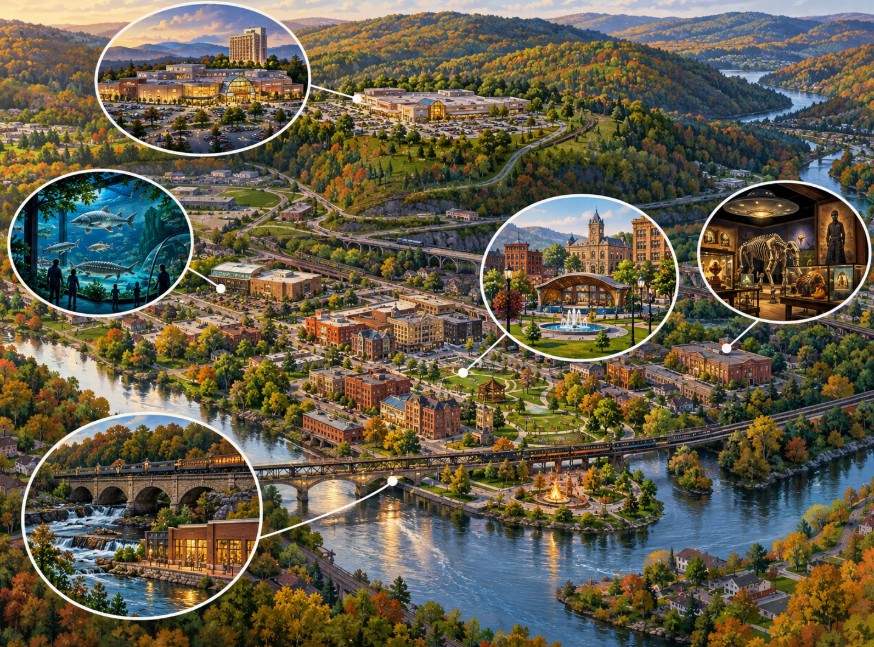
Start at the top, at The Johnstown Galleria in Richland Township. Stand in the parking lot on a clear evening and look out over the valley. Then keep reading, because the view is only half of what’s happening up here.
Leo Karruli bought the Galleria at an online auction in 2022 for $3 million. He grew up in a poor village in communist Albania, left for Italy in 1991 when the regime fell, worked in restaurants, and eventually made it to America. When he took over the mall, he didn’t wait for a national chain to rescue it. He opened the doors to local entrepreneurs and branded the place the “First Small Business Mall Ever,” hosting startup storefronts and giving them room to find their footing. He took over the Italian Oven and has been seen serving pasta himself. He has been repairing the private access roads that previous owners let crumble. Earlier this year his tenants held a night market partly to thank him. A Pitt-Johnstown marketing class is turning the old Hollister space into a co-working center for remote workers and new businesses. There’s an arcade, a retro roller rink, and a food court that reads like a world map.
Karruli asked the public and entrepreneurs to bring him ideas. This article is one of them, and he’s the reason we wrote it. A man who fights for a mall that other owners walked away from deserves investors who show up with plans.
Picture this. The Galleria’s anchor boxes sit under layers of separate ownership, and some of that property is in rough shape. Now picture a hotel of ten floors or so on that hilltop. By Johnstown standards that’s a skyscraper, and the rooms above the third floor would face a view people pay extra for in the Poconos. The rooms would sell on the view alone, before any tourism push. Guests would walk out the lobby into a mall that already runs on restaurants and entertainment, and the mall would stay full because of them.
With a tourism push behind it, the hilltop turns into base camp for the region: trails, rivers, festivals, ski slopes within an easy drive. Eventually someone builds a taller hotel next door and blocks your view. That’s the good-problem version of this plan, and the first builder gets to enjoy the view for a good while before it arrives.
Stop two: Downtown
Drive down the hill into the city. Central Park reopened this month after a year of construction, with:
- a new pavilion and an amphitheater
- a fountain
- a monuments walkway
- utility hookups that let several events run at once
A downtown bookstore owner called the reopening a reboot. The Main Street project follows next year.
Downtown is where visitors staying on the hill need a reason to come down. So we’d build reasons.
Stop three: The Point and the Stone Bridge
Walk to Point Park, where the Stonycreek and the Little Conemaugh meet to form the Conemaugh. The eternal flame here burns for the dead of 1889.
On May 31 of that year, the South Fork Dam gave way fourteen miles upriver. More than 2,200 people died. The wreckage piled up against the seven stone arches of the Pennsylvania Railroad bridge just downstream and burned for days. The Stone Bridge still stands, still carries trains, and lights up at night. The existing Johnstown Flood Museum, run by Heritage Johnstown, tells that story, and it belongs at the center of any tourism plan for this city.
The ground along the levees near the bridge sits underdeveloped. We see a promenade there that ties the museum, the Point, the bridge overlook, the festival grounds, and Cambria City into one walkable loop. The full design is in Johnstown’s River Promenade.
Development paths: riverfront hospitality, food and retail, event space.
Stop four: The museums Johnstown hasn’t built yet
A city with this story should have more places to tell it. Bright Meadow Group has published design work on several of them.
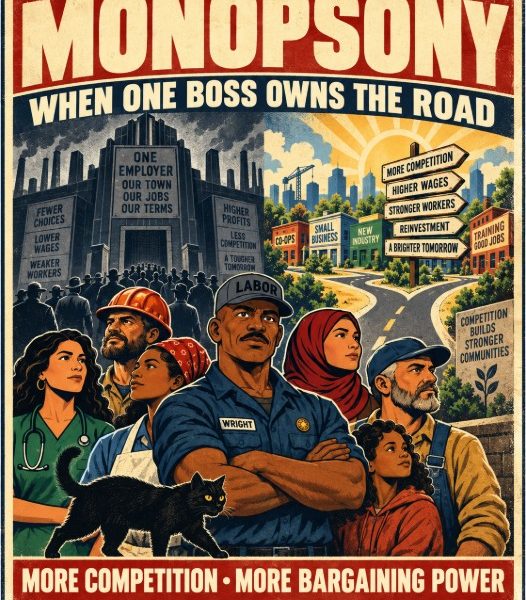
The Johnstown Labor History Museum. The flood has its museum, and the immigrants have their exhibit at the Heritage Discovery Center. The work that built the town is still waiting for one. The proposal is in The Johnstown Labor History Museum.
Interactive cultural museums. Cambria City has been called the Ellis Island of Johnstown. Germans, Irish, Poles, Slovenians, Croatians, Hungarians and others came through that neighborhood to work the mills. The Cambria City Ethnic Festival still fills its streets on Labor Day weekend and drew about 28,000 visitors last year, with guests logged from dozens of states and several countries. The Flood City Music Festival grew out of the 1889 flood centennial street fair. Thunder in the Valley brings riders in by the thousands.
The heritage already draws crowds a few days a year. We’d give it a permanent home: museums where visitors cook the food, learn the dances, hear the music, and try the crafts year-round. A city with this inheritance that doesn’t lean into it for foreign travelers is leaving money on the table.
The Johnstown Museum of Fortean Studies. A cryptid and Fortean attraction built to make travelers pull off the highway. The full proposal is in The Johnstown Museum of Fortean Studies.
The Mine. A live music venue and gallery proposed for the Ohio Street vacancy. The feasibility note is in The Mine.
Development paths: attraction venues, adaptive reuse of vacant commercial buildings, cultural nonprofits with earned-income models.
Stop five: Westmont
Ride the Inclined Plane up the hill. It was built in the years after the 1889 flood to give the valley a way up to high ground, and the view from the top is worth the ticket. From the upper station, picture a gondola line running out over the valley, turning the view into something to do instead of something to glance at. That idea is in Looking Down on Johnstown.
Westmont’s homes still sell, which tells you people want to live here. Its storefronts are another story, with plenty of vacancies. The towns around it are emptier still. That’s inventory: shopfronts for the cafés, outfitters, and galleries that follow visitors, and houses for the people who come for a weekend and start pricing moving trucks.
Development paths: storefront rehab, small-scale mixed use, residential renovation, and a gondola concession at the top of the hill.
Stop six: The western hills
The western hills stay the western hills. Tree cover, quiet streets, deer in the yard. Growth here should look like infill: newcomers buying and restoring what’s already standing.
I came to Johnstown once for a festival and moved here. Plenty of people will do the same once they’ve had a reason to visit.
Intervene
Bright Meadow Group helps outside investors find the right property and the right development path in and around Johnstown. We walk the ground, study the site, design the use, and connect you with the local partners who can make it happen. The paths are laid out above:
- hilltop hospitality
- riverfront promenade
- attraction venues
- interactive cultural museums
- storefront reuse
- residential infill
We publish our designs openly because we’d rather see them built than sit on them. If one of these stops caught your eye, come take the tour in person. The views are better than the photographs, and the land is still cheap.
To set up a site walk or talk through a project, reach out to: robert@brightmeadowgroup.com
Sources
- Tribune-Democrat, “Pitt-Johnstown students look to open co-working space at Galleria” (Feb. 2026)
- Tribune-Democrat / ncnewsonline, “‘First small business mall ever’: Johnstown Galleria owner says mission is supporting ‘mom and pops'” (updated Jan. 2026)
- WJAC, “Galleria Night Market celebrates small businesses, mall owner” (Jan. 2026)
- Johnstown Galleria, About and News pages (johnstowngalleria.com)
- Wikipedia, “The Johnstown Galleria”
- Yahoo News, “Central Park celebration to kick off new era for town square” (Sept. 2026)
- Tribune-Democrat, Central Park and Main Street photo gallery (July 2026)
- Tribune-Democrat, “Residential Keystone Opportunity Zone for Cambria County, Johnstown included in state budget” (July 2026)
- WJAC, “Johnstown leaders tout Central Park renovation, blight demolitions in State of the City” (June 2026)
- Johnstown Redevelopment Authority, “Cambria City Renewal” (jrapa.org)
- Cambria City Ethnic Festival site (camcityethnicfest.wixsite.com)
- Flood City Music Festival, “Festival History” (floodcitymusic.com)
- Heritage Johnstown (JAHA), Stone Bridge location page (jaha.org)
- Wikipedia, “Stone Bridge (Johnstown, Pennsylvania)”
- U.S. Census Bureau, historical and 2020 population counts for Johnstown
- Blue Ribbon Team, “Johnstown’s River Promenade” (July 2026)
- Blue Ribbon Team, “The Johnstown Labor History Museum” (June 2026)
- Blue Ribbon Team, “The Johnstown Museum of Fortean Studies” (March 2026)
- Blue Ribbon Team, “The Mine” (July 2026)
- Blue Ribbon Team, “Looking Down on Johnstown” (June 2026)