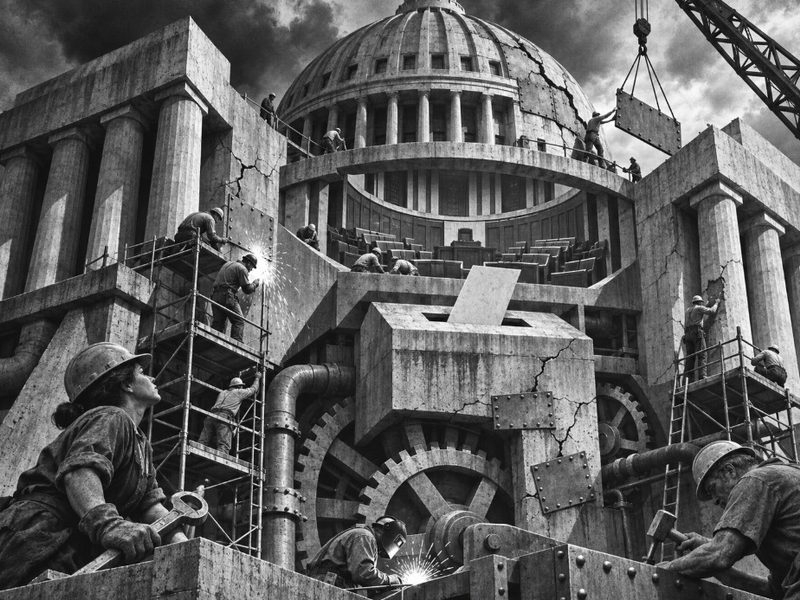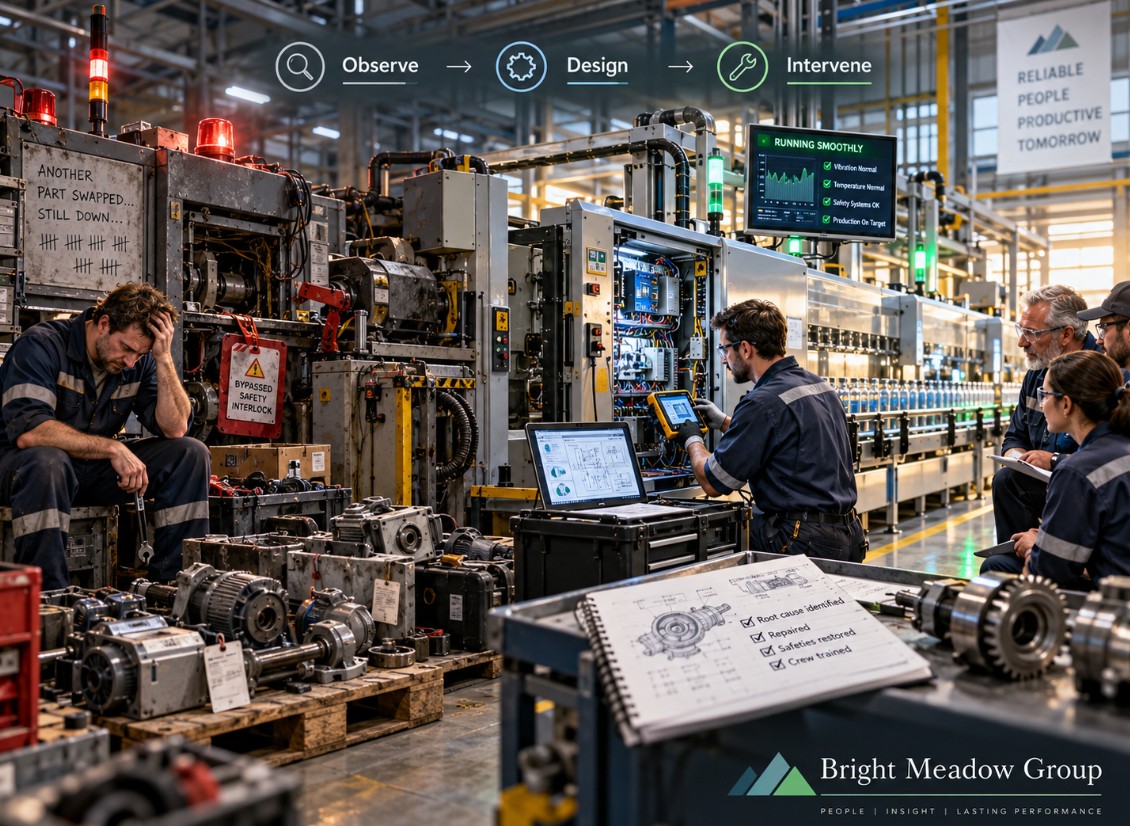
A diagnostic technician in medicine who does the job moderately well gets a hospital office as a career baseline. A diagnostic technician who does the job well on machinery and electronics gets filthy night shifts and bypassed safety protocols as a fact of life. That gap shows up on the plant floor as recurring maintenance issues and unscheduled downtime.
Proper maintenance protocols get skipped as routine. Run-to-fail thinking and planned obsolescence have trained maintenance crews into parts monkeys at best: swap the part, restart the line, wait for the next failure. Good diagnostics cost substantially less than that cycle. Repairing a machine keeps it running longer and more efficiently, and the repair work trains the crew to care for the equipment so it stops breaking and wrecking their day.
Standard Diagnosis Expectation for Industrial Engagements
When BMG is called into a factory, warehouse, or manufacturing plant, the client should expect the engagement to run on the following standard.
Observe
- How the facility handles maintenance protocols in practice, compared with what the written schedule says
- Which safety systems have been bypassed, and the reason given for each bypass
- The downtime record, with attention to the same assets failing more than once
- Parts replacement history: how many times the same component has been swapped on the same machine
- Who does diagnostic work, on which shift, with which tools, and with how much authority to stop a line
Design
- Find the cause of a failure before ordering parts
- Repair sound machines in place of replacing them
- Restore bypassed safeties as part of the fix, with the underlying fault corrected so the bypass has no reason to come back
- Build crew training into the repair itself, so the people who run and maintain the machine understand what failed and how to spot it early
- Give the diagnostic role the standing, schedule, and tools the work requires
Intervene
- BMG diagnoses, repairs, documents, and hands the machine back to a crew that knows what was done and why
- Each engagement closes with a cost comparison: the diagnostic and repair cost set against the downtime and repeat parts spending it replaces
- A follow-up visit confirms the repair held and the crew kept the protocol