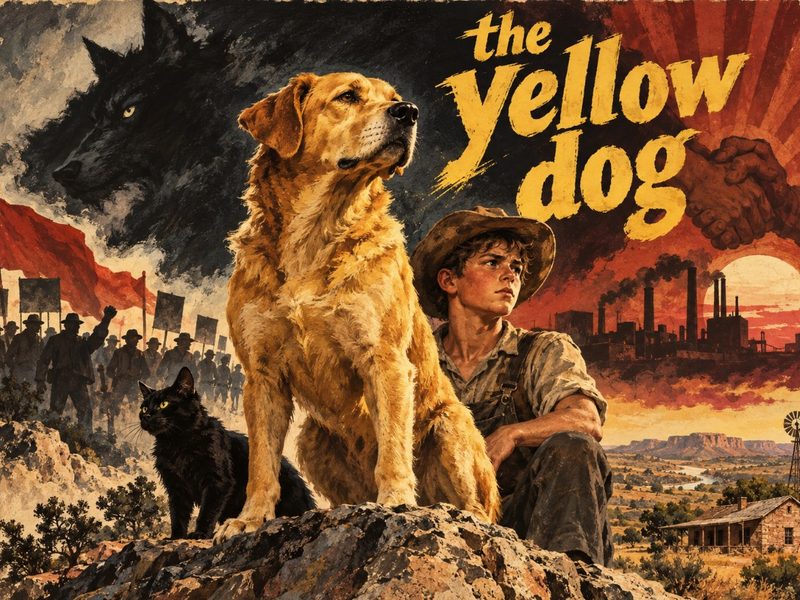
Donald Trump is President again because he had something to sell. Andrew Yang shook the 2020 Democratic primary from a standing start — no political base, no party machine, no money compared to the field — because he had something to sell. The product in both cases was a picture of the future. One was nostalgic and ugly. One was technocratic and weird. Both were visions. Both were concrete enough that a normal person could close their eyes and see them.
That is the entire game.
Democrats — and I am one, registered, voting, a veteran, a lifelong union member from a long line of laborers and farmers and tradesmen — cannot do this. We physically cannot do it.
Watch any Democrat speak for ninety seconds and count how many times they describe America by what it should stop being:
- Stop being racist.
- Stop being authoritarian.
- Stop being unequal.
- Stop banning books.
- Stop gutting Medicaid.
Every sentence is a no. Every position is a brake pedal. Every campaign is a defensive crouch around something the other side just attacked.
You cannot win a country with a brake pedal.
You can slow the descent. You can save what’s left. You can martyr yourself nobly into a 75-25 blowout in PA-13 like the last cycle and the cycle before. What you cannot do is move people. People do not move toward the absence of bad things. They move toward the presence of good things. They always have. Every movement in American history that mattered had a picture attached. I have a dream. Freedom from want, freedom from fear. Morning in America. Yes we can. Make America great again. The pictures vary in quality. Some of them were lies. The presence of the picture is the thing.
Project 2025 is a 900-page picture. It is a bad picture. It is a vivid picture. Children pulled from public schools. Federal workforce purged. Race based nationalism baked into every agency. EPA gutted. Whatever you think of the contents — and I think the contents are obscene — the document is a description of an America that someone, somewhere, is trying to bring into being. They told us what they wanted. They told us how they would do it. They are now doing it.
What is the Democratic equivalent? Where is our 900-page document describing the country we are trying to build? It does not exist. We have white papers. We have policy briefs. We have a thousand op-eds about why the other guy is dangerous. We do not have a description of the country we are trying to create. We have not had one in fifty years.
Here is the part that matters: we all want the same things.
This is not a slogan. This is the actual condition of human beings in this country, including the ones who voted for the guy I cannot stand. We want work that means something and pays the bills. We want our kids to have a better shot than we did. We want food we can trust. We want air we can breathe. We want neighbors we know by name. We want to grow old in the place we grew up — or, like me, in the place we chose — and either way come home to something that feels like home. We want a stretch of woods we can walk in. We want to feel useful. We want to be left alone in the ways that matter and held close in the ways that count. Right, left, urban, rural, Black, white, churched, unchurched — this list does not vary. It does not vary. The entire political class makes its living convincing each tribe that the other tribe is the obstacle to that list. They are not. The obstacle is that no one in power is describing how we actually get there.
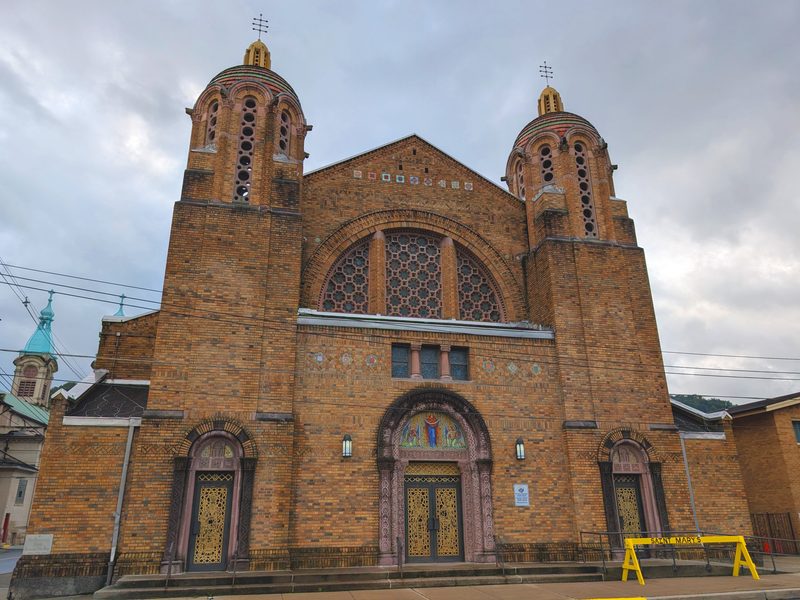
So let me describe it. I grew up in Indianapolis. The first time I came to Johnstown I fell in love with it the way you fall in love with a person — instantly, then slowly, then permanently.
I brought my company here. I named it Cernunnos Foundation, after the horned god of the forests, because the work I do is rooted in this ground. I am a newcomer to PA-13 who looked at these mountains and these rivers and these towns and said this is the way. So I get to say what I am about to say, because I picked this place on purpose.
Here is the picture.
PA-13 is a region where our political figures actually work together. Where a member of Congress holds a town hall in part in the district, every year — not a tele-town hall, not a Zoom, not a fundraiser, an actual room with actual chairs and actual people who got off shift to come see them. You represent these people. Come see them. Don’t tell me about fundraising time. The job is representation, not portfolio management.
PA-13 is a region where the systems work. The watershed is clean enough to swim in and feeds a fishery. The fishery feeds the towns. The towns have schools that turn out kids who can read a balance sheet and a topographic map and decide for themselves whether to stay or leave — and a lot of them stay, because there is something here worth staying for. The waste stream is a nutrient stream. The grid is local enough to hold during a storm and connected enough to send power out when somebody else needs it. The land is worked, not strip-mined. The forests are managed, not abandoned. The rivers run clear because we decided they would.
PA-13 is a region where the coastal cities envy us. People in Brooklyn and San Francisco and DC — people drowning in rent, in screens, in noise, in the particular exhaustion of digital-economy life — they come here on weekends and on summer trips and on long retirements because we have what they cannot buy back. We have mountains. We have rivers. We have forests. We have a Main Street with a restaurant somebody’s grandmother started. We have a museum about the flood. We have a music venue in a converted mill. We have a coffee shop where the owner knows your kids. We have history that is not curated and culture that is not for sale. The tourism economy is real and growing because what we have is genuinely rare. We are not trying to become Pittsburgh. We are not trying to become Philadelphia. We are certainly not trying to become some Sunbelt office park. We are trying to be more of what we already are, on purpose, with our eyes open.
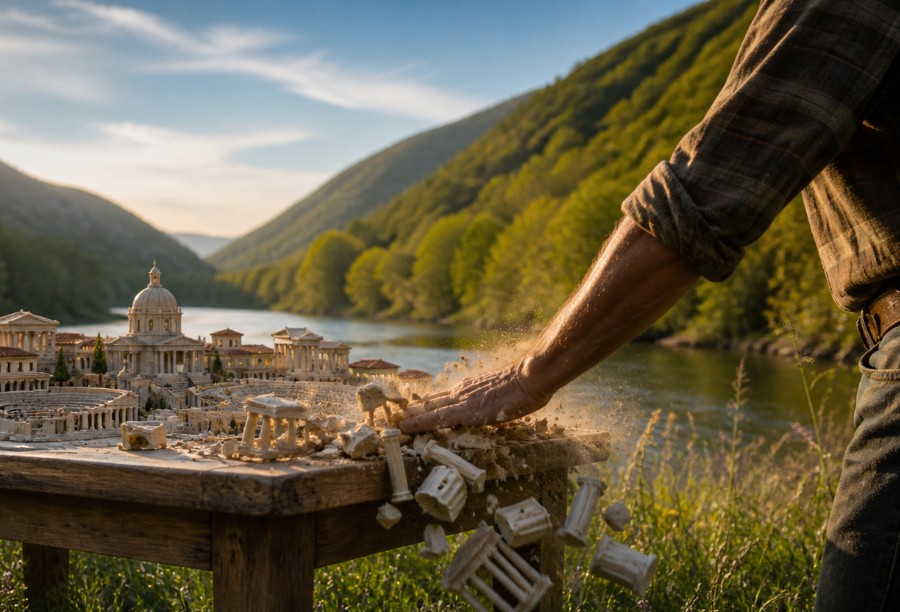
PA-13 is a region that does not have to choose between being a museum and being a strip mall. We can have nice local restaurants and serious art and small museums and regional history and the kind of culture that grows up out of a place instead of getting helicoptered in. We can have broadband and front porches. We can have factories and farms. We can have a young couple who wanted out of Brooklyn buying a Victorian in Johnstown for the price of a parking space and opening a bakery, and we can have the family that has been in Bedford for six generations farming the same ground their great-grandparents farmed. We can have all of it. We are not picking. The “you must pick” framing is a thing that gets sold to us by people who do not live here.
That is the picture. That is what I want. That is what most of my neighbors want too, whether they voted blue or red last November, and the proof is that you can sit at any bar in this district and describe what I just described and watch heads nod across the political spectrum.
We do not get there by waiting for Washington. We do not get there by losing PA-13 by 50 points every two years and calling it a moral victory. We get there by talking to each other about what we want — not what some asshole in Washington or Florida or California wants — and then building it. Locally. With our hands. With our institutions. With our money where we can keep it close. With our votes when they matter and our labor when they don’t.
I say all of this as a newcomer. I say all of this as someone who came here on purpose and said this is the way. I say all of this from Cernunnos Foundation, in Johnstown, in PA-13, where I plan to stay and help build.
Knock the comparisons off the table. Knock the defensive crouch off the table. Knock the fix it mentality off the table. We are not maintenance contractors for a country someone else designed. We are supposed to be the people who imagine new countries — and then, in our own piece of ground, build one.
Imagine one. Then say it out loud. Then start.