GETTYSBURG — The good news came first.
Gettysburg CARES, which runs the only cold-weather shelter in Adams County, has bought itself a permanent home at 25 S. Washington St. Ten bedrooms. Five bathrooms. Family rooms. Space for counseling. Staff on site around the clock once the doors open.
The number came a few paragraphs down.
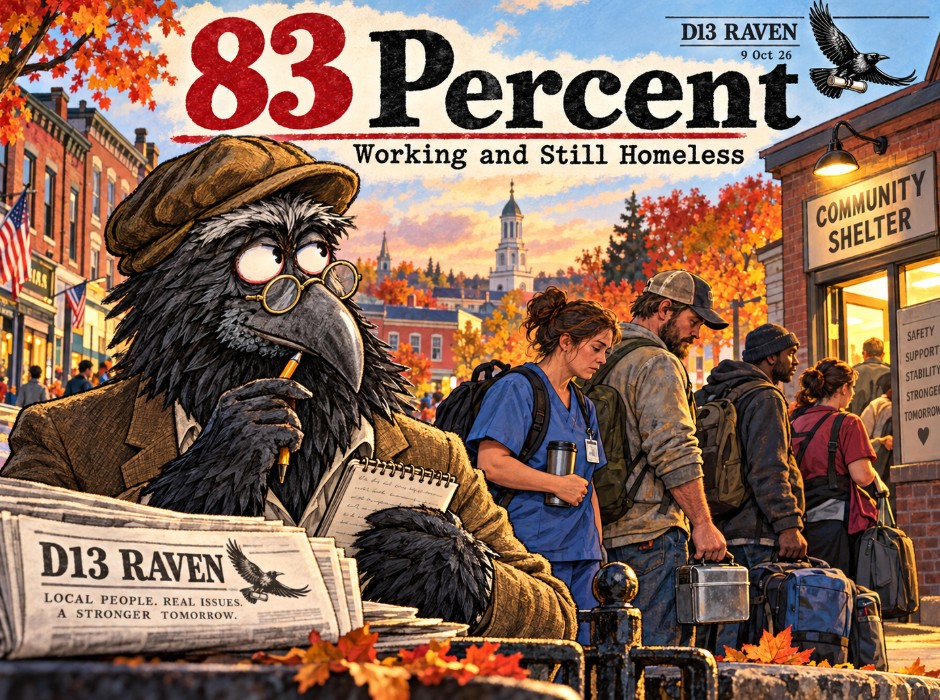
About 83 percent of the shelter’s guests are employed.
Sixty-eight people stayed there last season. Eighty-seven percent came from Adams County. Sixteen percent were children. And by the organization’s own count, better than eight in ten guests hold a job.
Sit with that a minute.
We hand kids the deal early. Get a job. Show up on time. Do the work, and the work will keep a roof over your head. That bargain gets sold from the guidance office to the pulpit to the campaign stump.
Somebody in Gettysburg kept up their end of it and slept on a shelter cot anyway.
I’ve got no use for a society that writes people off when illness, age, disability or plain bad luck keeps them off a payroll. A person’s worth doesn’t ride on a time card. That failure is old, and it’s ugly.
This one goes further. These folks clock in. They answer to a boss. They’re doing exactly what we told them to do. And the paycheck still won’t cover a door with their name on it.
When the people doing the work can’t keep housing, something is broken upstream of them.
Run the numbers.
The National Low Income Housing Coalition puts fair market rent for a one-bedroom in the Gettysburg metro at $1,099 a month this year. To carry that without spending more than 30 percent of gross pay, a full-time worker needs $21.13 an hour. That’s $43,960 a year. A two-bedroom, the kind a parent with a kid needs, takes $26.42 an hour.
Now look at what Pennsylvania pays the jobs it leans on. Statewide median for home health and personal care aides: $14.53 an hour. Cashiers: $14.44. Fast food and counter workers: $14.12. Retail salespeople: $15.42. Nursing assistants make $22.04, enough for the one-bedroom and short of the two.
At $7.25, still the minimum wage in this state, a worker would need 117 hours a week to afford that Gettysburg one-bedroom. There are 168 hours in a week.
And rent is only the monthly bill. Getting through the door means a security deposit, first month up front, application fees, a credit check. A worker can manage $1,099 a month and still be unable to put together the cash it takes to start. An old eviction or a medical bill that wrecked a credit score can keep that door shut for years.
That’s where the looking needs to happen, and Gettysburg is handing us the chance.
Sixty-eight people came through last season. Each one carries the story of how a working person ends up without an address. Maybe the wage falls short of the rent. Maybe the hours got cut. Maybe a transmission ate the deposit money, or a landlord wouldn’t take the application.
Those are different problems. They need different fixes. Help with a deposit. A guarantee that gets a landlord to say yes. Cash before an eviction lands, so nobody needs a shelter bed after. Small units people can rent on a working wage.
CARES already does part of this work. Staff coach guests, help them get vouchers through the Housing Authority, call landlords and help with job searches, all aimed at getting people into stable housing before the shelter closes in April. The new building gives them room to do more.
It’s also the place to start asking, with guests’ privacy protected, what put each person there and what got them out. Then count what works and do more of it.
A shelter can’t carry that alone. Employers paying $14 an hour in a $21 rent market belong in the conversation. So do landlords, the housing authority, the borough and the county.
Gettysburg has company out here.
In Chambersburg, the one-bedroom housing wage runs $21.52 an hour. Altoona rents are lower, and the median renter household there clears what a one-bedroom requires by about a thousand dollars a year. In Johnstown, a one-bedroom goes for $846, and the median renter household brings in $31,899. It takes $33,840 to afford that apartment.
Half the renters in Johnstown earn less than it takes to rent a modest one-bedroom in Johnstown.
None of this makes a working person more deserving of a bed than a disabled neighbor or a retired one. Shelter is a floor for people, whatever their pay stub says.
But the 83 percent takes away an easy excuse. You can’t tell these folks to go get a job. They have one.
Eighty-three percent. They did what they were told. The rest of us owe them a straight answer about why it wasn’t enough.
Twelve counties, every day, no appointment necessary. — Silas Corvin.
SIDEBAR: LOCAL 29 GETS A DEAL ON THE TABLE
PITTSBURGH — One week after walking out, IBEW Local 29 has a tentative contract with Duquesne Light.
The company announced the five-year agreement at 10:30 Thursday night. It isn’t done yet. Members still have to vote, and neither side has released the terms.
About 1,000 workers struck at midnight Oct. 1: linemen, customer service reps, mechanics and troubleshooters. Members had authorized the strike 592-14 on Sept. 15.
The fight centered on staffing, safety, technology, subcontracting and which employees get to join the union. The union pointed to slow power restoration after the deadly April 2025 storms.
Before the strike, the company offered 4 percent raises for most positions and a $3,000 ratification bonus. On day one, Local 29 President Nicole Greb said the two sides were very far apart.
Duquesne Light kept the lights on with non-union employees and out-of-state contractors. Hundreds of strikers rallied outside the North Side facility Wednesday, and bargainers went back to the table that afternoon. The deal came about 30 hours later.
This was the first strike at Duquesne Light in over half a century.
The Raven will post the ratification vote when it comes in.