Senator Ron Johnson has called Social Security a Ponzi scheme since 2010, and lately he calls it a “legal” one. He has held that comparison for sixteen years without testing it against anything new. What the line proves is a lack of neuroplasticity, and to see why, you have to start with what a Ponzi scheme is.
A Ponzi scheme is an investment scam. The operator gathers money as fast as he can by promising outsized returns. When he can’t deliver them, he takes money from new investors to pay off the old ones who feel cheated, which keeps the complaints down and the new money coming in. Charles Ponzi, who gave the scam its name, promised fifty percent in forty-five days in 1920. There isn’t enough money to pay the investors out, so the con man has to keep the funds in the air for the scheme to survive.
What makes it a scam is expectation. The investors expect more than they will or can get. The operator knows it and they don’t. That gap between what the investor believes and what the operator knows is the fraud. Moving money from new people to old people is only the machinery.
Johnson is right about the machinery. Social Security works the same way mathematically. There isn’t enough money on hand to pay out the full roll at once, and the system depends on future workers paying in to support today’s retirees. Draw the money’s path on a chalkboard next to Ponzi’s and the arrows look alike.
The resemblance ends there, because the expectations run the other direction.
People on Social Security don’t expect to be paid more than they were promised. The program tells you what it plans to pay, and its trustees publish a report each year giving the date the reserve runs short. The people paying in have the same information as the people running it. There’s no gap to exploit.
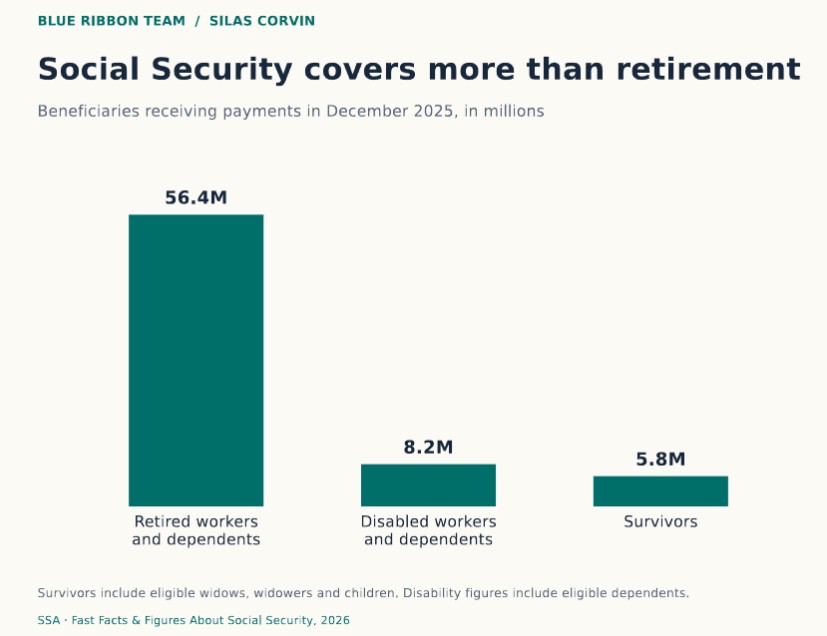
The system is also built to pay some people more than they put in. It’s intentionally a descending radius. The benefit formula returns a larger share of earnings to low-wage workers than to high earners, and it covers widows, orphans and disabled workers who couldn’t contribute much or at all. We choose to do this as a society because EVERYONE deserves a decent life without worrying whether they’ll have a place to sleep and enough to eat. We don’t apologize for that. It’s collectivism for the weak at its finest, and it’s designed that way openly. A Ponzi operator hides who gets paid and why. Social Security writes it into law.
The fund wasn’t built to pay an immediate return on investment either. Money is supposed to trickle in from paychecks and trickle out to retirees over decades, with the trust fund holding the balance between the two.
So the program is honest about what it promises. Its trouble is in what it collects, and the clearest way to see that is to set income beside income.
Start with the retiree. A check already in payment gets a cost-of-living adjustment each year, which holds its buying power where it was. After inflation, it grows by zero. New retirees’ starting benefits are indexed to the national average wage, and so is the cap on taxable earnings. Since 1984 the average wage index has grown about 4.5 times. The average retirement check has grown by almost exactly the same amount, and the cap has kept pace with them.
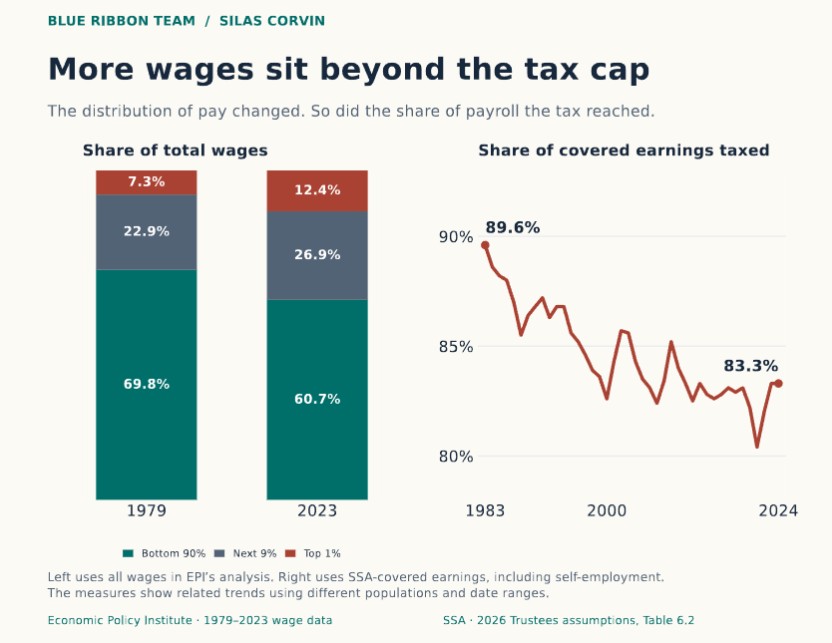
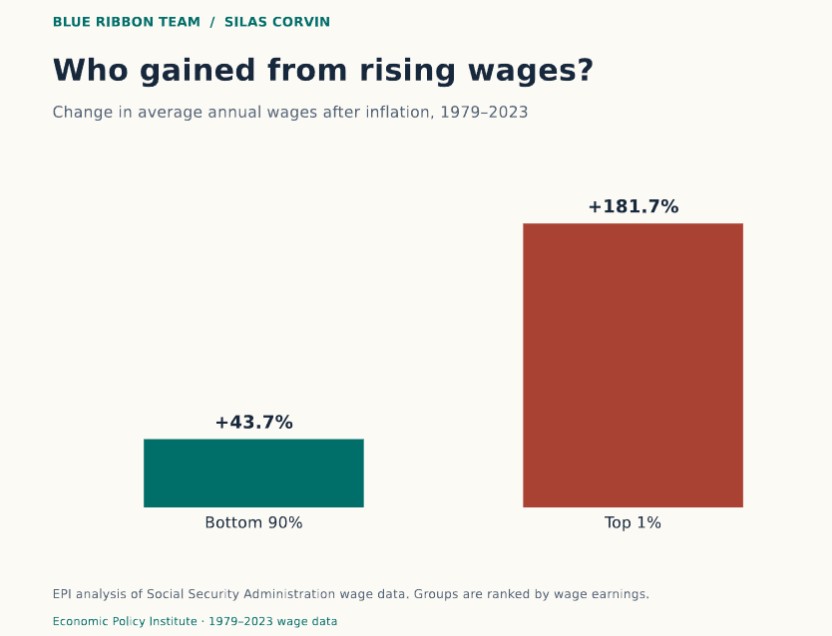
Now the workers paying in. From 1979 to 2023, after inflation, wages for the bottom 90% of earners grew 44%. Wages for the top 1% grew 182%. The bottom 90%’s share of the nation’s pay fell from about 70% to about 61%. The top 1%’s share went from about 7% to more than 12%.
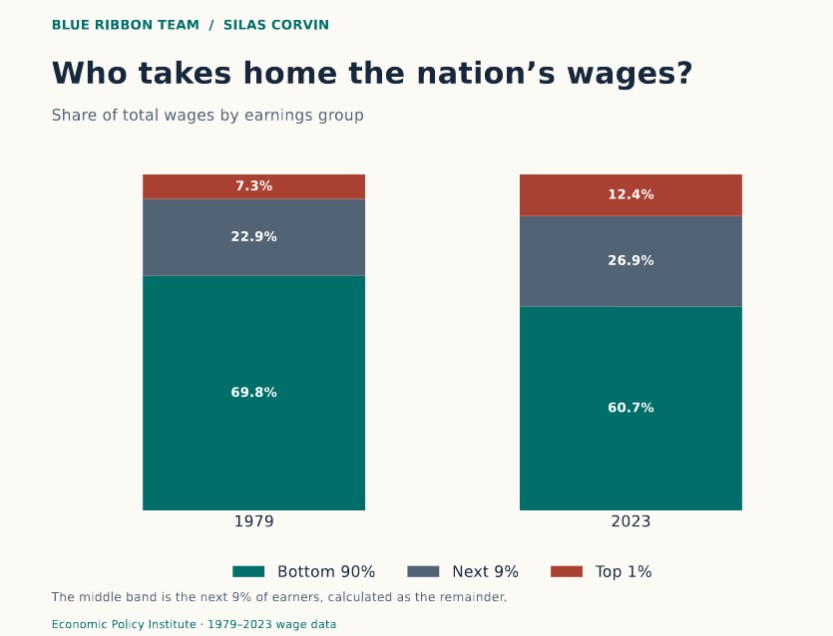
Line those up and the problem is plain. Retirees’ checks hold flat in real terms. The workers whose whole paycheck gets taxed are the bottom 90%, and they’re taking home a shrinking share of the country’s pay. The cap and the benefits follow an average wage. The top 1% has run away from that average, and the cap stops their contribution at a fixed line while their income keeps climbing past it.
It’s the same arbitrage game insurance companies play, run through payroll. An insurer makes its money on the spread between what it takes in and what it pays out. The cap hands a spread to the top of the wage scale: their contribution is fixed, their income isn’t, and the difference stays with them. The obligations stay tied to the wages underneath.
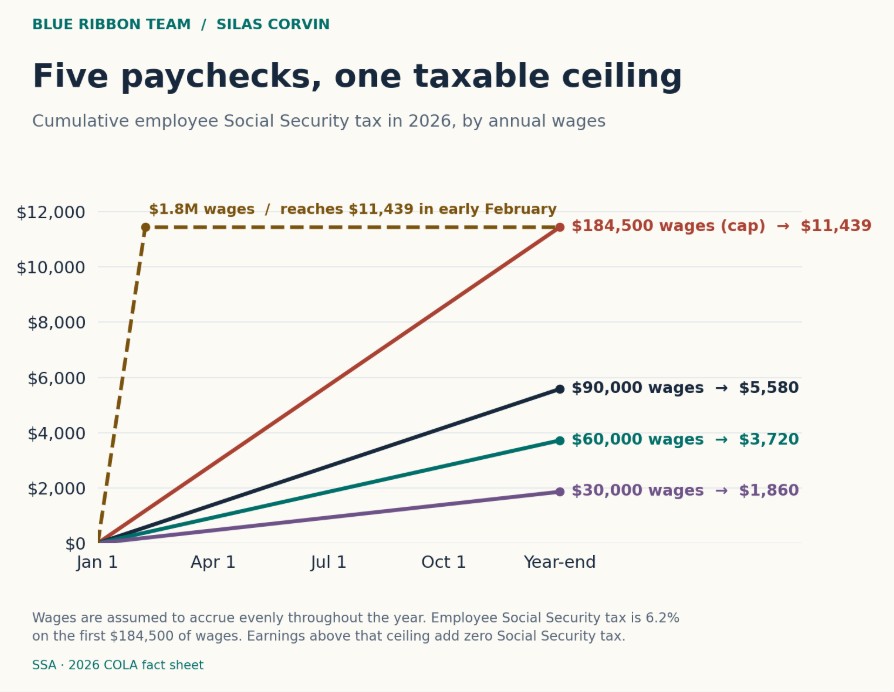
In 2026 the cap is $184,500. A warehouse worker earning $50,000 pays the tax on each paycheck from January to December. An executive earning $1.8 million hits the cap in the first week of February, and his contribution stops for the year. When Congress last rebuilt the program in 1983, the cap caught about ninety percent of the nation’s wages. Today it catches somewhere in the low eighties, because the growth went to income the cap doesn’t touch.
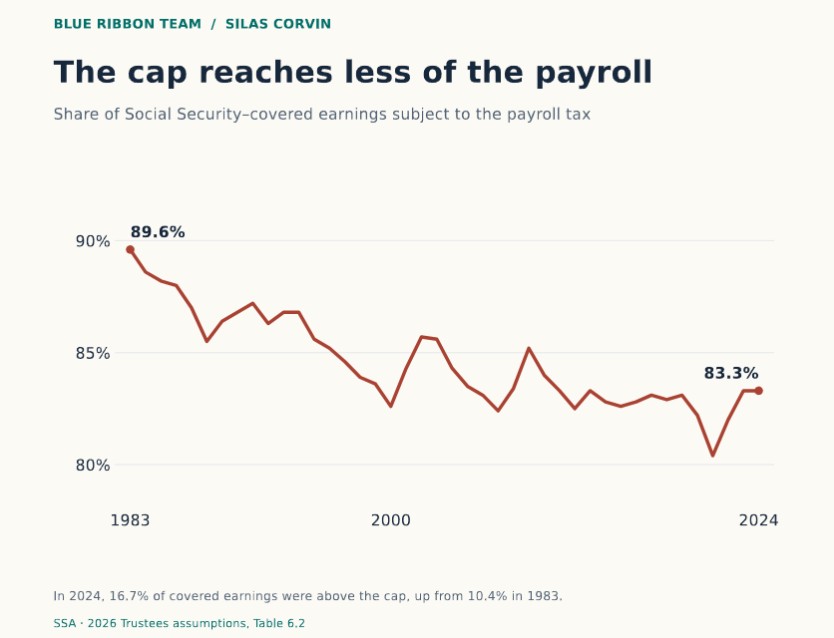
An imbalance like that breaks any system built on shared contribution. When the income growth goes to the people whose contribution is capped, and the obligations ride on the people whose income isn’t growing, the math cannot work. You can’t fund a promise made to the whole workforce out of a shrinking slice of its pay.
Erase the cap and the math changes. The Committee for a Responsible Federal Budget, working from the Social Security actuaries’ own numbers, estimates that eliminating the cap today would close about two-thirds of the seventy-five-year shortfall and push the date the reserve runs out back about twenty-one years. Had Congress done it in 1995, it would have closed the whole gap and then some. The longer the fix waits, the less of the gap it covers.
Now go back to what makes a Ponzi scheme a fraud: the gap between what the people paying in believe and what the man running the game knows. Social Security doesn’t have that gap. Senator Johnson’s argument does.
The shortfall comes from the cap, and the cap protects the income of the people at the top. Lifting it would cost them. So instead of patching the hole, they need workers to believe the program is rigged and doomed, so those workers will accept cuts, a later retirement age, or a private account in its place. Johnson carries that message. He has said he supports privatizing the program, which would move workers’ retirement money out of a public trust and into private accounts managed for a fee. A worker who believes Social Security is a Ponzi scheme will hand it over without a fight.
I opened by calling Johnson’s comparison a lack of neuroplasticity. That’s the charitable reading. The trustees publish the numbers each year. The cap, the wage gap and the fix are all on the public record, and a United States senator has had sixteen years to read them. When a man in that seat keeps telling working people their retirement is a scam, while the real cause sits in plain view and his remedy delivers their money to Wall Street, he isn’t confused about Social Security. He is the one running the con.
Senator Johnson is perpetrating a fraud against the American people on behalf of money. The workers are the marks. The people above the cap, and the firms waiting to manage what’s left of the program, collect the return. Calling Social Security a Ponzi scheme is the sales pitch.