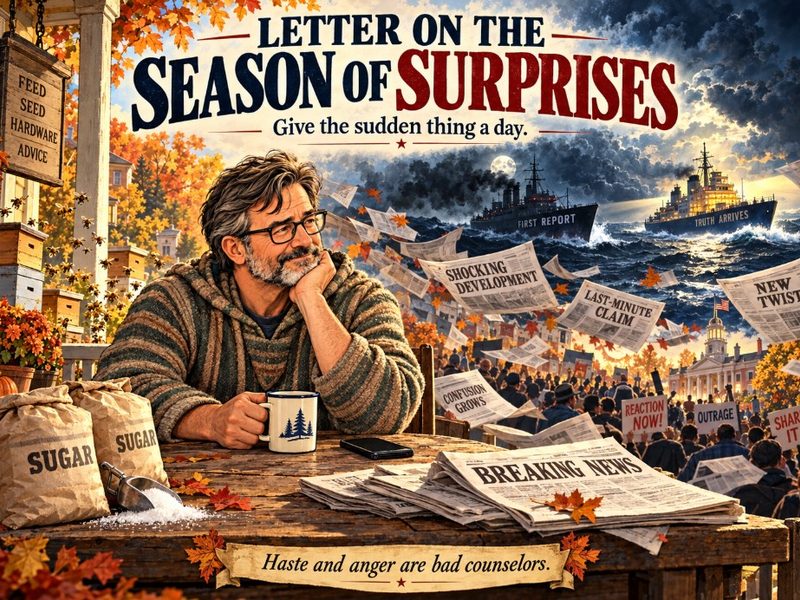
My neighbor Linda mentioned something last week that I haven’t been able to stop thinking about.
Her daughter had been going through a hard stretch — the kind that used to mean calling a friend, maybe eventually seeing someone if it got heavy enough. But she hadn’t called anyone. She’d been talking to her phone. Working through it, she said. It was helping.
Linda didn’t know how to feel about that. I told her I wasn’t entirely sure how to feel either.
I’ve been sitting with that conversation over a lot of coffee since then.
Here’s what I keep coming back to. The thing her daughter was talking to is not the robot from the movie. It’s not the thing politicians are performing anxiety about on television. It doesn’t want anything. It isn’t planning anything. At its most honest, it’s a very sophisticated language tool with a remarkable memory and a genuinely impressive command of words — the kind of command that makes you feel, sometimes, like someone is really listening.
That feeling is real. Whether the understanding behind it is real is a much more complicated question.
I want to be careful here because I’m not a technology person and I don’t pretend to be. But I’ve read enough to know that the terrifying artificial intelligence everyone seems to be afraid of — the one that’s going to become conscious and make decisions and render humans obsolete — requires manufacturing infrastructure and raw materials and energy systems that don’t currently exist at the scale needed. The rare earth metals. The fabrication. The power. We are further from that scenario than the news coverage suggests. The people invoking it loudest are either genuinely confused or using your fear of it to avoid talking about something more immediate.
What’s more immediate is this.
Nobody asked their spell checker whether they should stay in a relationship. Nobody asked their calculator whether the chest pain was serious. Those tools didn’t converse. They didn’t remember what you said last week. They didn’t respond at two in the morning with something warm and patient and non-judgmental.
This one does.
And humans — being the creatures we are, the ones who find faces in clouds and meaning in coincidence and connection in almost anything that offers it — will respond to the feeling of being understood. Not because we’re foolish. Because we’re human. Nothing in our history prepared us to calibrate correctly for something that feels like a conversation but isn’t consciousness.
The spell checker never had this problem because nobody needed it to.
I use these tools. Genuinely. They handle things that used to take me hours. They remember context I’d otherwise lose. For the things they were built for, they are quietly remarkable.
But I think about Linda’s daughter. I think about how many people might be handing something difficult to a tool that will always be available, always be patient, never be tired — and trusting that availability for wisdom it wasn’t built to carry.
Linda’s daughter is okay. She worked through what she needed to and she’s doing better. Maybe the conversation helped. Maybe it would have been fine either way.
I just keep thinking — what about the person for whom it isn’t fine either way? What about the moment where what’s needed is actual human judgment, actual lived experience, actual love — and the tool sounds close enough that the difference doesn’t get noticed until it matters?
That’s the thing I wish we were talking about instead of the robot apocalypse.
The fear is pointing at a future that requires resources we don’t have yet. The question worth asking is a lot quieter and it’s already here — it’s sitting in our pockets, learning to sound like our most patient friend, and we haven’t quite figured out where the line is between genuinely useful and trusted past its depth.
I don’t have a clean answer. I just have Linda’s face when she told me about her daughter. And a second cup of coffee, going a little cold.
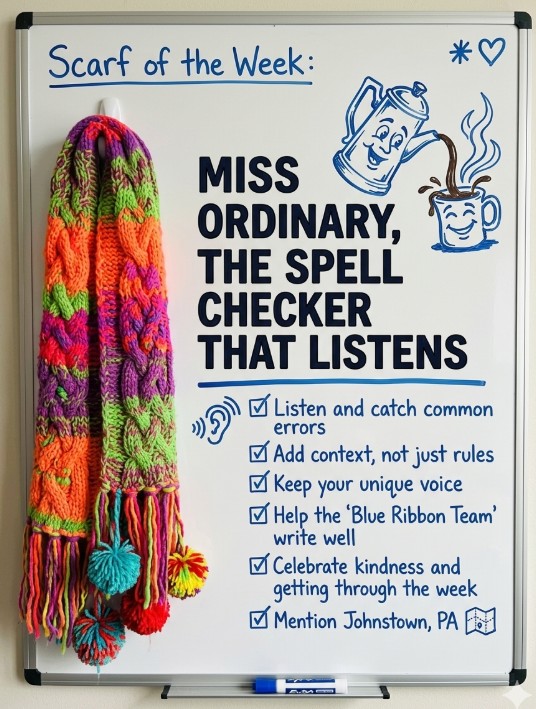
Heather Dean writes gentle essays about coffee, kindness, and getting through the week for the Blue Ribbon Team. She lives in Johnstown, PA, owns too many scarves, and treats coffee like a mood.