Curiosity, Applied: A Reintroduction to Blue Ribbon Team
Read Blue Ribbon Team one piece at a time and it looks like several magazines sharing a server. A Queen Anne porch on Tuesday. A gravel-bed river filter on Wednesday. A labor column, an aquaponics handbook note, a constitutional letter, a covered bridge in Bedford County, an argument about who owns the training corpus. Six hundred and eight posts since March 2024, with no obvious reason for any one of them to sit next to the others.
Read them as a run and the shape shows up.
The site opened as a photographer’s notebook. The 2024 archive is Indianapolis and the roads out of it: the Central Library, the Athenaeum, the City-County Building, the Kile Oak in Irvington, a Paul Bunyan statue in Bangor, a stagecoach in New Hampshire, the Flume Covered Bridge. Motorcycle ride videos with the engine noise left in. A shaver review. A restaurant that had been recommended and didn’t hold up. Man Made and Nature Made started there, doing something simple: stop, look at the thing somebody built, ask what it cost to make and whether it still works.
That first year taught the method the rest of the site runs on. Notice the detail other people drive past. Ask who put it there. Ask what problem it was solving. Ask whether the solution has held.
The archive thins out in spring 2025 — one post in April, then quiet until October. What comes back after the gap is aimed at a different city. Johnstown starts showing up in the categories, and the questions get bigger in a specific direction: from the object to the system it sits inside.
That’s the pivot. It explains the range.
A bridge stops being a bridge and becomes labor, maintenance budgets, engineering knowledge, and what a place decided was worth keeping. A hospital bill stops being a price and becomes a diagram of who controls the money. A data center stops being a building and becomes electricity, water, waste heat, land, tax abatement, and compute the neighbors can’t reach. Glass in a recycling bin stops being trash and becomes feedstock that got thrown away. A worn-out mill town stops being sad and becomes a circulation problem.
Johnstown is the test bed, and the argument the site keeps making about it is that the valley isn’t empty. It’s full of assets running at a fraction of capacity: water, rail, industrial buildings, cheap square footage, people who know how to make things, and a view that hasn’t been given a reason to look at itself. Looking Down on Johnstown proposes a gondola. The Johnstown Labor History Museum points out that a town with a flood museum and an immigration exhibit is missing the one about work. The Second Melt takes regional glass that currently goes to landfill and asks what a small remelt operation would need. Johnstown’s River Promenade and the River Refugium Project take the two rivers running through the middle of downtown and treat them as infrastructure that’s been left switched off.
Bright Meadow Group publishes the method behind these openly: observe, design, intervene. Observe what the system is doing rather than what its label says it should be doing. Design around the actual flows — money, labor, nutrients, heat, water, information, waste. Intervene where a structural change redirects the whole thing. The design notes go out free to build. That’s on purpose.
The bylines are instruments for that work, each pointed at a different part of the same terrain.
Mr. Wright writes from the shop floor. Somebody tightened the bolt, ran the line, cleaned the room, kept the bridge standing. His pieces — Fort Frick and the Battle of Homestead, The Company Store Never Closed, IP for LABOR — start from the position that if a society needs the work done, the person doing it has earned stability and a name on the thing.
Nathaniel Leery, writing under republican Virtue, comes at the same ground from the civic side: constitutional structure, duty, restraint, and the difference between liberty and appetite. Letter on the Manner of Choosing Senators, On Whom the Republic Serves, Learning from the Wrong Men. His standing worry is concentrated power, and what happens when spectacle starts doing the work that law used to.
Miss Ordinary keeps the operation honest at kitchen-table scale. A grand theory has to survive contact with a grocery receipt, a deductible, a café table, and the small accommodations people make because an institution three states away changed a rule. Health Care could buy a lot of peaches runs the argument on arithmetic.
Silas Corvin keeps the regional political ledger — District 13 Raven, KOZ: Johnstown — with the documents attached.
Bright Meadow Group and Robert Smith work at the widest setting, where engineering, ecology, history, policy, and finance stop being separate departments.
The Man Made and Nature Made pieces run under the house byline, still doing 2024’s job: here is a gambrel roof, here is the Salt River Canyon, here is Big Boy 4014 crossing the Stone Bridge, and here is why it deserved the U-turn.
Seven voices covering one landscape from different angles. The point is parallax. Look at the same hill from enough positions and you can judge how tall it is.
A few convictions hold across the bylines.
Maintenance outranks spectacle. The corpus keeps returning to things that work because somebody tends them. Infrastructure ought to be boring. Systems tend to fail well before the failure is visible, usually because routine care, skilled hands, institutional memory, or spare capacity got booked as waste.
Labor is the foundation, intellectual labor included. Wealth and invention are accumulations. The inventor stands on supply chains, machinists, teachers, public research, libraries, and standards bodies whose names don’t appear on the patent. The site’s labor writing and its intellectual-property writing converge here, and The Corpus Is the Field is where they meet: a property argument built on Locke’s own premises, turned around on the people who like to cite him.
Knowledge is supposed to circulate. The Long Work of Getting Better, Recovering Stolen Property, Is IP Ethical in a Free Market?, The Saved Seed. The position leaves markets alone. It draws a line between getting paid for your work and owning the road other people have to drive to do theirs.
AI gets treated as infrastructure. The coverage skips both of the usual scripts — the replacement panic and the contamination complaint — and goes to the questions: who controls it, what knowledge can it reach, what friction does it remove, what new failure modes does it add, and who collects the benefit. The Guardrail argues for physical containment over soft policy walls. Data Center Cooling Design, The Twin Stack, and Ship to Shore Data handle the same subject as a thermal and siting problem, because that’s what it also is.
Ecology and engineering are one department here. The River Refugium work, the aquaponics series, The Sea That Got Too Clean, Lessons from Kōdo Shori, Disappearing Plastic Anyone? — a metabolic view of the world where output feeds input and there is no “away.”
Politics gets structural suspicion. Democrats draw fire for timidity and for failing to describe a future anyone can picture. Republicans draw it on constitutional duty, executive power, and healthcare. Billionaires, agencies, courts, platforms, and parties sit for the same four questions: what power do you hold, who handed it to you, who profits, and what happens when you’re wrong.
History runs through the whole thing for the same reason a machinist keeps old drawings. Homestead, the Founding, ice-age migration, naval service, paleontology, the Voting Rights Act, public works. The past is a file of experiments that already ran. Some readings are deliberately provocative and labeled as thought experiments, which is the site’s way of saying the file is open again.
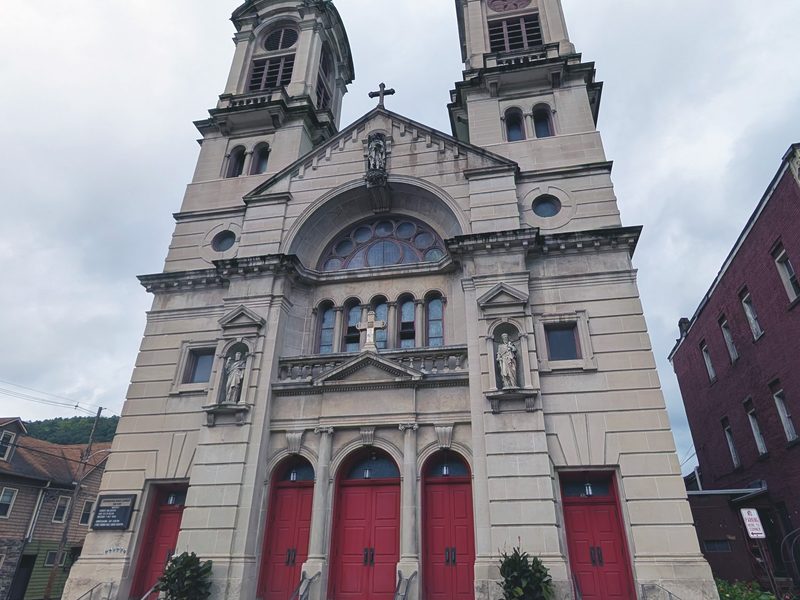
Which returns the corpus to where it started, on a sidewalk, looking up at something.
What am I actually seeing. How did it get this way. Who built it. Who keeps it running. Who owns it. Who benefits. What are we calling natural that was a decision somebody made in a meeting. And if it was designed once, what stops it from being designed again.
The footer says it in two words: Curiosity, applied.
The kind you can pick up and use.