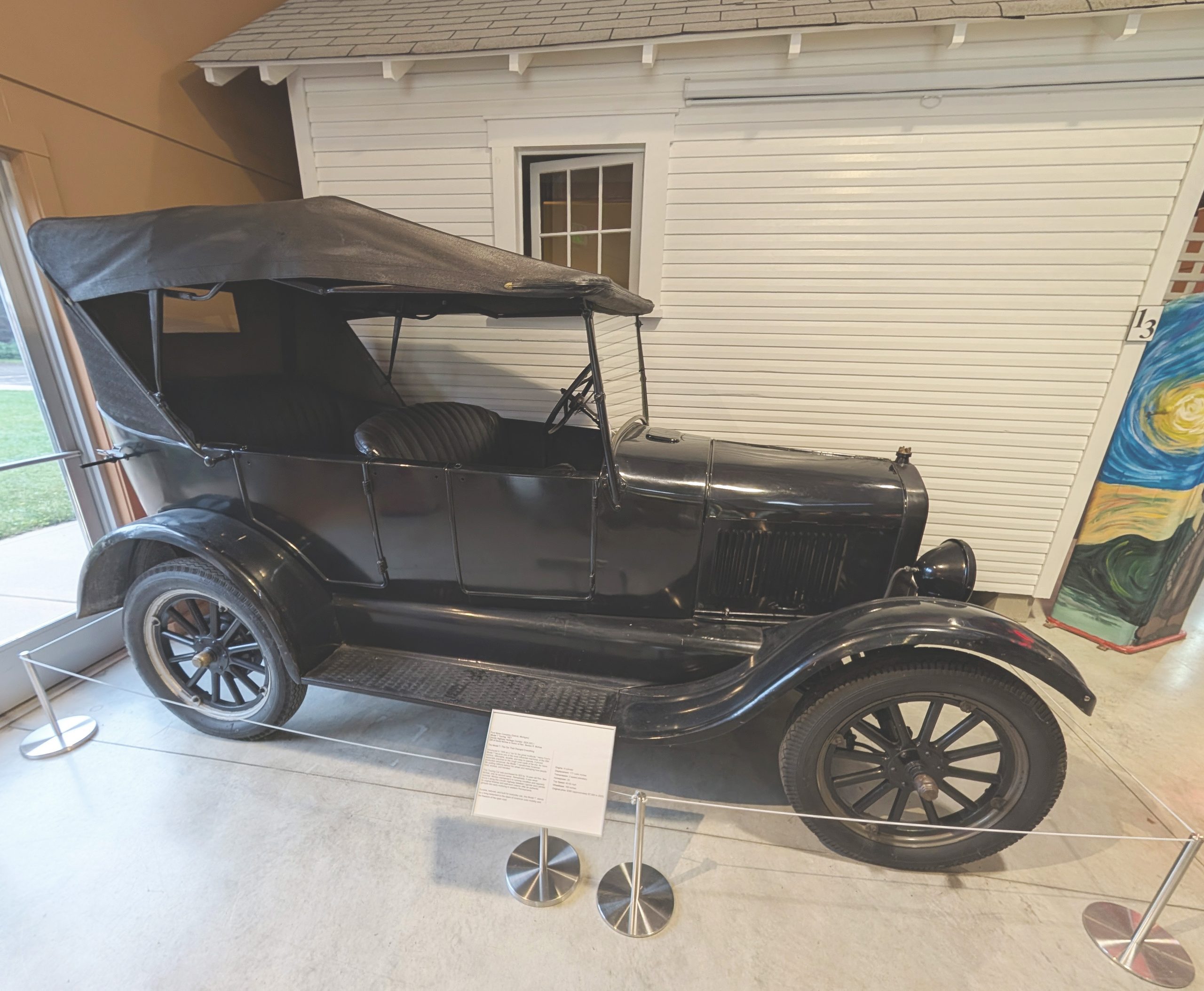
Some cars get photographed because they’re beautiful. The Model T gets photographed because it put the rest of them on the road.
This one is a touring car, the open four-door body with a folding top and side curtains you snapped on when the weather turned. Black paint, black fenders, black top, wood-spoke wheels and a running board wide enough to stand on while you argued with the driver. Parked in a museum next to a white clapboard house front, it looks like it’s waiting for somebody to come out the door with a picnic basket.
Ford built the Model T from 1908 to 1927, and somewhere around fifteen million of them rolled out. Most of that number came after 1913, when the Highland Park plant put the moving assembly line to work and cut the time to build a chassis from hours of men walking around a car to a car walking past the men. The price dropped year after year as the line got faster, until a working man could buy the thing he spent his days building. That math changed the country more than any styling ever did.
Driving one takes some relearning. Three pedals on the floor, none of them a gas pedal. The left one handles high and low gear, the middle one is reverse, the right one is the brake. The throttle is a lever on the steering column, and a second lever sets the spark timing, which you adjusted by ear the way a fiddler tunes a string. Get the spark wrong while hand-cranking and the crank could kick back hard enough to break a thumb. Folks learned to wrap their fingers on the same side as the thumb.
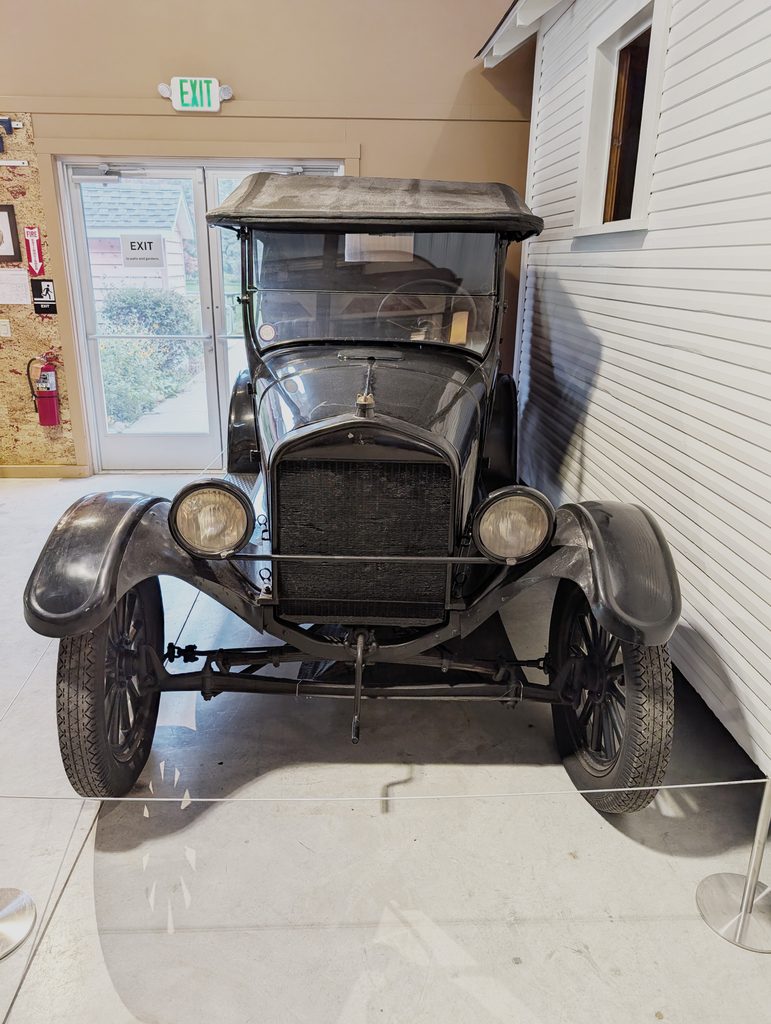
The car was built tall on purpose. Rural roads in 1915 were two ruts and a prayer, and the T rode high enough to clear the hump down the middle. Farmers used them to haul feed, power saws off a jacked-up rear wheel and pull stumps. Mail-order catalogs sold kits to turn one into a tractor. It was less a car than a tool that happened to carry passengers.
The famous line about any color so long as it’s black had a practical root. Black japan enamel dried faster than the other paints of the day, and on an assembly line drying time was money. Ford stuck with black from 1914 into the mid-1920s, then brought colors back when Chevrolet started stealing customers with prettier cars. The swoop of these fenders and the louvered hood suggest this one comes from those late years, when the T got a lower body and a bit of style to keep up. By then the world it built was moving on without it, and Ford shut down the line in 1927 to retool for the Model A.
It’s sitting behind a velvet rope now. Back when it was new, a kid could climb on that running board and nobody would say a word.