Read the Paperwork
Sit down a minute. Coffee’s still hot.
Folks keep asking me who I’m voting for on November 3rd. I tell them what I tell the young men on the crew. A man’s ballot belongs to him the same way his paycheck does, and I won’t reach into either one.
I will do what a steward does before a grievance meeting. I read the paperwork and lay it on the table where both sides can see it. So here’s one year of it, give or take.
On October 19th the Labor Department withdrew the old letters behind what restaurant people call the 80/20 rule. Here’s what that rule did for a waitress making $2.13 an hour and living on tips. If her boss had her rolling silverware and scrubbing the walk-in for too much of her shift, he owed her the full minimum wage for that time. That protection is gone now. Lawyers on the employer side said in print that it should end lawsuits already sitting in court. When the people paid to defend the company are the ones applauding, you can tell which way the floor tilted.
That’s one sheet. Here’s the stack under it.
The referee. In January of last year the President fired Gwynne Wilcox, a sitting member of the National Labor Relations Board, years before her term ran out. That left the Board without enough members to decide cases for the better part of 2025. Picture a ballgame where the umpire gets sent home in the second inning and the home team keeps batting. The administration carried that fight to the Supreme Court. In June the Court ruled that the President can fire members of boards like that one at will. On October 19th it declined to hear Ms. Wilcox’s appeal. The umpire now works at the pleasure of one coach.
While the Board sat empty, New York and California passed laws letting their own state boards hear workers’ cases. The federal labor board, the agency built to protect the right to organize, went to court to stop them. This summer a judge struck down New York’s law in a suit Amazon brought. For a stretch, a worker in New York had a federal board that couldn’t hear him and a state board that wasn’t allowed to.
The prosecutor’s list. The Board’s new General Counsel is its chief prosecutor, and she published her targets in August. She wants to overturn the rule that keeps a company from forcing you into a meeting to hear why you shouldn’t join a union. She wants severance agreements that can gag you about the job you just lost. She wants to drop the remedy that pays a fired worker for the harm that rolls downhill, like the late car payment and the overdraft fees.
Early last year, the acting man in that office had already thrown out guidance on non-competes. He also threw out guidance on “stay-or-pay” contracts, the ones that bill a worker for leaving. The reason he gave was a case backlog. When a shop falls behind, you don’t catch up by tearing pages out of the safety manual. In September the new Board majority made its first move. In a case called Lion Elastomers, it narrowed how far the law protects a worker who gets heated while speaking up.
The boss behind the boss. In February the Board brought back a narrow test for who counts as a “joint employer.” Say you work through a staffing agency or at a franchise. The big company setting your schedule and your pay is now harder to bring to the table unless it exercises direct control. Over at Labor, a proposed rule would make it easier to call a worker an independent contractor, which means no overtime and no minimum wage. The Department had stopped enforcing the stronger rule back in May of last year, before the new one was written.
The ones with the least. Home health aides are the women who bathe and feed somebody’s mother. Investigators were told to stop enforcing their minimum wage and overtime protections, open cases included, and the Department has proposed taking those protections away. It dropped a plan to end paying workers with disabilities below the minimum wage.
Farmworkers lost a rule that protected them from retaliation and required seatbelts in the vans that haul them to the fields. The wage floor for guest farmworkers got cut, with housing costs deducted. A federal judge in California called that wage rule unlawful in August. And as of September 30th, the regulation requiring the Labor agencies to coordinate enforcement for migrant farmworkers is off the books.
Heat. OSHA’s heat inspection program came back this spring with no target for how many inspections it should do. The heat standard, with rest breaks and water once the heat index hits 80, sits on a shelf. Ask a roofer in July how long that shelf is.
The people who work for us. Executive orders stripped bargaining rights from over a million federal employees on national-security grounds. In February the personnel office told agencies to start ending their union contracts. A federal worker caught in a layoff, or let go on probation, now appeals to the same personnel office that wrote the rules, mostly without a hearing. When that office asked the public about moving layoff appeals, 99 out of 100 comments said no. They moved them anyway.
The Merit Systems Protection Board also changed how it judges discipline. It dropped the twelve-factor checklist it used to decide whether a punishment fit the offense. Now it presumes the agency’s penalty is reasonable.
Compare that with August of last year. The Labor Department moved to scrap two retirement-plan rules. The Chamber of Commerce and other business groups objected, and the Department backed off. One set of comments got results within weeks. The other set got a polite receipt.
Congress. The Senate confirmed the people carrying out this program. Congress writes the law, and it could put any of these protections in a statute where an opinion letter can’t touch them. I’ll give credit where it’s earned: in June the House passed a bill, with votes from both sides, to speed up first union contracts. Last I checked, the Senate hadn’t moved on it. One good bill against a year of this paperwork is a bucket against high water.
Here’s how I measure it. As a drill instructor I learned you find out what a leader thinks of his troops by watching him after the inspection is over. Speeches are for Labor Day. The Federal Register is for the other 364. This administration, and the majority standing behind it, have told us rule by rule what they think a working man and a working woman are owed. They’re owed less on the paycheck, less say on the job, and less of a referee when it goes wrong.
Respect is the first safety rule. This paperwork reads like a shop where somebody pulled the guards off the saws to make the line run faster.
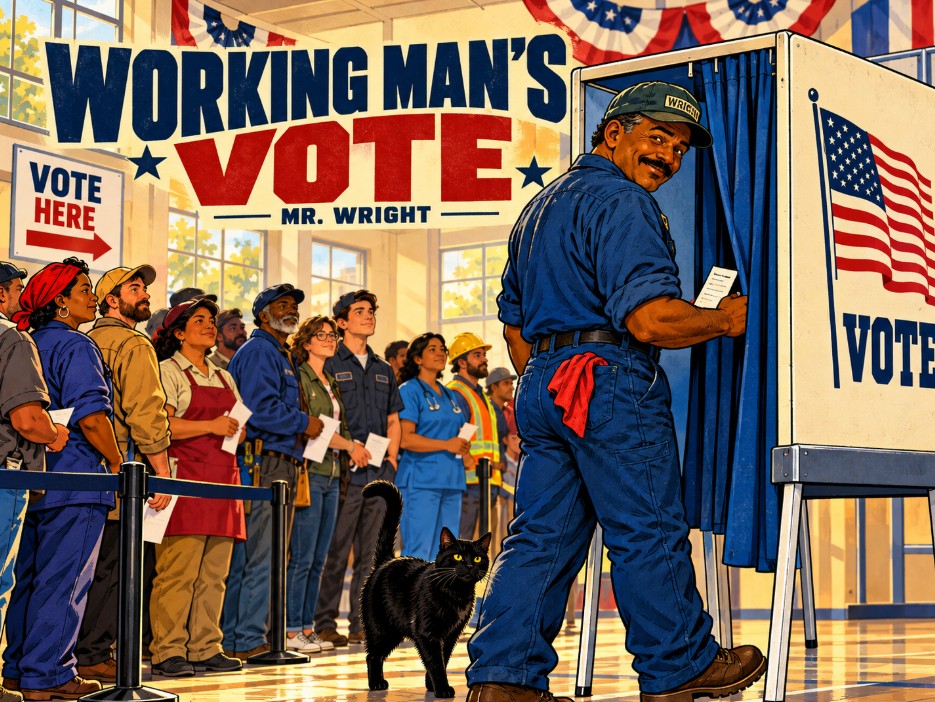
I’m not going to tell you how to vote. I’ll tell you how I go about it. Check your measure, then check your motive. Read the paperwork. Then stand in that line on the third and sign your own name to what you read.
It didn’t take me long to decide.
Now you know, Jack.