An open letter to the United States Postal Service Board of Governors, the USPS Office of Inspector General, the Office of Personnel Management, the Congress of the United States, and the American people
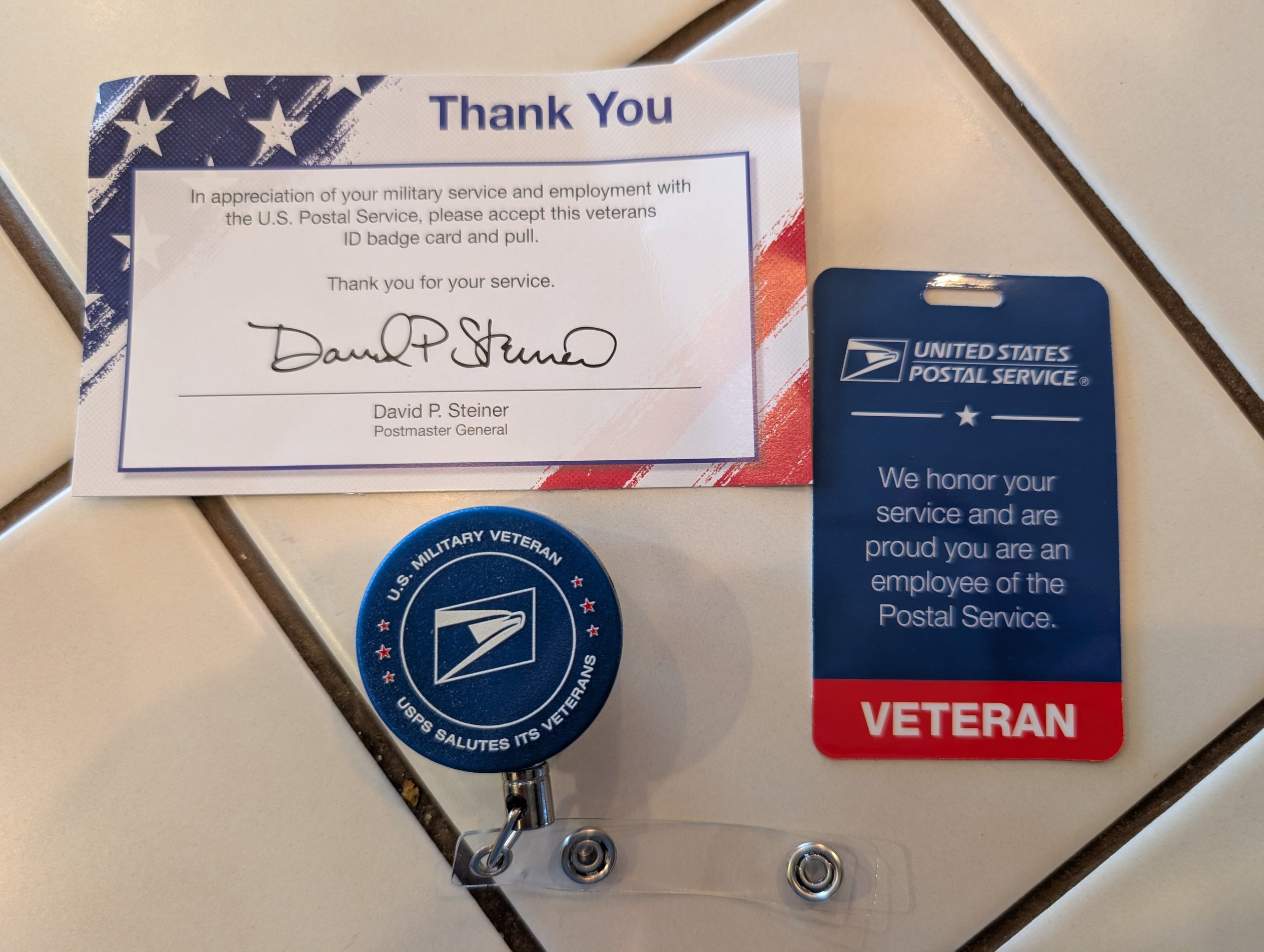
Last Veterans Day I wrote about two envelopes that crossed in the mail. One held a lapel pin and a printed thank-you from the Postmaster General. The other held my letter to Congress, asking why the agency that mailed the pin would not follow its own rulebook on how to pay a returning veteran.
I was polite about it. I left a great deal out. I gave the Postal Service a year to read its own manual.
It used the year to show me exactly what it thinks a veteran is worth.
The Short Version
I’m a disabled Navy veteran with more than twenty years at the Postal Service. I spent 18 years on the workroom floor before I left to try something bigger. When that didn’t work out, I came back.
The Postal Service took those years and set them to zero. It paid me like a stranger who wandered in off the street, as if the veteran’s preference stamped on my record were a typo. Its own Employee and Labor Relations Manual tells it how to place a returning preference-eligible veteran on the pay scale. Federal law extends veterans’ preference to the Postal Service by statute. The agency had the rule in writing, and it chose to look the other way. Actually, it went further; USPS is actively resisting even discussing the matter in court. Their position to date has been, ‘NO’.
What It Took
That fight came during a hard stretch of a hard life. I got sober in the middle of it. Anyone who has done that knows it takes what you have and then asks for more, and I had to split what was left between my recovery and a federal agency that answered my questions with silence and paperwork.
Something had to give, and it was me. I had a mental breakdown and had to resign. For a while I didn’t know whether I would work again at all. I wasn’t wondering whether I’d get back to the Post Office. I was wondering whether I’d get back to any job.
I rebuilt. It took months. When I could stand myself again, I went back to the Postal Service to reclaim the position I had earned.
The Wall
Since then I’ve applied for job after job and been turned away on technicalities that wouldn’t survive any real reading of the reinstatement rules or the disability protections the agency is bound by. I’ve watched positions I am qualified for go to outside hires. I watched a full-time job I was already doing part time go to someone from another craft, who now does work outside their training while I am still limited to part time hours.
Today I clean floors part time for the Postal Service. I earn less than I did at the same level in 2008.
The Fast Lane
Here’s the part that keeps me up.
While I’ve been stuck at the wall, I’ve watched the same district find a way to move someone else fast. A senior manager’s relative came in, landed a management detail almost as soon as he arrived, and has been promoted since. I have the receipts. I’m keeping the names to myself for now.
So the Postal Service knows how to cut through its own procedures. It knows how to skip the wait, find the detail, and open the door. It does it for family. It won’t do it for a disabled veteran with two decades of service and a written rule on his side.
That’s what employment ethics look like inside this agency. The rulebook is a tool, picked up when it keeps someone out and set down when it gets in the way of someone with connections.
The Ledger
The Postal Service trained me to repair its equipment, through its own schools, on its own dime. Right now it is hiring maintenance workers across the country because it can’t keep enough people on those machines.
So it paid to train me. It pays to recruit and train outsiders to do the work I already know how to do. It pays me under my old wages to mop. And it pays lawyers, labor relations staff, and HR personnel, year after year, to keep from giving me a straight answer about any of it.
A business run that way would be in bankruptcy court. A household run that way would be in collections. The Postal Service runs that way and then goes to Congress asking for help with its finances.
The Clock
Along the way I learned how the system is built to wear people like me down.
To enforce a right as a federal employee, you have to clear five gates. You have to know the law exists. You have to recognize that what happened to you breaks it. You have to know it happened, which is hard when the decision was made in an office you’ll never see. You have to document it. And you have to document that you qualify for the protection in the first place.
Clear all five, and you still face a clock measured in days, one that often starts before you know anything went wrong. Meanwhile the agency’s duty to answer your questions and hand over your records carries no deadline worth fearing. When the agency goes silent, your time keeps running out. Picture a referee who starts the shot clock and then holds the ball.
That’s how a valid claim dies without anyone ever ruling on it. The agency doesn’t have to win. It only has to wait.
Who This Lands On
I know how to build a file. I spent 10 years as a Mail Handler Shop Steward and another as an insurance claims adjuster, reading fine print for a living, and this has still taken three years and two lawsuits so far. Think about the veteran on the dock with no background in any of this, no lawyer, and a family to feed. Think about the employee coming back from a breakdown, an injury, or a deployment, who doesn’t know which form to file or which clock is already running.
Those are the people these protections were written for. They’re the people this agency grinds down.
The Postal Service holds itself up as one of the country’s largest employers of veterans. It prints our faces on its recruiting material and mails us pins on the eleventh of November. Then, when one of us comes back and asks for what the rules say we’ve earned, it hands the matter to its lawyers and waits for us to give up.
That isn’t gratitude. It’s a recruiting slogan with a legal department behind it.
What I’m Asking
To the Board of Governors: find out why your agency’s veterans’ pay rule goes unapplied, why the people it trains sit idle while it hires outsiders, and why its procedures bend for family and lock up for veterans.
To the Office of Inspector General: follow the money. Count what this agency spends on lawyers and staff to avoid fixing problems it could fix with a signature. Then look at who gets fast-tracked, and why.
To the Office of Personnel Management: veterans’ preference and reinstatement rights mean something across the federal workforce. Find out whether they mean anything here.
To Congress: you wrote veterans’ preference into the law that governs this agency. Ask whether it is being followed. And when an agency stalls on its own obligations, stop the employee’s clock until it catches up.
To the American people: you pay for the ceremonies and you buy the stamps. You deserve to know what the agency does with its veterans when the cameras are gone.
One Year Later
Last year I asked the Postal Service to pay what was earned and fix what was broken. It answered by doing neither, while finding time to promote a manager’s relative.
I’m still here. I’m sober, I’m working, and I’m qualified for better work than I’m allowed to do. The rules that would fix this already exist, in writing, in the agency’s own manual.
The Postal Service can keep the pin. I’d rather it kept its word.
Sources
- Robert Smith, “Don’t Thank Me for My Service,” Blue Ribbon Team, November 10, 2025 — https://blueribbonteam.com/blog/2025/11/10/dont-thank-me-for-my-service/
- USPS Employee and Labor Relations Manual (ELM), Section 422.121(d)
- 39 U.S.C. § 1005 (applies Title 5 veterans’ preference provisions to the Postal Service)
- Rehabilitation Act of 1973, Section 501 (29 U.S.C. § 791)
- 29 C.F.R. § 1614.105 (45-day EEO counselor contact requirement)