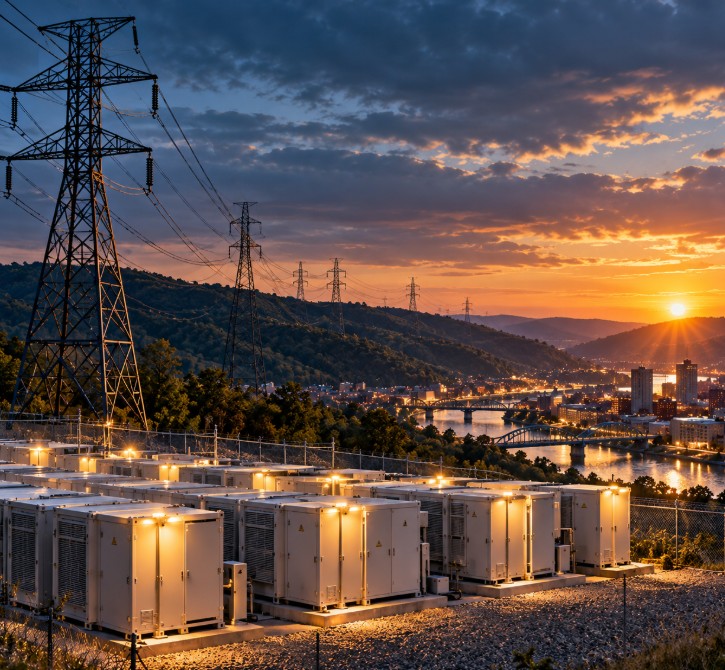
The grid has to grow and get more efficient in the same decade. The ground can only hand over so much copper, lithium and cobalt to help it do either.
This summer I wrote about salting the grid. Then I wrote about the transformers we keep wearing out while the waiting list for new ones stretches into years.
Both pieces made the same case from different ends. Cheap batteries spread through the electrical system let the wires and transformers we already own carry steadier loads, run cooler and last longer.
This piece is about the money.
Specifically, why sodium-ion storage looks like one of the sounder places to put capital in an industry that has to expand and tighten its belt at the same time.
The short version is geology.
The ground keeps a ledger
Anyone who has run a well knows the difference between rain and an aquifer. Rain comes back. Draw an aquifer down faster than it recharges and sooner or later the pump starts sucking air.
Metal ore behaves like the aquifer.
The International Energy Agency’s Global Critical Minerals Outlook 2026, released in July, projects supply shortfalls for copper and lithium running through 2035. Under current policy, the agency puts primary copper supply roughly a quarter short of what the world will need by then.
Part of that is plain mining arithmetic. The big legacy copper mines in Chile and Peru are working lower-grade rock each year, which means moving more earth and spending more energy for each ton of metal. A mine is a bank account with no deposits.
Prices already show it. The IEA reports lithium prices more than doubled between 2025 and early 2026. Cobalt rose about 130 percent after the Democratic Republic of the Congo imposed export quotas. Copper set record highs.
Then there is the question of who owns the refineries. China and Indonesia accounted for over three-quarters of refined supply growth across key energy minerals. China tripled the number of mineral categories requiring export licenses between 2023 and April 2025, covering rare earths, battery materials and the processing technology behind them. Zimbabwe restricted lithium ore exports. Mozambique began requiring graphite to be processed at home.
A mineral can sit in the crust and still be out of reach. It has to be found, permitted, dug, refined and shipped, and one export rule in one capital can close the tap.
Too many buyers at one counter
Copper sits at the center of electrification.
Transformers need it. Transmission and distribution lines need it. Motors need it. Electric vehicles need it. Data centers need it in startling amounts; industry analysis of the IEA report puts a single 100-megawatt facility at up to 500 tons for power distribution and cooling.
Lithium-ion batteries need it too. Each lithium-ion cell uses copper foil as the current collector on the anode side, and in published cost breakdowns that foil runs a little over a tenth of the cell’s cost.
So the battery we brought in to relieve the grid walks up to the same counter as the transformer it was supposed to protect, holding the same shopping list.
That is a strange way to run a supply chain.
What a sodium cell leaves out
Sodium-ion cells work on the same principle as lithium-ion. Ions shuttle between two electrodes through a liquid electrolyte. Existing lithium production lines can be adapted to build them, which shortens the road from lab to factory.
The difference is the parts list.
Sodium replaces lithium. CATL, the world’s biggest battery maker, puts sodium at more than a thousand times as abundant as lithium, and it is spread around the globe instead of concentrated in a few brine flats and hard-rock mines. The United States sits on one of the largest trona deposits on Earth in Wyoming’s Green River Basin, the mineral soda ash comes from.
Aluminum replaces copper. Lithium alloys with aluminum at the anode’s operating voltage, so lithium cells need copper on that side. Sodium doesn’t, so a sodium cell can run aluminum foil on both electrodes. Researchers who took apart commercial sodium cells found no copper current collector inside.
Iron and manganese carry much of the cathode load. Many sodium cathode designs lean on common metals and leave cobalt off the list entirely.
Investors should hear the trade-offs plainly too. Sodium cells hold less energy per pound. Hard carbon, the usual anode material, currently costs more than the graphite used in lithium cells. The manufacturing base is young, and young industries trip. Analysts at IDTechEx estimate that at scale, sodium cells could carry material costs 25 to 30 percent below lithium iron phosphate, the chemistry that dominates grid storage today. That is an estimate, and scale is the part still being built.
A chemistry built for a concrete pad
Weight decides a car battery. Every extra pound costs range.
A substation battery sits on a pad for twenty years. Nobody drives it anywhere. It gets judged on cost per cycle, cycle life, safety, and whether its materials show up on schedule.
Sodium does well on that scorecard. The cells can be discharged to zero volts for shipping and storage, where lithium cells typically travel at around 30 percent charge. Sodium electrolytes generally have a higher flashpoint. And CATL rates its TENER Sodium storage system at 15,000 cycles with a projected service life of 25 to 30 years. Those are the company’s numbers, but they describe the target the industry is aiming at.
The money is already moving
In July, Peak Energy picked Sacramento for what it calls the first U.S. factory dedicated to grid-scale sodium-ion storage. The plant is a $71 million, 183,000-square-foot facility rated for up to 4 gigawatt-hours a year, with shipments slated for the first quarter of 2027 and 239 jobs averaging over $90,000 a year.
Peak reports more than 6 GWh of customer commitments through 2030, including about 4.75 GWh for Jupiter Power and 1.5 GWh for Energy Vault’s AI data center platform. Its first grid-scale system, built with RWE Americas on the MISO grid in Wisconsin, was energized in March 2026. GM Ventures has partnered with the company, and GM plans to prototype sodium cells for stationary storage by the end of this year with commercialization targeted for 2028.
Now look across the Pacific.
In April, CATL signed a three-year, 60 GWh sodium storage order with HyperStrong, the largest sodium-ion contract announced so far. CATL has also described a planned base in Jining, Shandong, that could support 160 GWh of sodium-ion production. BYD, HiNa and Farasis are already shipping commercial sodium products.
One Chinese contract is fifteen times the annual output of America’s first sodium factory.
We have watched this movie before. Bell Labs built the first practical silicon solar cell in 1954. China makes the large majority of the world’s solar panels today.
What the investment buys
Put the earlier two pieces next to the mineral numbers and a pattern shows up.
Grid strength. Batteries near the load let the upstream system carry something closer to average demand. That is copper we do not have to string, because the lines already strung can serve more customers.
Protection. A transformer held to a steady, cool load lasts longer. Each transformer that stays on its pad is a load of copper and electrical steel that stays out of the procurement line.
Efficiency. The inverter on each battery can help manage voltage and reactive power, trimming losses and smoothing what reaches motors, drives and electronics downstream.
Here is the inversion I keep coming back to. A sodium battery guarding a transformer spends abundant material to conserve scarce material. Salt, aluminum and iron stand guard over copper and grain-oriented steel.
A sacrificial anode on a ship hull works the same way. You bolt on the cheap metal so the expensive metal survives.
Reading it as capital
Electrical demand growth is already baked in. Data centers, reshored manufacturing and electrification have seen to that.
The open question is which raw materials that growth will draw down.
Capital tied to scarce, concentrated inputs carries that concentration as risk: price spikes, export quotas, a strike at a single mine, a closed shipping lane. Capital tied to abundant, domestic inputs carries less of it. Sodium-ion storage lets the grid grow while pulling part of its demand off the scarce list.
Sodium probably won’t take over phones or long-range cars anytime soon. Stationary storage is a large, fast-growing market on its own, and sodium fits it.
The things to watch are concrete:
- Lifetime cost per kilowatt-hour delivered, measured on real installations
- Cycle and degradation data from early field systems like the RWE project in Wisconsin
- Domestic supply of hard carbon and cathode material, so the cell supply chain doesn’t recreate the lithium one
- Utility commission rules that let storage count as a substitute for transformer and distribution upgrades, so the savings can be paid for through rates
Salt the grid, save the copper
For a century we built the grid on the assumption that the ground would keep producing whatever we needed. Some of it still will. Copper is getting harder to dig, lithium and cobalt ride on export politics, and the refineries sit in a short list of countries.
Sodium sits in seawater, salt flats and Wyoming rock.
Put capital where the raw material is plentiful. Let the salt take the cycling. Let the copper we already mined stay in the transformers and lines we already built.
We can keep drawing down the aquifer, or we can learn to build around the rain.
Sources
- IEA, Global Critical Minerals Outlook 2026 (July 16, 2026), as reported by Tribune India/ANI, Skillings Mining Review, and Altiorem research summary
- Skillings Mining Review, “The IEA Just Dropped Its 2026 Critical Minerals Bombshell” (data center copper figure)
- pv magazine USA / ESS News, “Peak Energy to build 4 GWh grid-scale sodium-ion BESS factory in California”
- Intersolar & Energy Storage North America, Peak Energy Sacramento announcement (jobs and wages)
- Slashdot / Intelligent Living, “America’s First Grid-Scale Sodium-Ion Battery Plant Gets Its First Big Test” (RWE, Energy Vault, GM, CATL TENER)
- Fox News / CyberGuy, “New sodium-ion battery could reshape grid storage” (July 2, 2026)
- IDTechEx via Energy Industry Review, “Sodium-Ion Batteries to Diversify Energy Storage Industry”
- Springer chapter on sodium-ion cell design (current collector cost shares)
- Battery Burn Book, “Sodium-ion batteries” (aluminum current collectors, zero-volt discharge)
- nanoGe SSI24 proceedings, multi-scale analysis of commercial sodium-ion cells