When I was a young man I found myself working an open shop. I don’t care for that, and I expect you know why. A man ought to pay his share or stay out of the hall. At the same time, membership in any group has to be a choice or it isn’t membership. My daddy carried bags on the Pullman cars, and the Brotherhood he belonged to was built by men who chose it with their jobs on the line. So I hold both of those thoughts at once, and back then I held the first one a good deal tighter.
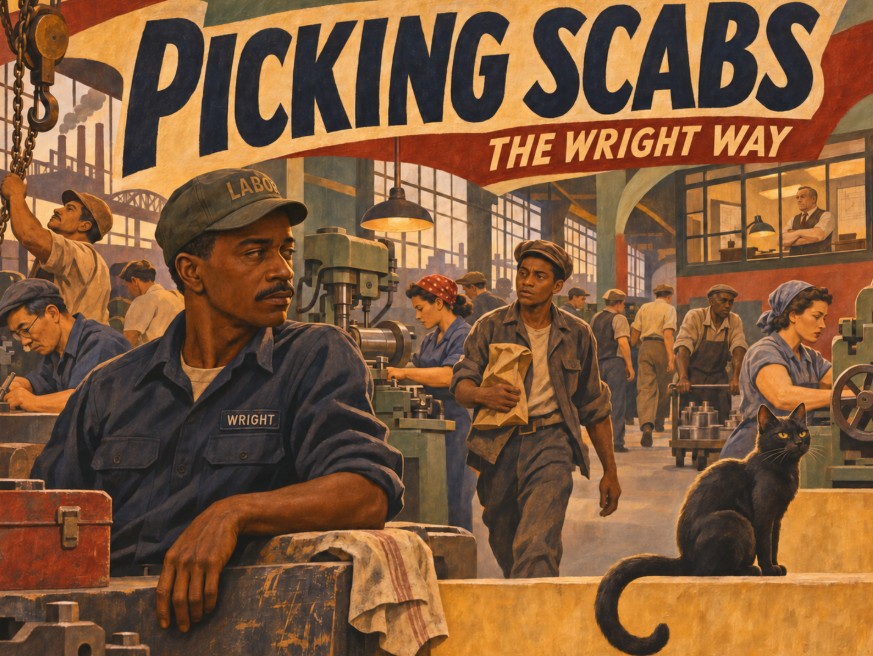
That shop ran hot and loud. You stood your station from the first whistle, sweat down your back by the morning break, and the man next to you was the only thing between you and a bad day. In an open shop, some of those men had a card in their wallet and some didn’t. The ones who didn’t still collected the raise we bargained for. They still got the safety rail we fought to have bolted on. And a few of them made a point of being seen laughing with the foreman over coffee.
I had a word for those men and I used it.
I was twenty-some years old, fresh out of the service, with a short fuse and a good left hand. Evenings I was at the gym working Golden Gloves, and my trainer had me drilling a jab rotation until my shoulder burned. Double jab, step, jab to the body, back out. I was proud of it. And I spent a good part of my shifts hoping one of those nonmembers would give me the excuse to show it to him.
Yes sir, I worked on them. I’d stand at a man’s elbow and tell him who he was. I’d ask him how the foreman’s boots tasted. I’d let his parts sit at the end of the line a little longer than they needed to and watch him scramble to make his count. If he went to the break room, I found a reason to be there too. I’d work on a man from first whistle to last and do whatever I could to run him out of the shop. I had no tolerance for anybody taking the legs out from under me and my brothers and sisters on the line, and I figured a man who wouldn’t stand with us had picked his side.
One of the men I rode hardest worked right at my bench. Skinny kid, kept his head down, brought the same bologna sandwich in a paper sack day after day. He’d been there about four months. He never said a word back to me, which I took for guilt.
Then one afternoon I was out back on break and came across a younger worker giving a hard time to a slower man on his crew. The slower fella was older, had a bad knee, and couldn’t keep up the pace the foreman had set that week. This young buck was on him for dragging down the crew’s numbers.
I pulled him aside. I told him that old man had done him no harm. The foreman sped up the line, and the foreman was the one passing his troubles down to us. The fella sweating beside him with the bad knee was carrying the same load he was, just with more weight on it. Being a little weaker is no reason for a man to suffer. I was pleased with myself. I thought I’d said something wise.
That kid looked at me for a second, and then he pointed it right back.
He said, “You mean like how you ride my buddy at your bench?”
I asked him what he meant by that.
He said his buddy didn’t pay dues because he couldn’t afford them. His daddy had walked out, his mother was sick, and he had two little sisters at home eating off his check. He’d told this kid he wanted to join and was saving up for it. And I’d been riding him like he’d personally cut my pay.
I didn’t have anything to say to that. I went back inside and stood my station until lunch, then I checked out and went home. Sat in my kitchen with it a good long while.
My daddy used to tell me, “We carried other folks’ baggage, son, but never their shame.” I’d been handing out shame by the armload, to a boy carrying more than I was.
Here’s where I landed. I insist on dignity for myself. That’s the first thing I want when I walk through a gate. If I deserve dignity on the job, so does the man whose circumstances differ from mine. A rule that only covers me is just a preference wearing work boots. If something isn’t consistent, it isn’t true. That goes for the bosses too, even the ones who’ve shown us none.
The next morning I came in early and was standing at the bench when that kid walked up with his paper sack. I could see him brace himself.
I took a different tack. I showed him how to set his station so he wasn’t reaching across himself and wearing out his shoulder by noon. I showed him the tricks to make count without killing himself. I split my thermos of coffee with him at break. And over the next few months, a piece at a time, I taught him union history. I told him about A. Philip Randolph, the man I’m named for, and how the porters organized when the company would fire you for whispering about it. I told him about the sit-downs and the picket lines, and what working people went through to win the ground he was standing on.
He joined the union at his first raise. First thing he did with the money. He’s been a shop steward in his local for twenty-two years now, and every so often he calls me about a hard case. Usually it’s some young buck riding a man who can’t fight back.
We can all grow.
Now you know, Jack.